Is $1 USD A Good Tip In Punta Cana?
Tipping math for Punta Cana tours: when $1 USD works, when it falls short, and what guides, crews and drivers are usually tipped on island and catamaran days.
A dollar is a fine tip for one drink and a poor tip for a full day. That is the honest, unglamorous answer, and almost every tipping question in Punta Cana resolves into it. Bartenders, bag handlers and housekeepers see a guest for a minute or a morning, and $1 USD fits the scale of that interaction. A guide who has picked you up at 7 a.m., driven you to a pier, fed you, floated you over a reef and dropped you back at dusk has given you a working day, and the usual tip reflects it: full-day tour guides commonly receive $10 to $20 per person, while half-day tours and boat crews usually see $5 to $10 per person, often pooled.
Sometimes yes, sometimes no. A dollar per drink at the bar, a dollar or two for the person hauling your bags, and $2 to $5 a day for housekeeping all sit inside normal Punta Cana practice. For anyone guiding, driving or crewing a tour, $1 reads as loose change rather than a tip: half-day crews are usually tipped $5 to $10 per person and full-day guides $10 to $20. The distinction is not generosity versus stinginess, it is duration. Tipping culture here runs on small, frequent amounts for brief services and a genuine daily amount for people who structure your whole excursion.
The dollar question usually arrives with a second question attached: is it rude to tip small at all? It is not. US dollars are widely accepted for tips, transfers and many resort services in Punta Cana, and small bills are preferred by the people receiving them. Nobody is offended by a dollar from a guest ordering one beer at a pool bar. What causes awkwardness is a mismatch of scale, a lone dollar handed to a guide at the end of a nine-hour Saona day, in front of other guests, when the group around them is handing over ten and twenty.
There is also a budgeting reality worth naming early. Tips are a real line item on a tour day, not an afterthought. A couple taking a full-day island trip should mentally add the tip on top of the ticket for guide and crew, plus a few singles for the driver and pier staff. Travelers who plan for that number stop doing anxious math in the parking lot and start handing things over with a smile, which is the entire social function of a tip in the first place. If you want to see how ticket prices stack up before adding the tip layer, the Punta Cana excursion prices guide breaks the costs down by tour type.
If the day you are tipping toward is a boat day, catamarans and party boats are where most travelers start comparing.
What Should You Tip Tour Guides And Boat Crews?
Plan on $10 to $20 per person for a full-day guide, $5 to $10 per person for half-day tours and boat crews, and a few dollars for the driver who transfers you. Crews often pool their tips, so handing cash to one crew member is normal. On small-group tours, the per-person amount stays the same even though the group is smaller. These are the usual figures local tipping guides describe for Punta Cana, and they hold across island days, catamaran sails and buggy runs.
The reason full-day guides sit at the top of the range is the shape of the day. Take the Catamaran Boat to Saona Island with Buffet Lunch, an 8-hour trip from $71 per person, rated 4.4 across 4,780 reviews, with hotel pickup, lunch and drinks included. Someone meets your bus, loads you, coordinates a pier departure, manages a boatload of forty-plus people at a sandbar, serves a buffet, keeps the drinks flowing and gets you home. That is a shift, not a favor. Two travelers tipping $10 each, roughly $20 for the couple, matches what local guidance describes as standard for that kind of day. The full picture of that itinerary is in the Saona Island tour from Punta Cana guide, which walks through the schedule stop by stop.
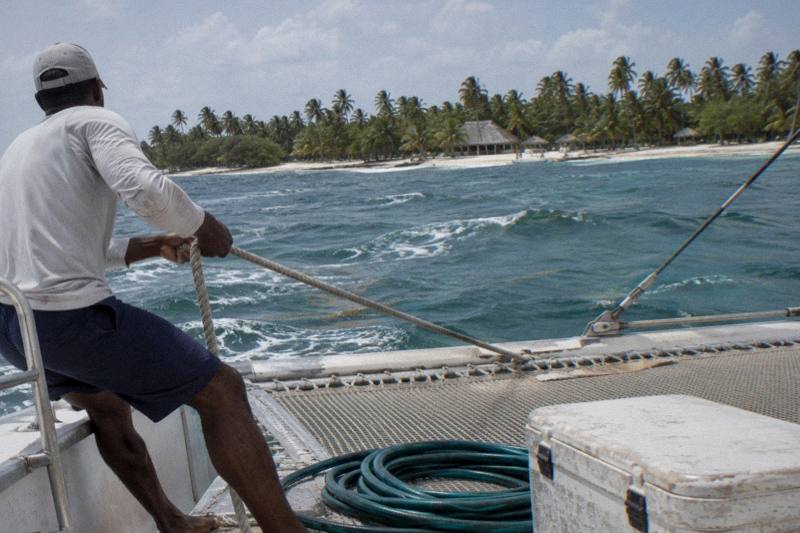
Boat crews are slightly different because the work is collective. A catamaran carries a captain, deckhands and often a bartender and photographer, and crews commonly pool what they receive at the end. You do not need to work out who did what. Handing $5 or $10 per person to whichever crew member says goodbye last, or dropping it in the box if one is passed, both happen constantly and neither is wrong.
Drivers deserve their own line because they are the most frequently undertipped people on any excursion. The transfer driver who collects you at 6:45 a.m. and returns you at 6 p.m. is often not the guide and does not share the guide's tip. A few dollars per person for the day, or a flat $5 to $10 from a couple, is a common acknowledgment. For a short hotel-to-pier transfer of an hour or less, rounding up or a couple of dollars is plenty. The Saona trips all begin with a road transfer to the Bayahibe and Dominicus pier area, about 60 to 90 minutes from Punta Cana and Bavaro hotels, so there is a driver in the picture even on days that feel purely nautical.
| Service | Usual tip | Basis |
|---|---|---|
| Full-day tour guide | $10 to $20 | Per person |
| Half-day tour or boat crew | $5 to $10 | Per person, often pooled |
| Transfer driver, full day | A flat tip in US dollars from the group | Per vehicle |
| Bartender | $1 to $2 | Per round or drink |
| Housekeeping | $2 to $5 | Per day, left daily |
| Bag handler | $1 to $2 | Per bag or carry |
One habit worth borrowing from experienced travelers: break your tipping money into envelopes or pockets the night before a tour. A stack of ones for drinks and pier moments, a separate amount for the crew, another for the driver. It removes the scramble, and it stops the common mistake of arriving at the goodbye moment with nothing smaller than a twenty and no plan.
Should You Tip In USD Or Dominican Pesos?
Both work, and US dollars are so widely accepted for tips and transfers that you do not need to exchange money just to tip. Small USD bills are preferred and easiest for everyone. If you happen to have Dominican pesos, they are equally welcome, but nobody expects a visitor to carry them. The exchange rate floats daily, so treat any peso figure you look up as approximate rather than fixed.
The practical advantage of dollars is denominations. Tipping lives on ones and fives, and US small bills are the easiest currency in the country to obtain in the right sizes before you travel. Resort staff, drivers and crews handle dollars all day and can convert or spend them without trouble. Pesos are the local currency and are never refused, but a visitor scrambling to break a large peso note at a beach bar is doing it the hard way.
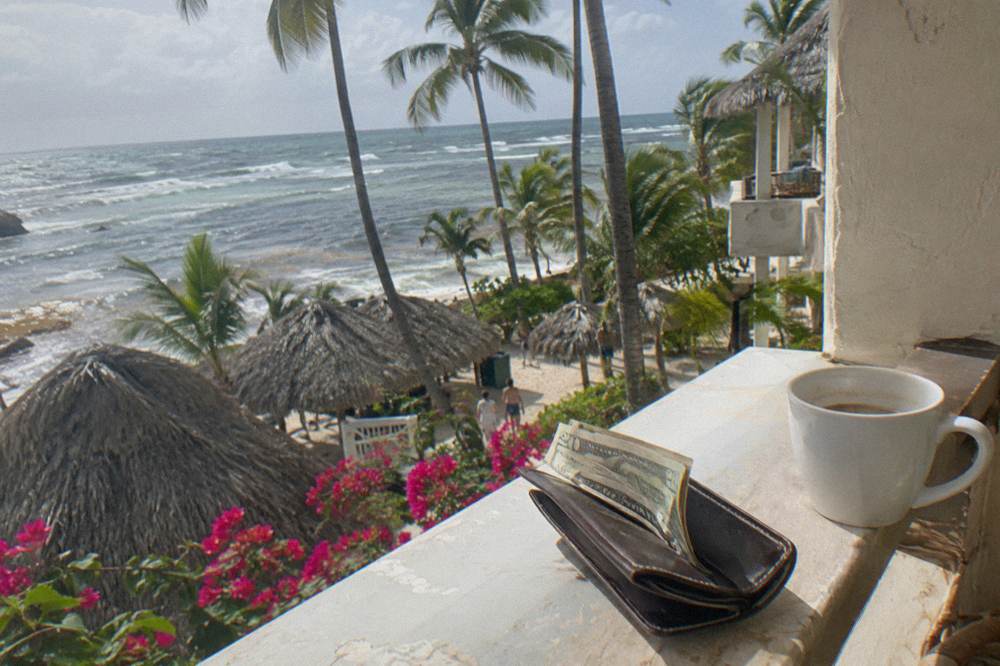
The one place currency choice genuinely matters is coins. US coins are hard for local staff to use, so never tip with quarters or dollar coins. Paper only. The same logic applies to very large bills: a $50 for a $3 tab invites an awkward silence at a small beach kiosk that may not have change. Carry more small bills than feels reasonable, because you will spend them.
Exchange rate figures move daily, so if you want to check the peso rate before your trip, the live converter at Exchange-Rates.org shows the current USD to DOP figure. When in doubt, a current Punta Cana tipping guide breaks down suggested amounts by service type, from airport drivers to excursion crews. Small US bills or Dominican pesos both work for tips.
How Much Should You Tip On Different Punta Cana Tours?
Match the tip to the length and intimacy of the tour, not to its ticket price. A 3.5-hour shared catamaran with an open bar calls for about $5 to $10 per person for the crew. A full 8 or 9-hour island day calls for $10 to $20 per person. A small-group tour with a dozen guests still tips per person, which is why small groups often leave the best total for the crew.
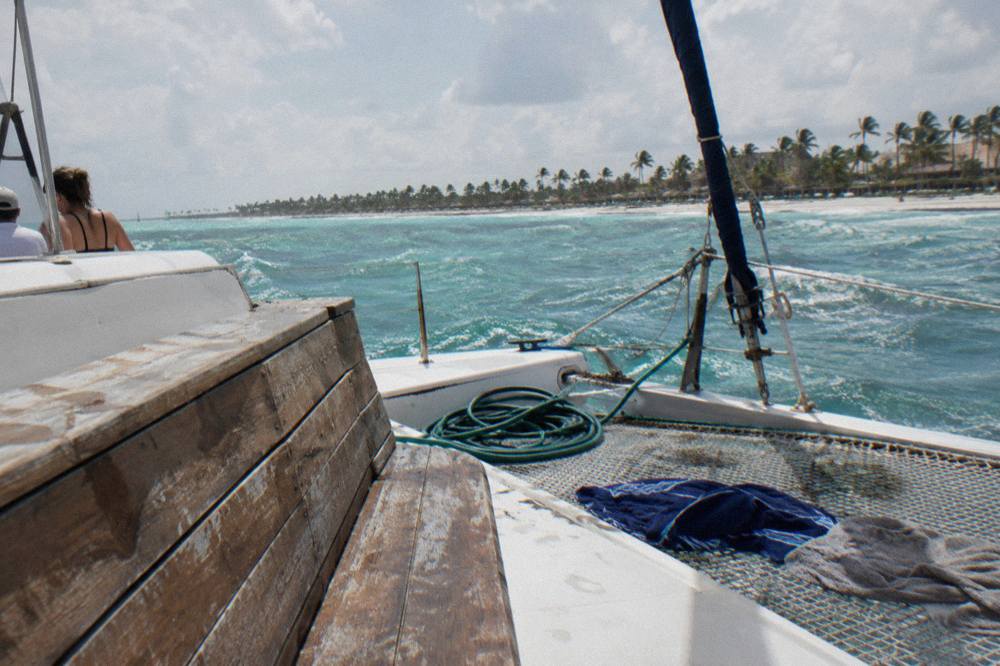
The shared catamaran scene illustrates the short-day end. The Small Group Cruising and Snorkeling Catamaran Tour runs 3 hours 30 minutes from $99 per person, rated 4.9 across 2,659 reviews, capped at 16 travellers, with drinks and hotel pickup included but no meal. It is a half-day by any measure, and crews on half-day sails are usually tipped in the $5 to $10 per person band. Because the group is only sixteen, sixteen guests at even $5 each produce a fair pool, and guests at $10 produce a genuinely good one.
Land adventures follow the same length logic. The ATV Adventure to Water Cave and Macao Beach runs 4 hours from $45 per person, rated 4.8 across 3,513 reviews, with hotel pickup listed and free cancellation. Four hours sits between half and full day, and groups here run large, up to 200 travellers, with multiple guides working the convoy. A per-person tip in the $5 to $10 range, handed to your specific guide rather than scattered across the group, is the usual practice. Dust and mud are part of the job description on these routes, so plan on old clothes for you and a real tip for them. The what to wear for a dune buggy guide covers the clothing side of that trade.
| Tour type | Typical length | Usual per-person tip |
|---|---|---|
| Snorkeling or party boat | 3 to 3.5 hours | $5 to $10 for the crew |
| ATV or buggy run | 4 hours | $5 to $10 for your guide |
| Zipline and park day | 5 to 7 hours | $10 to $20 for guides |
| Full-day island trip | 8 to 10 hours | $10 to $20, guide and crew |
| Santo Domingo city day | 10 hours | $10 to $20 for the guide |
Two edge cases come up often. On private charters, where one price covers the whole boat, the tip is the crew's main variable income and travelers commonly tip on the generous end of the per-person scale for their party size. On heavily discounted or promotional tickets, nothing changes: the crew's day is the same length regardless of what you paid to board, and the tip is calculated on the day, not the deal.
What About Hotels, Restaurants And The Airport?
At resorts, tip in small amounts often: $2 to $5 a day for housekeeping left daily, $1 to $2 per round at the bar, and a few dollars for the server at a la carte dinners. At the airport, $1 to $2 per bag for handlers is the norm. Restaurants outside all-inclusive plans commonly add a 10 percent service charge, with an extra 10 percent appreciated, not obligatory.
The daily housekeeping habit matters more than the amount. Leaving $2 to $5 each day, rather than a lump at checkout, means the person who actually cleaned your room on Tuesday receives the Tuesday tip, since room assignments rotate. Small bills, placed somewhere visible like the pillow or desk, remove any ambiguity about whether the money is meant for them.
Airport moments are brief and the amounts are correspondingly small. A dollar or two per bag for the person lifting suitcases onto a shuttle, and nothing expected at immigration or security, which is true both as etiquette and as rule: officials cannot accept tips. Pre-booked transfer drivers who meet you inside arrivals with a name sign and track your flight are usually tipped a few dollars on arrival and again on departure, or a rounder amount if they handle both legs well.
Restaurant tipping outside the resort depends on the bill. Check the restaurant bill before tipping in Punta Cana, since what is included varies by place, and adding another 10 percent directly for the server is a common, appreciated move rather than a requirement. Reading the bill before tipping prevents the double-tip surprise, and asking "is service included?" in any form of Spanish or English is completely normal.
How Do You Handle Tips When A Tour Disappoints?
Withhold or reduce the tip, but say why, and direct the feedback where it can act. Silence plus a small tip tells the operator nothing. A quiet word to the guide or a note to the operator about what went wrong, with a tip that matches the service actually delivered, is the honest move. A tip is payment for service, not a tax on exiting the parking lot.
The scale of the reduction should still be proportionate. A boat delayed twenty minutes by weather is not a tip offense, since sea state and weather genuinely vary and operators cancel or adjust for safety constantly. A guide who disappears for an hour, a buffet that never materializes when the booking page listed a meal, or equipment that is missing or broken, those are service failures, and a reduced tip plus a clear complaint is a fair response. Every tour on Punta Cana Travel Tours lists free cancellation, so problems discovered before the day can often be resolved by canceling rather than by enduring.
There is a counterweight worth weighing before docking a tip entirely: much of what goes wrong on excursion days is outside the crew's control. The road transfer is long, the pier is crowded, the sandbar stop is shortened because another boat got there first. Crews rarely set those terms. Punishing the deckhand for the timetable rarely achieves anything except a bad goodbye. The people to hold to account for structure are the operator and the booking process, through reviews and complaints, while the people in front of you get paid for the day they actually gave you.
What Does A Tipping Budget Look Like For A Whole Week?
For a couple on a mid-range week, a realistic tipping budget is roughly $100 to $200 in small bills: about $50 to $70 for hotel staff across seven days, $25 to $40 per full-day excursion for two, $15 to $25 per half-day tour, and a loose float of ones and fives for bars, bags and drivers. Solo travelers can scale that toward the lower end, and families should budget per person, since kids on tours are usually counted in the per-person tip too.
The reason to carry it as cash, mostly in ones, fives and tens, is that tipping moments in Punta Cana are constant and small. A week that includes a Saona day, a catamaran afternoon, an ATV run and normal resort life will produce a dozen tipping interactions, and each one works best with paper you can hand over without change. Getting small bills before travel is easier than breaking large ones at a resort desk, and the failure mode of arriving with only twenties is the single most common tipping complaint travelers report.
Budget the tip when you budget the ticket. A full-day Saona ticket plus the guide and crew tip is a meaningfully bigger number than the ticket alone, and the small-group Saona options carry the same tip expectation on top of their premium price. Travelers who fold tips into the excursion price from the start tip better and enjoy the goodbye more, which is, in the end, the whole point of the question. A dollar is a good tip in Punta Cana exactly as often as the service it thanks took a minute.
Common Questions About Tipping In Punta Cana
Is $1 USD A Good Tip In Punta Cana?
For one drink at the bar, one bag carried, or a short taxi hop, yes. For guides, crews and drivers, no: half-day tours and boat crews are usually tipped $5 to $10 per person and full-day guides $10 to $20 per person.
Should I Tip In Dollars Or Pesos?
Either is accepted. US dollars, in paper small bills, are the most convenient for visitors and widely used for tips across Punta Cana. US coins should be avoided because local staff have trouble spending them.
Do I Tip The Driver Separately From The Guide?
Usually yes. On island tours the transfer driver is often a different person from the guide and does not share the guide's tip. A few dollars per person for the day, or $5 to $10 from a couple, is a common approach.
Do Boat Crews Share Tips?
Very often, yes. Crews on catamaran and snorkeling tours commonly pool what they receive, so handing your tip to one crew member at the end of the sail covers the whole team.
How Much Should I Leave For Housekeeping?
Typically $2 to $5 per day, left daily rather than at checkout, so the person who cleaned the room that day actually receives it. Small bills placed on the pillow or desk work well.
Is Service Already Included At Restaurants?
Many Dominican restaurants add a 10 percent service charge to the bill. Check the check before adding more; an extra 10 percent for the server is appreciated but not required.