Punta Cana Scuba Diving: The Basics Plus Snorkel Tours You Can Book
Punta Cana sits on a coast of barrier reefs, calm shallows and warm Atlantic water, but the dive shops that run tank trips here are booked separately from the island and boat excursions most travelers see first. Here is how diving in the area actually works, and what you can book today if you want reefs without a certification card.
Short answer
Punta Cana has real scuba diving, offered by independent dive shops running discover scuba sessions and certified reef and wall dives, but no tank dive trip appears among the bookable tours this site covers. The bookable reef option is the snorkel cruise: the small group catamaran runs from $99 per person, rated 4.9 across 2,659 reviews.
Punta Cana's reputation is built on beaches, but the water off Bávaro and Cap Cana holds barrier reef, patch coral and the deeper blue of the Mona Passage channel, and that combination is exactly what dive shops look for. The catch for a visitor planning from home is structural: the dive operations in the area sell their tank trips directly, and none of the bookable excursion products in the region's main tour catalogs is a scuba dive. What those catalogs do sell, in volume and with strong ratings, are snorkel trips that reach many of the same reef systems in the top few feet of water. This guide walks through how diving here works, who each format suits, and what you can actually reserve in advance when diving is not the right fit. The same catalogs push dolphin swims hard, so before you book one, the guide to dolphin encounters in Punta Cana lays out what the experience actually involves and the welfare questions worth asking.
Is There Scuba Diving In Punta Cana?
Yes, scuba diving exists in Punta Cana, run by independent dive shops rather than by the standard excursion catalog. Those shops offer discover scuba introductions for beginners and guided fun dives for certified divers, typically on reef snorkel stops reached by catamaran from the Bávaro coast. None of the bookable tour products on this site's catalog is a tank dive, so a diver books with a shop directly.
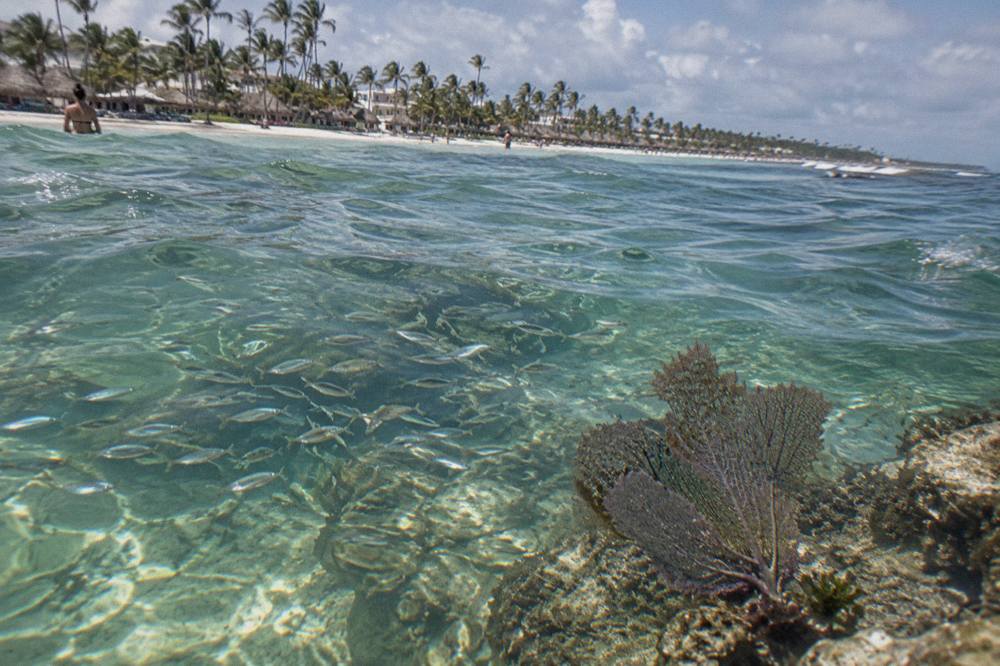
The honest framing is that Punta Cana is a snorkeling destination with a diving scene attached, not the reverse. The reef that protects the Bávaro beach strip runs for miles close to shore, which means shallow, forgiving conditions for learners and plenty of coral and fish life in the first several feet of water. That same geometry is why the snorkel cruise is such a good substitute for many travelers: a mask, a fin kick and a calm morning put you over the same structures a diver descends along.
For certified divers, the deeper story sits to the south. The Bayahibe and La Romana side of the coast, about an hour to an hour and a half of road transfer from most Punta Cana hotels, gives shops access to wall diving and healthier reef than the stretch directly off the resort zone. Dive shops in the area commonly run both sides, and prices, sites visited and certification requirements vary shop to shop, so check with the operator directly for current dive pricing before committing a day.
The natural split in the market, then, is this. If you hold a certification card or want to earn one, contact a dive shop and build the day around tanks. If you want to see fish and coral with minimal friction, minimal training and a booking you can make tonight with free cancellation, the excursion catalog has you covered, and the rest of this guide leans into that second path without pretending the first one does not exist. The Punta Cana snorkeling tours overview breaks down every reef trip in the catalog if you want the full picture.
Certified Diving Or Discover Scuba: Which One Fits You?
The dividing line is a certification card. Certified divers can join guided fun dives at depth, booked directly with a dive shop, while everyone else starts with a discover scuba session, a supervised shallow-water introduction that needs no license and usually runs a few hours. If neither appeals, a snorkel trip delivers reef, fish and clear water with zero training.
A discover scuba session is the standard entry point worldwide and Punta Cana is no exception. Expect a safety briefing, some shallow skill practice with a regulator in your mouth, and then a closely supervised swim over shallow reef, all with an instructor within arm's reach. It is genuinely beginner friendly, and the warm, calm water of the east coast is close to ideal conditions for a first breath underwater. What it is not, is a bookable excursion product in the tour catalog this site covers: you arrange it with the dive shop itself, and pricing sits outside the figures this guide can quote with confidence, so ask the shop directly.
Certified divers face a different decision: which coast, and how deep. Reef dives off the Bávaro stretch tend to be shallow and easy, useful for a rusty diver shaking off cobwebs. The Bayahibe side offers the more serious profiles, including walls and deeper structure, reached after a road transfer. Shops vary in what they include, whether they pick up at your hotel, and what they charge for gear rental, so the practical advice is to email two or three shops, state your certification level and your dates, and compare what comes back.
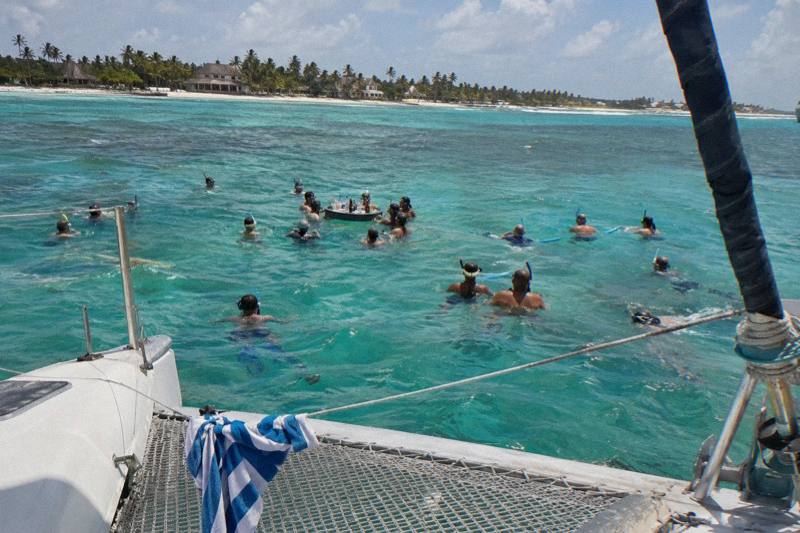
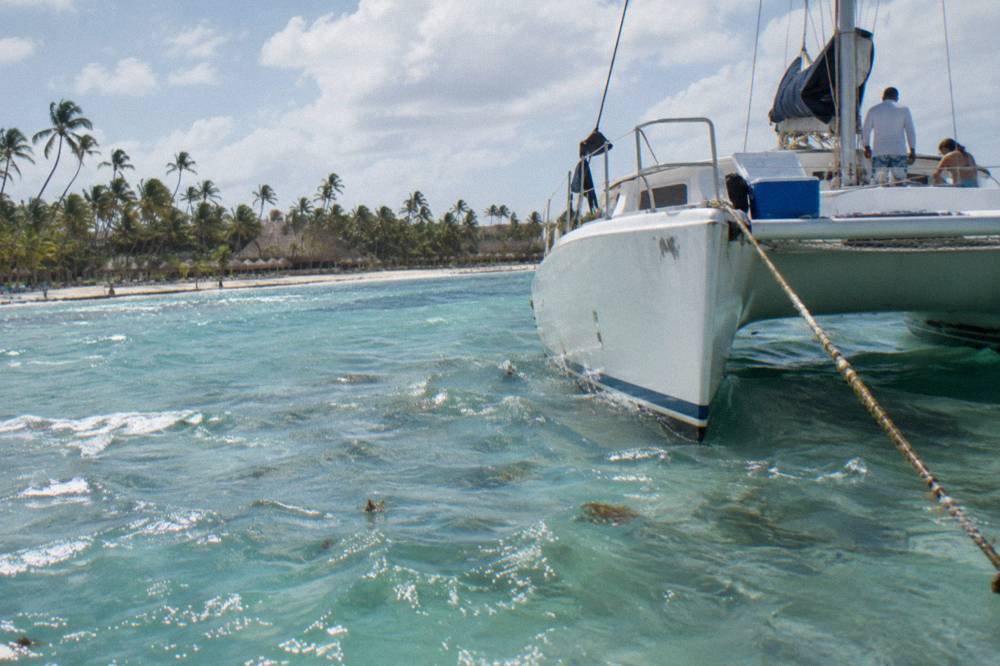
There is a third category worth naming honestly: the traveler who thinks they want to dive but whose real goal is seeing tropical fish in clear water. For that person, a discover scuba session can be an expensive detour. A small group snorkeling catamaran covers reef, gear, guidance and an open bar for a from price of $99 per person, and the 3 hour 30 minute format leaves the afternoon free. The Small-Group Cruising and Snorkeling Catamaran Tour runs that exact format, rated 4.9 across 2,659 reviews with a cap of 16 travellers on board, hotel pickup listed and free cancellation included.
What Do Bookable Reef Trips In Punta Cana Include?
The bookable reef and water trips share a common skeleton: hotel pickup, boat time, snorkel gear, drinks and a crew, with the differences coming down to group size, duration and food. The small group catamaran caps at 16 travellers for $99 per person, the 27 person snorkeling cruise runs from $89 with snacks, and the Reef Explorer platform trip adds sharks and stingrays from $149 per person. Meals are the main variable, and not every trip serves food.
Reading inclusions carefully matters more here than on almost any other excursion type, because "snorkeling tour" covers formats as different as a 16 person catamaran and a floating platform. The table below shows the three reef-focused products side by side, using the figures as listed.
| Trip | Duration | From price | Group cap | Meal | Drinks | Rating |
|---|---|---|---|---|---|---|
| Small-Group Cruising and Snorkeling Catamaran Tour | 3 hours 30 minutes | $99 per person | 16 | No | Yes | 4.9 across 2,659 reviews |
| Small Group Snorkeling Cruise with Open Bar and Light Snacks | 3 hours 30 minutes | $89 per person | 27 | No, snacks only | Yes | 4.9 across 1,657 reviews |
| Reef Explorer Access with Sharks and Stingrays Swim | 3.5 hours | $149 per person | Not stated | No | No | 4.6 across 104 reviews |
The Reef Explorer trip deserves its own paragraph because it is the closest bookable product to a marine park experience. Rather than sailing to a reef, you transfer to a floating platform where snorkeling sits alongside interaction areas with sharks and stingrays. It is a different proposition from a drift over wild coral, and at 104 reviews the review pool is modest, so weigh the 4.6 rating with that in mind. Drinks and food are not listed as included, so check the booking page before you go if that matters to your day.
One more comparison worth making: full meal service on a water trip in this catalog comes from upgrading to a catamaran format with lunch, such as the Punta Cana Catamaran Tour with Food, Drinks, and Snorkeling, from $89 per person with a meal included and up to 27 people on board. That tour is covered in detail in the Punta Cana catamaran tours guide. If your dive-curious day needs to double as a proper lunch outing, that is the bridge product.
Can Beginners See Reefs Without A Dive Certification?
Yes, and in Punta Cana the beginner path is genuinely good rather than a compromise. Every snorkel product in the catalog needs no certification, no training course and no pool session: gear is provided, crews brief you on the boat, and the reef sits shallow enough that floating on the surface puts coral and fish directly below you. Discover scuba adds depth and a tank; snorkeling adds none of the cost or classroom time.
The mechanics favor the beginner here. Much of the reef the tours visit lies a few feet down, which means a snorkeler floating calmly sees clear water with passing marine life in view, while a diver on the same site would descend for a closer look at the same structures. Operators provide masks and fins for snorkeling, and a briefing covers the basics before anyone enters the water. No prior experience is listed as a requirement on these trips.
Beyond the two small group options in the trio above, the catalog's budget-friendly reef entry is the Punta Cana Booze Cruise with Snorkeling, Sand Bar, and Transfers, from $59 per person, rated 4.6 across 1,321 reviews, with up to 100 travellers and an open bar. The format is a party-leaning counterpart to the serene small group trips, three hours door to door with drinks flowing, and it suits a group whose priority is a fun boat day that happens to include a snorkel stop.
Families weighing the choice should also read the family-focused rundown in the Punta Cana excursions for families guide, since minimum ages for boat trips vary by operator and the smaller vessels are not always the ones that take young children. As a rule the small group formats are calmer water, calmer crowd, while the larger party boats have more energy and more people.
What Will You Actually See Underwater Near Punta Cana?
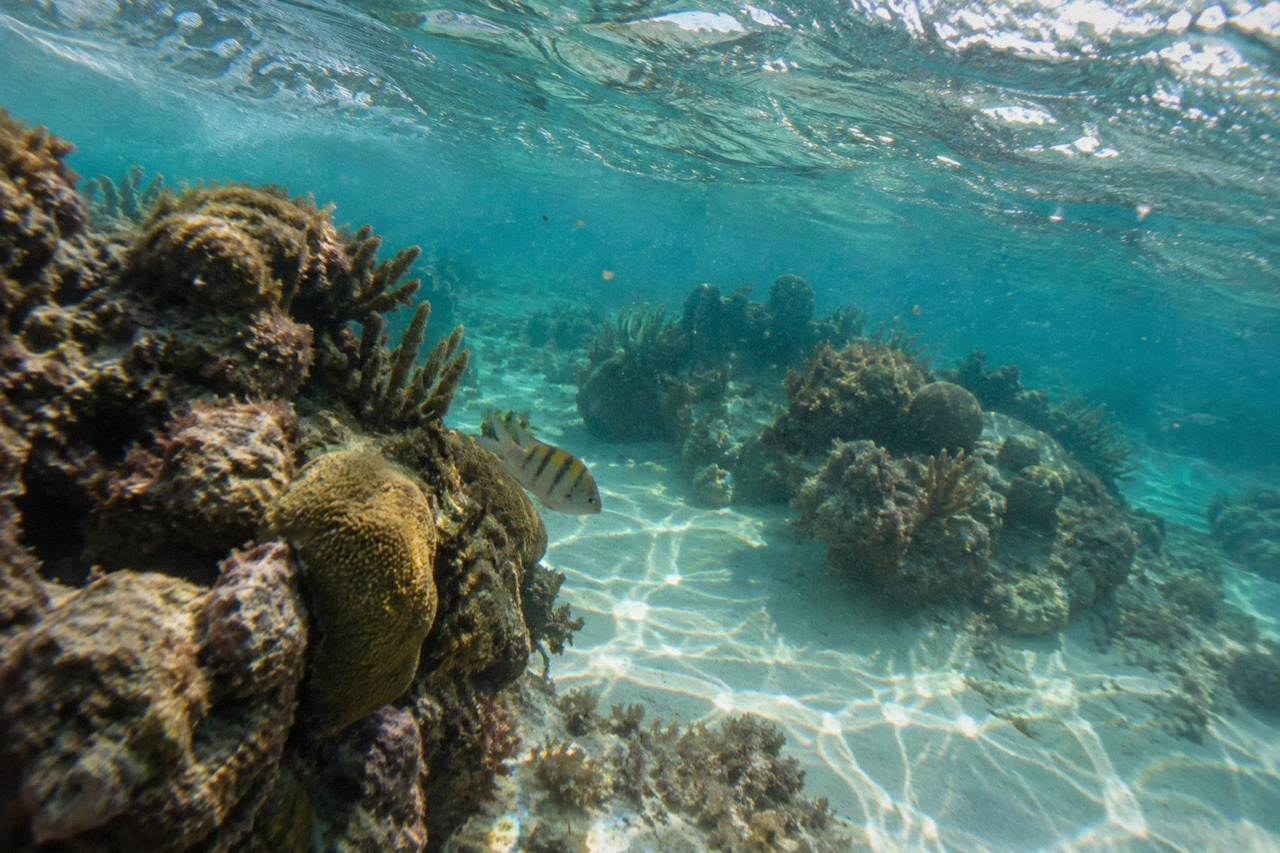
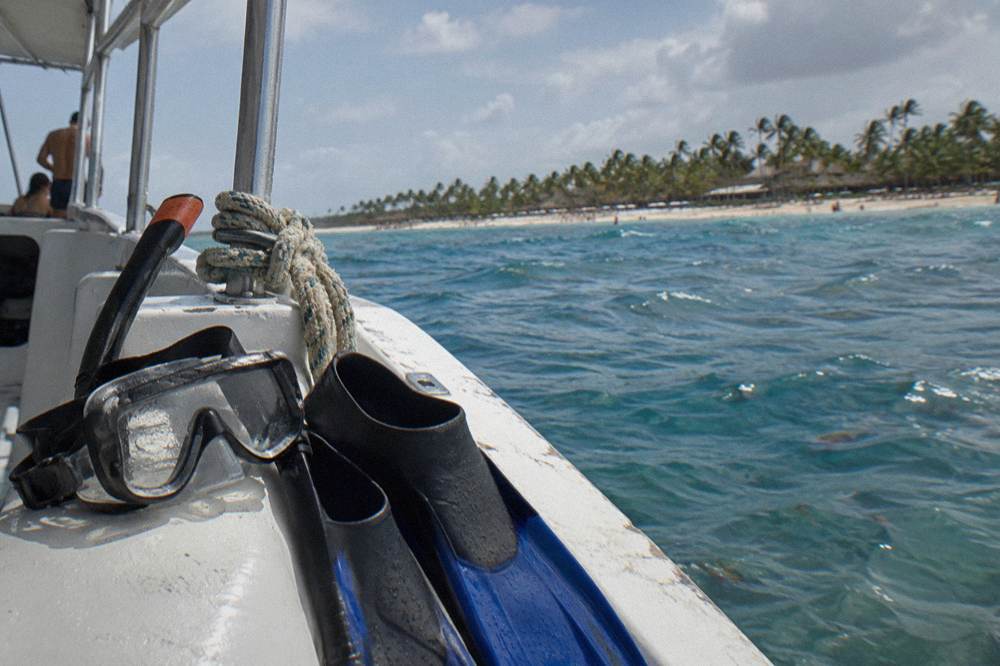
Expect reef fish, coral formations, sea fans and sand channels rather than big pelagics, because the sites the trips visit are shallow protected reefs, sandbars and natural pools. Snorkel cruises commonly stop at coral reefs and natural pools with equipment provided, and the Reef Explorer platform adds nurse sharks and stingrays to the mix. Visibility and sea state are weather dependent, and operators describe conditions rather than promising them.
The catalog descriptions are consistent on the shape of the day: a reef stop, sometimes a natural pool or sandbar stop, gear handed out on board, and a crew pointing out what to look for. The coral is real but it is shallow-water Caribbean reef, which means the color palette leans toward browns, tans and blues with bursts of purple sea fans and darting fish, rather than the deep wall colors a diver on the Bayahibe side might chase. Set expectations to "living reef full of fish" and you will not be disappointed.
What no operator can promise is water clarity on a given morning. Snorkeling stops are weather and sea-condition dependent, as the operators themselves describe, and a windy day can flatten visibility even when the trip still runs. The practical counter is to book early in your vacation week, keep the free cancellation option in play, and shift the day if the sea looks wrong. Beach condition trackers publish current sargassum and clarity reports for the Punta Cana coast, including a running beach conditions page and the weekly sargassum forecast, both worth a look the day before any water trip.
For the interaction end of the spectrum, the Reef Explorer platform is the only bookable product in this catalog with sharks and stingrays, from $149 per person. Treat it as its own category: structured, close-up and marine-park flavored, rather than a wild reef swim.
How Much Do Punta Cana Water Trips Cost?
Reef-adjacent bookable trips run from $59 to $149 per person, with the party-boat snorkel format at the floor, small group catamarans in the middle at $89 to $99, and the Reef Explorer platform at the top. Private formats jump to per-boat pricing, such as the private catamaran from $839 per group for up to 15. Dive shop tank dives are priced separately and are not part of these figures.
The per-person ladder is clean and worth seeing in one place. Note that the private catamaran price is one price for the whole party, never a per-person rate.
| Trip | Format | From price | Basis |
|---|---|---|---|
| Booze Cruise with Snorkeling, Sand Bar, and Transfers | Shared, up to 100 | $59 | Per person |
| Small Group Snorkeling Cruise with Open Bar and Light Snacks | Shared, up to 27 | $89 | Per person |
| Punta Cana Catamaran Tour with Food, Drinks, and Snorkeling | Shared, up to 27 | $89 | Per person |
| Small-Group Cruising and Snorkeling Catamaran Tour | Shared, up to 16 | $99 | Per person |
| Reef Explorer Access with Sharks and Stingrays Swim | Shared, size not stated | $149 | Per person |
| Private Catamaran Booze Cruise and Snorkeling | Private | $839 | Per group, up to 15 |

Reading the ladder, three sweet spots stand out. The $89 to $99 band buys the small group experience with gear, drinks and pickup included, and the difference between 16 and 27 guests on board is the real product distinction, not the ten dollars. The $59 floor buys a bigger, louder boat and a shorter day. The $839 private rate, divided across a group of 15, competes with mid-range per-person prices while handing you the whole vessel, the meal service and a 4.9 rating across 146 reviews, though that review pool is modest in size.
What none of these prices includes is the dive shop world. Tank dives, courses and discover scuba sessions are quoted by the shops themselves, and no dive price appears here because scuba excursions are not among the tours bookable on this site. Treat any dive quote you receive as its own comparison, and hold it against the $89 to $99 snorkel band when deciding how much the tank is worth to you.
When Is The Best Time To Dive Or Snorkel In Punta Cana?
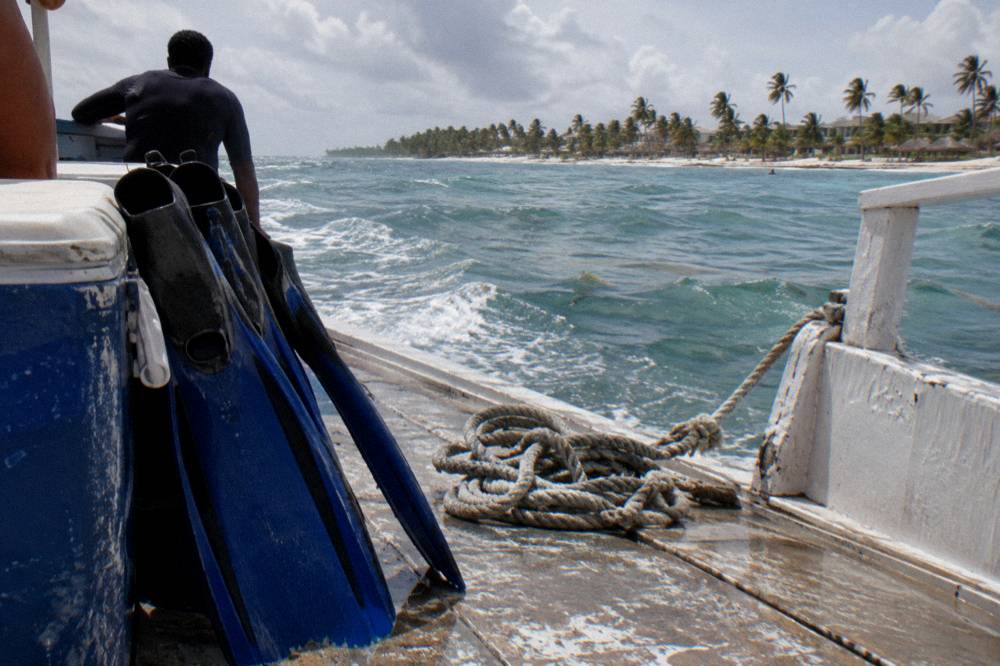
Sea conditions shift through the year. Trips still run year-round, with cancellations for weather and the most caution during the August to October hurricane season, while the late summer and autumn months carry more weather variability. Sargassum is a seasonal factor on Atlantic-facing beaches and is currently reported low across the area. Whatever the season, book water trips early in your stay and keep free cancellation so a rough sea day can shift rather than sink the plan.
The underwater logic is simple: diving and snorkeling both live and die by surface calm and clarity. Winter and early spring deliver the most reliable of both, which is also why that is high season for the whole coast and why prices and availability tighten then. Mid-summer through October overlaps the Atlantic hurricane season, and while the 2026 season has run below average with no cyclones on recent outlooks, the honest framing is that a tropical system anywhere in the basin can churn up the sea for a week. The table below summarizes how the year breaks down for water trips.
| Period | Sea And Visibility | Sargassum Risk | Booking Reality |
|---|---|---|---|
| December to April | Calmest seas, best clarity | Low | High season, book ahead |
| May to July | Warm, moderate variability | Historically heavier | Easier availability |
| August to October | Hurricane season overlap | Season tapering off, currently low | Keep free cancellation, schedule early in your stay |
Sargassum deserves a specific mention because it is the factor most travelers underestimate. It arrives on the Atlantic-facing beaches, not uniformly, and it moves with currents and wind, so one bay can be clear while the next is affected. The current outlooks show low levels and clean conditions across the main beach zones, and the forecasts update weekly. If your trip sits in the historically heavier months, check the forecast as your date approaches rather than assuming the trend holds.
For scheduling within your week, two rules of thumb do most of the work. Book a water trip toward the start of your stay, not the end, so a weather shift leaves room to rebook. And prefer morning departures when offered, since the sea is often calmer before the afternoon wind picks up, a pattern the operators themselves note when they describe conditions. The best time to visit Punta Cana guide carries the month-by-month detail if you are still choosing dates.
What Should You Bring And Know Before A Reef Trip?
Bring a towel, swimwear worn under clothes, reef-safe sunscreen applied before boarding, cash or small bills for tips, and a dry bag for phones. Gear, drinks and pickup are listed as included on the snorkel products, so the packing list is short. Tipping norms run about $5 to $10 per person for half-day trips and boat crews, and $10 to $20 per person for full-day guides.
The gear question answers itself: masks, fins and snorkel vests come with the trip. What operators cannot supply is sun protection that works, and a reef trip concentrates hours of tropical sun onto a floating person, so sunscreen applied early and reapplied after the water stop is the single most useful preparation. A rash guard beats sunscreen for long sessions in the water and does not wash off onto the coral.
Tipping deserves real numbers because crew energy visibly shapes these days, and the local guidance is consistent: about $1 to $2 per drink round where there is a bartender, $5 to $10 per person for half-day trips and boat crews, and $10 to $20 per person for full-day guiding. US dollars in small bills are widely accepted and preferred. The full breakdown, including resort and transfer norms, sits in the what to bring on a Punta Cana excursion guide.
Two rules protect the reef you came to see, and operators state both plainly. Do not touch or stand on coral, and do not remove starfish, shells or anything else from the water or the sand. The natural pool stops hold protected starfish, and the rules around them are part of the national park framework that governs these coasts. A calm float with hands back is the behavior that keeps the sites worth visiting.
Practical details round out the picture. The free official E-Ticket entry form is required for commercial flights into the country, so complete it before you travel rather than at the airport. And Water fills most of this page, but a full week rarely stops there. Punta Cana Travel Tours also lays out the buggy trails, zipline courses and Saona catamarans, on land and offshore.
Which Trip Should A Dive-Curious Traveler Actually Book?
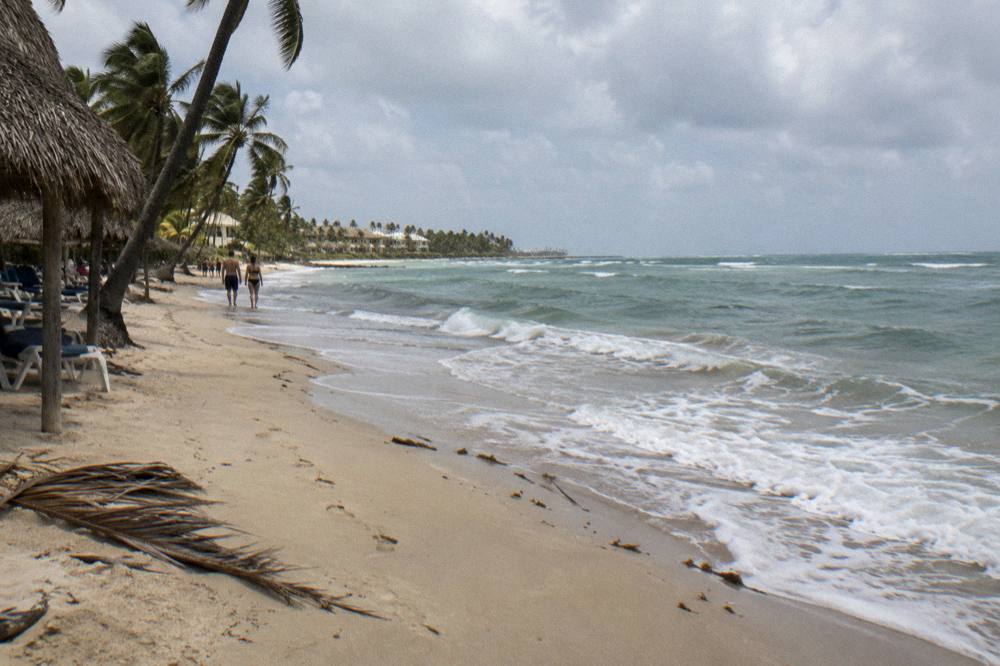
Book the 16 person catamaran at $99 per person if you want the closest feeling to a dive day: small group, real reef, gear and pickup included, rated 4.9 across 2,659 reviews. Book the $59 booze cruise if the day is social first and reef second, or the $149 Reef Explorer platform if close-up marine life matters most. Then, if the water hooks you, take a discover scuba session with a shop later.
That sequencing is the advice this guide exists to give. The most common mistake is treating diving and snorkeling as competing purchases made blind, when they are really a ladder. The snorkel trip tells you whether being in blue water with a mask is your thing at all, for under a hundred dollars and with no training. The discover scuba session answers the next question, whether breathing underwater adds enough to justify the extra cost and supervision. The certification course is the commitment rung, made with real information behind it.
Whichever rung you start on, two booking habits serve you well. Keep the free cancellation option, which every trip listed in this guide carries, and book early in your vacation week. The sea decides the day; a flexible booking turns a bad sea day into a reschedule instead of a loss.
Common Questions About Punta Cana Scuba Diving
Is There Scuba Diving In Punta Cana?
Yes. Independent dive shops in the area run discover scuba introductions and guided dives for certified divers along the reef off Bávaro and the deeper sites reachable from the Bayahibe side. These are booked directly with the shops, not through the standard excursion catalog, so ask the operator for current dive pricing and requirements.
Can You Scuba Dive In Punta Cana With No Experience?
Yes, through a discover scuba session: a supervised shallow introduction with a briefing, skill practice and a closely guided swim over shallow reef, no certification needed. It is arranged with a dive shop directly. The training-free alternative is a snorkel trip, which needs no course and reaches the same shallow reef from the surface.
What Is The Best Bookable Alternative To A Dive Trip?
The Small-Group Cruising and Snorkeling Catamaran Tour, from $99 per person, rated 4.9 across 2,659 reviews. It caps at 16 travellers, includes hotel pickup, gear and drinks, and runs 3 hours 30 minutes, which makes it the closest bookable experience to a dive day in format and water time.
How Much Do Punta Cana Reef Trips Cost?
Bookable reef and water trips run from $59 to $149 per person. The party boat with a snorkel stop starts at $59, small group catamarans sit at $89 to $99, and the Reef Explorer platform with sharks and stingrays starts at $149. A private catamaran runs from $839 per group for up to 15 guests.
Do You Need To Be Certified To Snorkel In Punta Cana?
No. None of the snorkel products requires certification or prior experience. Masks, fins and snorkel vests are provided, crews give a briefing on board, and the reef sits shallow enough that floating on the surface puts coral and fish clearly in view.
When Is The Water Clearest For Diving Or Snorkeling In Punta Cana?
Roughly December through April, when seas are calmer and visibility tends to be best. Sargassum is currently reported low across the main beaches. Book water trips early in your stay with free cancellation so a rough sea day can be moved rather than lost.