Do You Have To Pay $20 To Leave Dominican?
No separate $20 cash payment is collected at Punta Cana departure; the tourist card fee is included in most airfares and the required E-Ticket form is free. Here is what leaving actually costs.
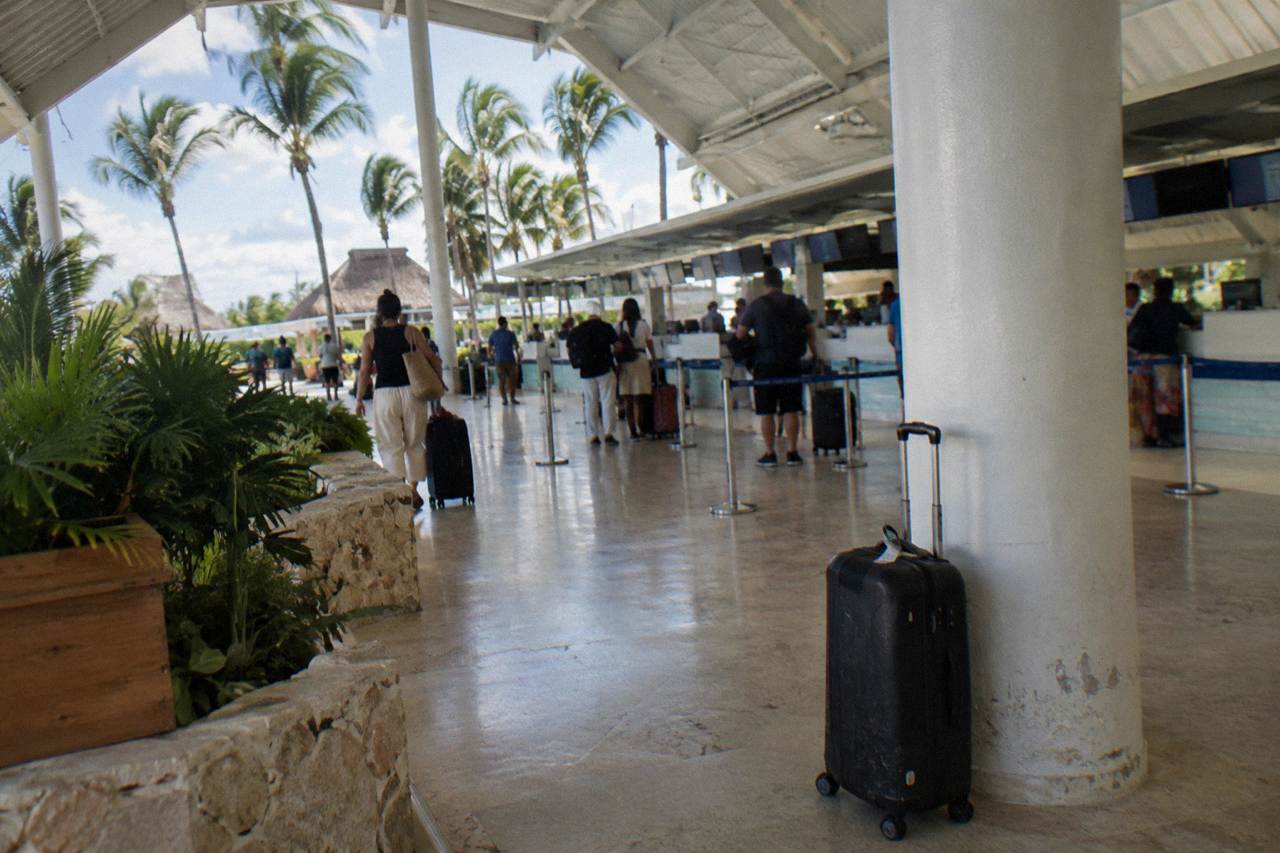
No, there is no separate $20 payment collected from travelers at Punta Cana airport on departure. The mandatory exit form, the E-Ticket, is free, and the $10 tourist card fee is included in most airfares rather than paid at a booth. Travelers who budget $20 per person for an exit charge are budgeting for something that no longer exists as a cash transaction.
The $20 question is one of the most persistent money myths in Dominican Republic travel, and it survives because it contains a grain of truth. The country did once collect arrival and departure charges separately, and older guidebooks still describe travelers queuing to pay a fee in cash. Those charges were folded into airline ticket prices years ago. What remains today is a free online form and, for most visitors, nothing to pay at the airport on the way out at all.
What does still cost money on a departure day is everything around the flight: the ride to the terminal, a tip for the driver, maybe a last-morning excursion if you have a late flight. A full-day Saona trip such as the Saona Island catamaran with buffet lunch runs 8 hours from $71 per person, rated 4.4 across 4,780 reviews, with hotel pickup, lunch and drinks listed, and free cancellation offered. That is a far better use of $71 per person than holding it for a phantom exit fee.
The confusion usually surfaces in the last days of a trip, when a traveler reads an old forum thread and starts setting aside cash. Resort staff get asked about it, taxi drivers get asked about it, and the answer is the same every time: there is no booth, no desk, no collector. This page walks through what the rules actually are, what the E-Ticket covers, what departure day at Punta Cana International looks like, and how the small real costs stack up against the tours you might book with the money you did not lose.
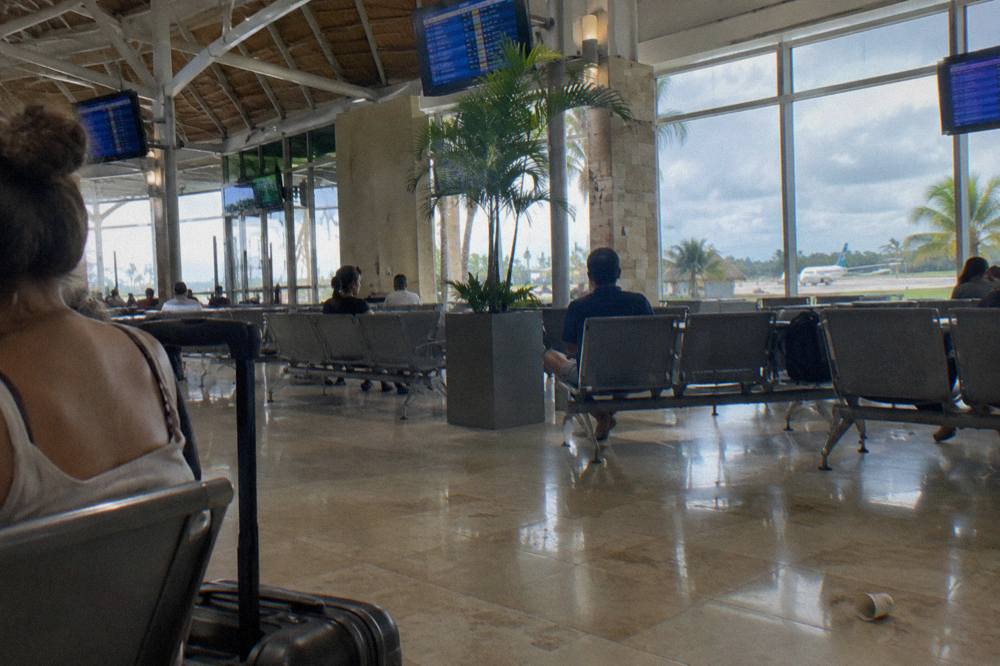
What The Departure Process Actually Costs
For almost every visitor flying out on a commercial ticket, the direct cost of departure is zero. The exit E-Ticket form is free, no tourist card booth exists at departure, and no $20 cash desk stands between you and the gate. Indirect costs, such as a private transfer to the airport from $35 to the Bavaro area, are the only payments most travelers actually make that day.
The fee that people half-remember worked like this: the Dominican Republic charged a tourist card on arrival, and airlines once collected departure taxes on top of ticket prices. Both mechanisms were absorbed into airfares, so the charge now travels invisibly inside the price you already paid. The current official process is digital: the E-Ticket, a free entry and exit form run by Dominican migration authorities, which you complete online before your flight. One form can cover a whole family of up to seven people, and you need separate QR codes for arrival and for departure.
That last detail is the one that trips people up. Arriving travelers fill in the arrival half, get their QR code scanned, and forget the form exists. Three weeks later they sit in the resort lobby the night before flying home, discover they need a departure QR code too, and assume there must be a fee attached. There is not. The form is free, and the tourist card charge, $10, is included in most airfares rather than collected separately. If a site or a desk ever asks you for $20 to "process your exit form," that is not a government charge.
| Item | What Travelers Pay | Where It Is Paid |
|---|---|---|
| Exit E-Ticket form | Free, $0 | Online, before your flight |
| Tourist card fee | $10, included in most airfares | Inside your airline ticket price |
| Cash exit fee at the airport | Not charged | Nowhere |
| Private transfer to PUJ, Bavaro area | From about $35 per vehicle, one way | Booked with the transfer operator |
| Tip for the driver | Discretionary | Cash, at drop-off |
The table above is the honest budget for departure day. Notice what is absent: any line for a government exit charge, because there is none to pay. Everything on the list is either a service you chose or a courtesy you control. The transfer price is a per-vehicle figure for up to six passengers with taxes included, so a group of four splitting it pays less per head than the mythical fee would have cost each of them.
It is worth being precise about the tourist card, because that is where the $20 number gets its fuel. The card was a real thing, charged to arriving visitors, and its price was $10. Airlines folded it into fares, so a traveler who inspects their ticket breakdown may see it itemized there. Seeing it itemized is exactly what convinces some people that a second, larger charge waits on the way out. It does not. The departure direction has no equivalent card, no equivalent fee and no equivalent booth.
How The E-Ticket Form Works At Departure
The E-Ticket is a single official form that covers both entry and exit, completed free at the migration authority's website, with one QR code issued per direction of travel and one form allowed per family of up to seven. At departure, the exit QR code is what airport staff scan, and travelers who never completed it can finish it on a phone, though it's easier done before departure day.
The practical sequence is simple. Some days before flying home, you go to the official site, choose the departure option, and enter passport, flight and accommodation details for everyone traveling. The system returns a QR code, which you save as a screenshot or a printout. Airlines and airport staff in Punta Cana ask for it during departure formalities. Families can submit one household form rather than one per person, which matters when you are shepherding children and luggage at 5 a.m.
Two mistakes show up repeatedly. The first is filling in only the arrival form in week one and assuming the same QR works on the way out; it does not, and the form itself says so. The second is paying a third-party site to "file" the E-Ticket for you. The official form is free, and the only official source is the migration authority's own page at eticket.migracion.gob.do. Any fee charged beyond that is a service markup, not a government charge. If you booked through a travel agent, some will complete the form for you as a courtesy, which is fine, but ask them to send you the QR code rather than leaving it in their inbox.
A few practical habits make the form painless. Complete the departure section the same evening you complete the arrival section, so the details are fresh and the accommodation address is still at hand. Save both QR codes offline: a screenshot in your phone's photo roll and a printed copy in your passport wallet. Airport wifi can be crowded on peak departure days, and a paper copy never loses signal. If your flight details change, return to the site, update the form and generate a fresh code, because an old code carrying an old flight number can slow you down at check-in.

What Happens At The Airport When You Fly Out
Departure day at Punta Cana International runs like most Caribbean airport exits: terminal by airline, check-in with your exit QR code, immigration control, security, then duty free and gates. Arrival immigration usually takes 15 to 40 minutes depending on flight volume, and departure security lines are typically shorter. Nothing in that sequence involves paying a fee.
Punta Cana's airport operates two main passenger terminals plus a private aviation terminal. Terminal A handles many Canadian and European charter carriers; Terminal B serves most United States carriers, including American, Delta, United and JetBlue. Which terminal you use depends on your airline, and pre-booked transfer drivers know the difference. Drivers meet passengers inside arrivals with a name sign on the way in, and on the way out they drop you at the correct terminal's departures curb. Everything else covered here is indexed on Punta Cana Travel Tours.
Inside, the flow is conventional. You check in with your airline, presenting passports and the exit QR code. Immigration officers scan the code and stamp you out. Security screening follows, then you are airside with the duty free, coffee shops and cigar counters. The whole exit side of the airport is built around the QR code, not around a cash desk. Travelers who arrive with the form done move through in minutes; travelers without it are usually waved to the side to complete it on a phone, which works but eats time when the check-in line is long.
A late flight out is a common pattern here, and it creates a genuinely pleasant problem: what to do with a checkout-to-departure gap of six or eight hours. A Santo Domingo city tour is a 10-hour day out, better saved for a full free day like the day before you fly from $95 per person, rated 4.8 across 5,427 reviews, with hotel pickup, meal and drinks listed and free cancellation offered. The colonial zone is about two and a half hours from Punta Cana by road, so the timing suits a full final day. For logistics around getting to and from the terminal itself, the site's Punta Cana airport transfers guide breaks down the options and costs.
Timing your arrival at the airport deserves one sentence of planning. Most airlines open check-in three hours before long-haul departures, and transfer operators book departure runs with that window in mind. Arriving earlier buys calm but not much else, since check-in desks and security lanes open on the airline's schedule, not yours. Ask your transfer operator for a pickup that lands you at the curb about three hours out, and use the waiting time airside rather than curbside.
How Departure Costs Compare With Tour Prices
The money travelers set aside for a phantom $20 exit fee is real money, roughly four-fifths of the cheapest buggy tour or a third of a party boat ticket. A clearer way to think about departure day is that zero goes to the government, perhaps $40 goes to a transfer and tip, and every remaining dollar is free for tours, meals or duty free.
Putting the mythical fee next to real excursion prices shows how small it always was, and how much better the money behaves when it buys something. The cheapest buggy and ATV rides on the site start from $24 per person. The Saona catamaran day starts from $71 per person. A Scape Park full-day admission with the Blue Hole runs from $129 per person. Against numbers like those, a $20 per person myth on a family of four is $80, which is one adult Saona ticket plus a good lunch.
| Way To Spend $20 Per Person | Approximate Cost | What It Buys |
|---|---|---|
| Mythical exit fee | $0 (does not exist) | Nothing |
| Buggy or ATV tour, cheapest listing | From $24.65 per person | 4 hours, cave swim and Macao Beach |
| Saona catamaran day trip | From $71 per person | 8 hours, lunch, drinks, pickup |
| Scape Park full day with Blue Hole | From $129 per person | 7 hours, zip lines, cenote, food extra |
| Full-day Santo Domingo city tour | From $95 per person | 10 hours, colonial zone, lunch and drinks |
The pattern holds across the whole excursion range. Adventure combos such as the Monkeyland, ziplines and buggies bundle list from $209 per group for a party of up to four, which is a per-group price, not per person. A small-group Saona luxury catamaran runs from $169 per person, rated 4.9 across 625 reviews. The point is not that any single tour is the right choice; it is that departure day has no mandatory charge competing with them, so the end-of-trip budget is genuinely flexible. For a fuller breakdown of excursion pricing across every category, the Punta Cana excursion prices guide lays out the ranges.
It also changes how you plan the last day. Many travelers treat the final 24 hours of a trip as dead time, hoarding cash for imagined charges and staying at the resort pool out of caution. Once you know the exit costs nothing at the desk, that day reopens. A morning at a cenote, an afternoon of zip lines, a horseback ride along the beach at Uvero Alto: all of it fits before an evening flight, and the operators listed on this site all offer free cancellation, so even a schedule wobble rarely strands the money.
Where The $20 Story Comes From
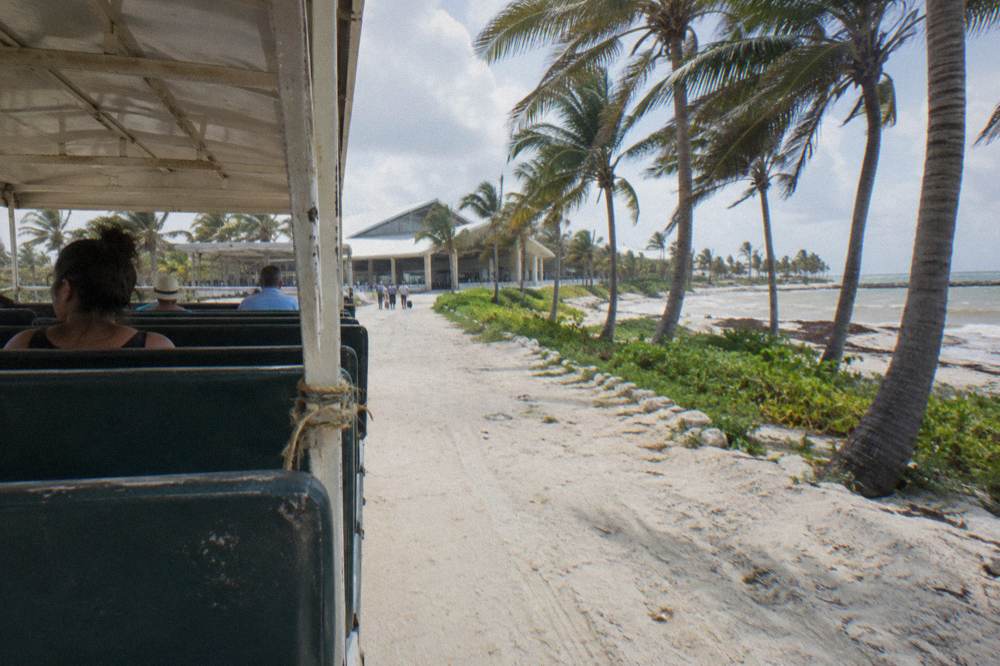
The $20 figure is a blend of two retired charges: the $10 tourist card fee, which most airfares already include as part of the ticket price. Old forum posts, reprint guidebooks and word of mouth keep the number alive, and some third-party form-filing sites price their markup near $20, which reinforces the belief that the government charges it.
Forum archaeology explains most of it. Old threads describe paying a departure charge at Dominican airports in cash, and those threads still rank in search results because the question never stops being asked. The rules changed, the search results did not. Travelers who read a dated answer, see a modern form-filing service charging a convenience fee, and then hear a fellow guest at the swim-up bar mention "the exit fee," assemble the $20 myth from three unrelated pieces.
The second source is the third-party E-Ticket industry. The official form is free, but private sites offer to complete it for you for a fee, and some structure their pricing per traveler. A family that pays one of those services $20 for a form that costs nothing naturally concludes that the government takes $20 to let people leave. It does not. The distinction matters because the fix is cheap: use the official site yourself, keep the QR code, and the entire category of expense disappears.
There is a version of this myth that does carry a kernel of caution. Scams and unofficial "helpers" exist at busy Caribbean airports, and a confident stranger offering to "process your exit fee" for cash is best declined. The way to protect yourself is to know that no such fee exists, to hold your own QR code, and to keep small bills for the people who actually earn tips. On the wider question of street-level hassle and how to handle it, the site's what to stay away from in Punta Cana piece covers the common scenarios. The United States State Department rates the Dominican Republic at Level 2, exercise increased caution, with tourist areas generally safer, so ordinary airport vigilance is enough.
A final-day plan that uses the money well is not complicated. Check out, leave bags with the hotel, spend the gap on water or a short excursion, and roll to the airport with the exit QR code saved offline. The site's what to bring on a Punta Cana excursion guide doubles as a packing check for that last afternoon, and it is worth a read before any booking, phantom fees notwithstanding.
Common Questions About Leaving The Dominican Republic
Do You Have To Pay $20 To Leave Dominican?
No. There is no $20 exit fee collected at the airport. The exit E-Ticket form is free, and the old tourist card fee is included in most airfares. Nothing stands between you and the gate except the usual check-in, immigration and security lines.
What Is The E-Ticket And Is It Really Free?
Yes, it is free. The E-Ticket is the Dominican Republic's official digital entry and exit form, completed on the migration authority's website. You receive one QR code for arrival and a separate one for departure, and one form can cover a family of up to seven people.
Do I Need To Fill In A Separate Form For Departure If I Already Did One On Arrival?
Yes. The arrival QR code does not work for departure. Go back to the official site before your flight home, complete the departure section, and save the new QR code as a screenshot or printout to show at check-in and immigration.
Is The $10 Tourist Card Paid At The Airport?
Not for most travelers. The tourist card fee is included in most airfares, so it was already paid when the ticket was bought. If you are unsure whether your fare includes it, ask your airline before travel rather than budgeting cash for a booth that does not exist.
What Will I Actually Spend Money On At Departure?
Your transfer, a driver tip, and anything you buy airside. Private one-way transfers to the airport start at about $29 to Cap Cana and $35 to Bavaro per vehicle, and a driver tip of a few dollars is customary. Duty free is optional.
Should I Pay A Website To File My Exit Form For Me?
There is no need. The official form is free, and paid services only add a markup for typing the same details. Complete it yourself at the migration authority's site, save the QR code, and keep the money for your last day.