Punta Cana Sargassum: Beaches, Boats And What To Expect
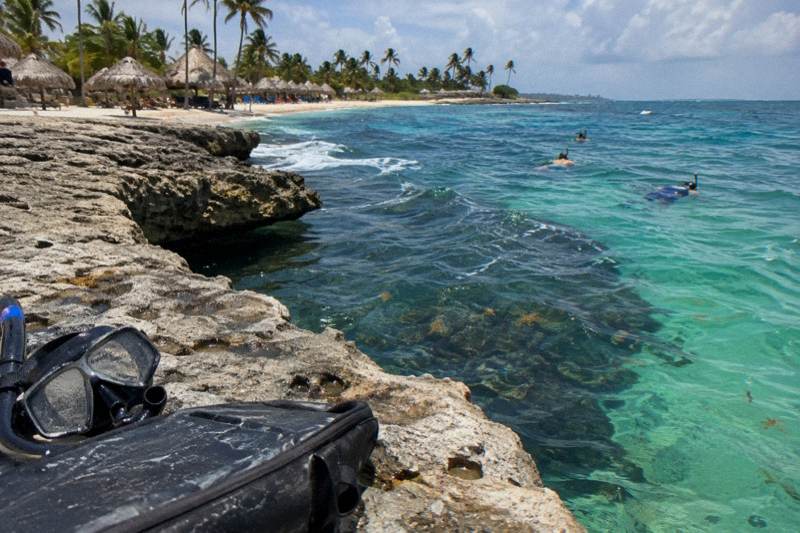
Sargassum is the brown seaweed that drifts onto Caribbean beaches in seasonal pulses, and it shapes which Punta Cana tours feel worth the money. Here is how the pattern works, what it does to Saona boats and snorkeling stops, and what to book instead when the wind pushes weed ashore.
Short answer
Sargassum typically reaches Punta Cana in pulses from roughly March through August, with the heaviest landings in late spring and early summer and cleaner conditions from late fall through winter. East-facing beaches like Macao and Uvero Alto get more weed than the sheltered south coast spots near Bayahibe. Boat tours to Saona and Catalina usually keep running, since the islands and offshore sandbars often sit beyond the weed line.
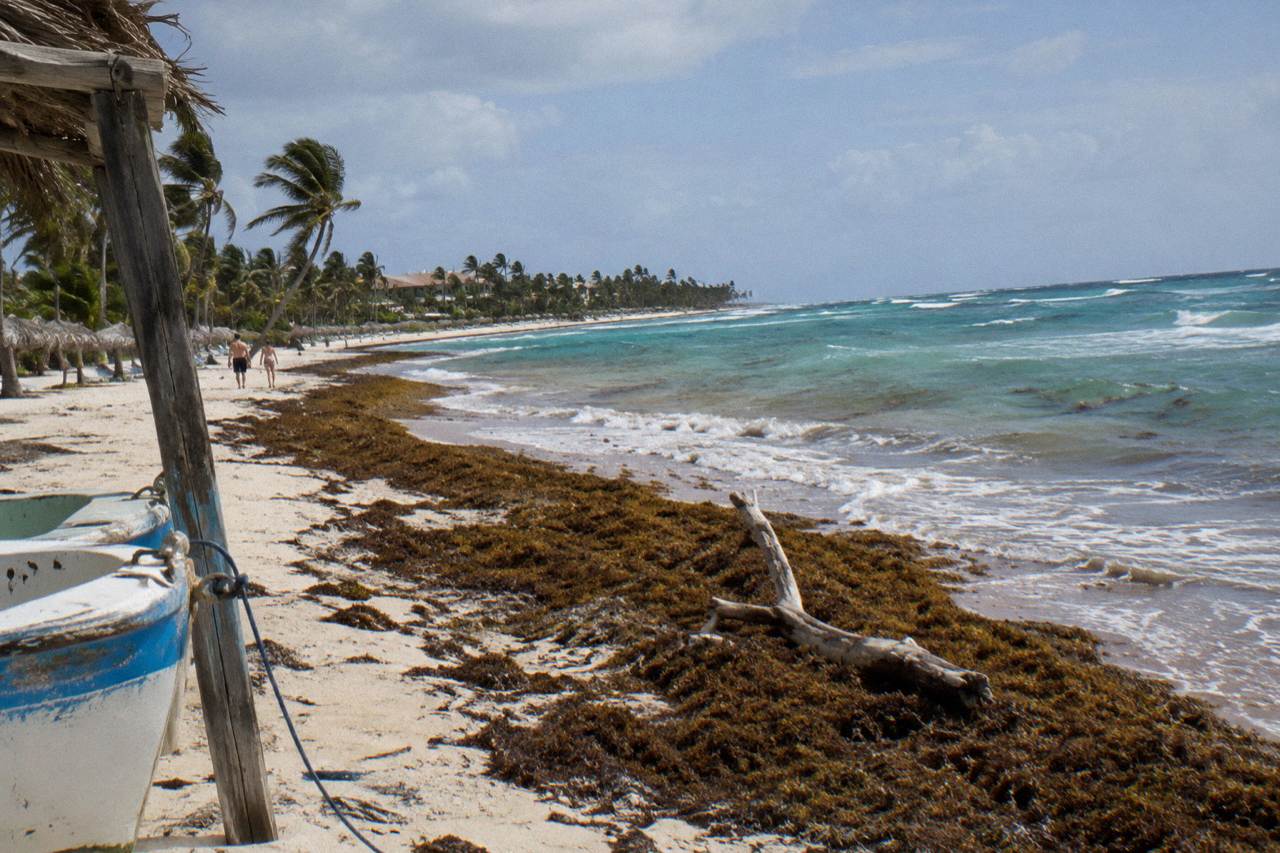
Sargassum is a floating brown algae that rides ocean currents in mats the size of city blocks, and some of it washes onto Punta Cana's beaches every year. The seaweed itself is harmless to touch, but a heavy landing turns a white-sand shoreline brown and murky at the waterline, and that changes which excursions deliver the day you pictured. The pattern is seasonal, patchy and famously unfair: one bay can be clear while the next, a ten minute drive away, is carpeted.
This guide walks through the rhythm of the seaweed year, which beaches and boat trips it touches, and how travelers adjust. The short version is encouraging. Punta Cana's tour industry has lived with sargassum for well over a decade, the headline excursions keep running through the affected months, and the offshore destinations that draw most visitors, Saona Island, Catalina and the shallow sandbars around them, frequently sit in clearer water than the hotel beaches themselves. A reader planning a trip in peak weed season just needs to know which bets are safe and which to hedge. If you want a sense of what the coming season might hold, our assessment of how bad the seaweed could get in Punta Cana picks up right where this overview leaves off.
What Is Sargassum And Why Does It Reach Punta Cana?
Sargassum is a brown algae that floats free on the open Atlantic, held up by small gas-filled bladders, and it reaches the Dominican Republic when prevailing currents and wind carry West African and equatorial Atlantic mats westward into the Caribbean. It is not pollution and not a local problem, and no beach town causes it.
The seaweed originates in a vast growth region between West Africa and Brazil, an area researchers have watched expand dramatically over the past decade and a half. Ocean currents push mats into the Caribbean through the island passages, and once inside, wind direction decides where they land. Punta Cana sits on the eastern tip of the island, fully exposed to the Atlantic, which is exactly why it receives landings that the sheltered south coast often escapes.
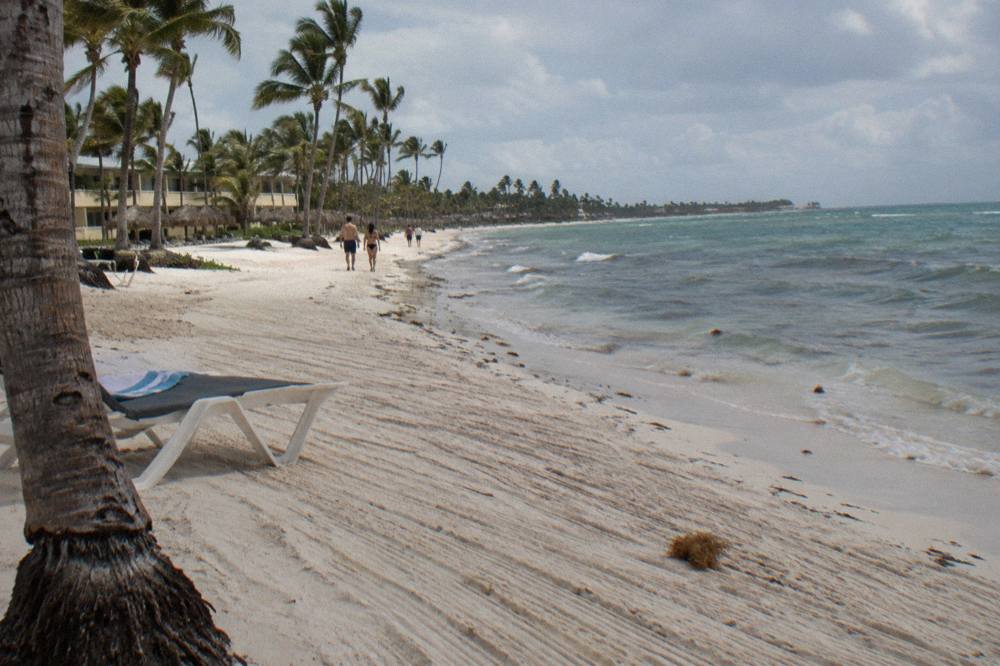
A landing can build over several days or arrive overnight. Resorts and municipal crews rake the most tourist-heavy stretches each morning, which keeps swimming workable in front of major hotels even in the middle of the season, but nobody can rake an entire coastline. That is why a seaweed day is a patchwork rather than a regional shutdown, and why the practical answer is almost always to move along the coast or go offshore rather than write off the beach.
There is a second, quieter effect worth naming. As sargassum mats decay in shallow water they can tint the water tan and reduce visibility for anything that depends on seeing the bottom, which matters for snorkeling more than for sailing. We come back to that in the snorkeling section, because the fix is destination choice, not cancellation.
When Does Seaweed Season Actually Hit Punta Cana?
The typical sargassum window runs from late winter through late summer, with landings building from around February or March, peaking between April and July, and tapering through September and October. From November through January the east coast is usually at its cleanest, though pulses vary year to year and no month carries a guarantee either way.
The seasonal arc is consistent even when the intensity is not. Late October 2026 is a good illustration: monitoring services were reporting low sargassum across the Punta Cana area, with beach condition scores in the 67 to 76 out of 100 range and low risk outlooks for the week ahead, which is the pattern that normally holds from fall into winter. The same sources show how quickly the picture turns in spring, when satellite observation starts tracking large mats entering the Caribbean and forecasts shift to moderate or high risk for exposed shores.

If your dates are flexible within a year, the calendar alone does most of the work. Travelers who book between November and February rarely think about seaweed at all. Travelers locked into June dates should not cancel either, because the offshore trips this guide features, including the popular catamaran run to Saona Island with buffet lunch (from $71 per person, rated 4.4 across 4,780 reviews, hotel pickup listed), operate through the season and target water that is frequently clearer than the shoreline the boats leave behind.
For readers who want the deeper background on the year-ahead picture, the blog post will sargassum be bad in 2026 unpacks the forecast season in more detail.
| Month range | Typical sargassum pattern | What it means for planning |
|---|---|---|
| November to January | Usually the cleanest stretch, low risk on most forecasts | Book any beach or boat day with confidence |
| February to March | First pulses arrive, patchy landings | Offshore trips unaffected in most weeks |
| April to July | Peak landings on exposed east-facing shores | Favor Saona, Catalina and inland parks |
| August to October | Tapering, with storm swell and weed both possible | Sea state matters as much as seaweed |
Which Punta Cana Beaches Get The Most Seaweed?
Exposure to the open Atlantic is the deciding factor. Uvero Alto and Macao, the northeast-facing beaches, take the heaviest and most frequent landings, while Bavaro's raked hotel stretches stay swimmable more often, and the sheltered south coast around Bayahibe and Dominicus sits far enough around the corner to escape most of it.
Think of the coastline as a curve. The Dominican Republic's east coast faces the incoming Atlantic directly, and Punta Cana's resort zone sits on it. As the shore bends south toward La Romana and Bayahibe, the angle changes, and the same wind that pushes weed onto Macao Beach carries it past the south coast bays. This is why Saona and Catalina day trips, which depart from the Bayahibe and Dominicus pier area inside Parque Nacional Cotubanama, so often run in clearer water than the beaches the guests were picked up from, about 60 to 90 minutes away by road.
Within Punta Cana itself, the resort beaches behave differently from the wild ones. Bavaro and Cap Cana's hotel zones are mechanically raked most mornings in season, which keeps a swimming lane open in front of the major properties. Macao, beloved for its raw beauty and its role in buggy and ATV itineraries, is unraked, so a spring landing there sits until the sea takes it back. The buggy tours guide covers how those rides handle beach stops when the weed is in.
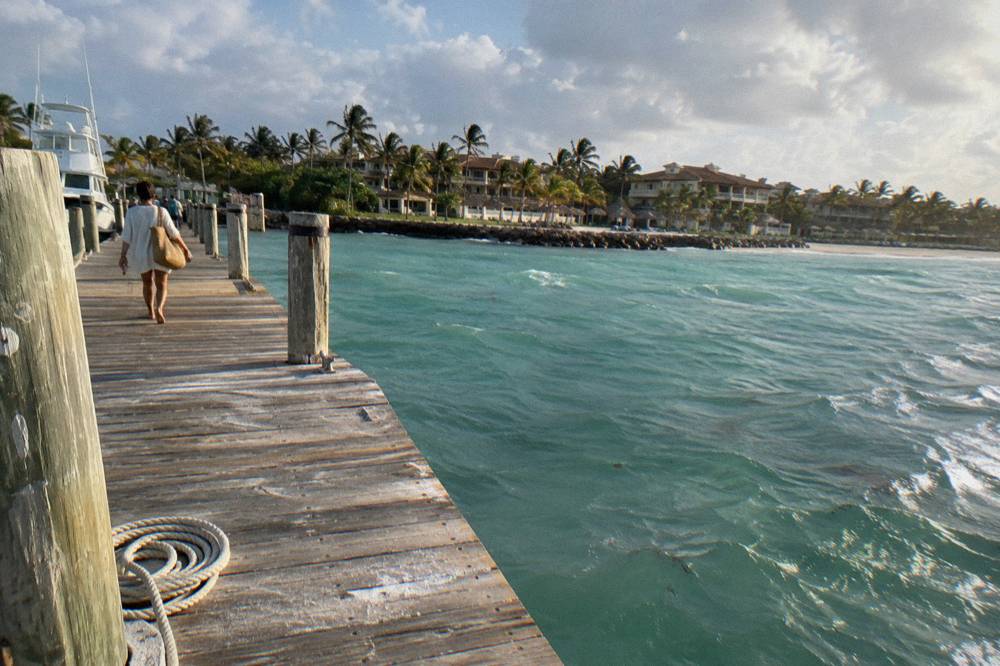
The rule of thumb for a seaweed day is simple: head south or head offshore. A traveler standing on a brown beach in Uvero Alto is often a ninety minute drive from a clear one, and the boat tours make that move for you.
| Beach or area | Exposure | Typical seaweed behavior |
|---|---|---|
| Uvero Alto | Open Atlantic, northeast facing | Heaviest and most frequent landings |
| Macao Beach | Open Atlantic, unraked | Weed accumulates until storms clear it |
| Bavaro hotel zone | Atlantic, raked daily in season | Swimming lanes kept clear most mornings |
| Cap Cana and Juanillo | Conditions vary, check ahead | Sargassum shifts day to day, check the current forecast |
| Bayahibe and Dominicus | South coast, sheltered angle | Usually clear when east coast is affected |
Does Sargassum Affect Saona Island And Catamaran Tours?
Saona and Catalina trips keep running through seaweed season, because the islands sit on the sheltered south coast side of Parque Nacional Cotubanama and the shallow offshore sandbars often lie beyond the nearshore weed line. Heavy landings can occasionally muddy a beach stop, and sea state rather than seaweed is what actually cancels boats.
The geography does the work here. Boats leave the Bayahibe and Dominicus pier area and cross to Saona in roughly 20 to 60 minutes by speedboat or one to two hours by catamaran, depending on the operator and conditions. Along the way most itineraries stop at the Piscina Natural, a waist-deep sandbar offshore where the water is filtered by distance from shore, and that stop is usually the clearest swimming of the whole day even when hotel beaches are brown.
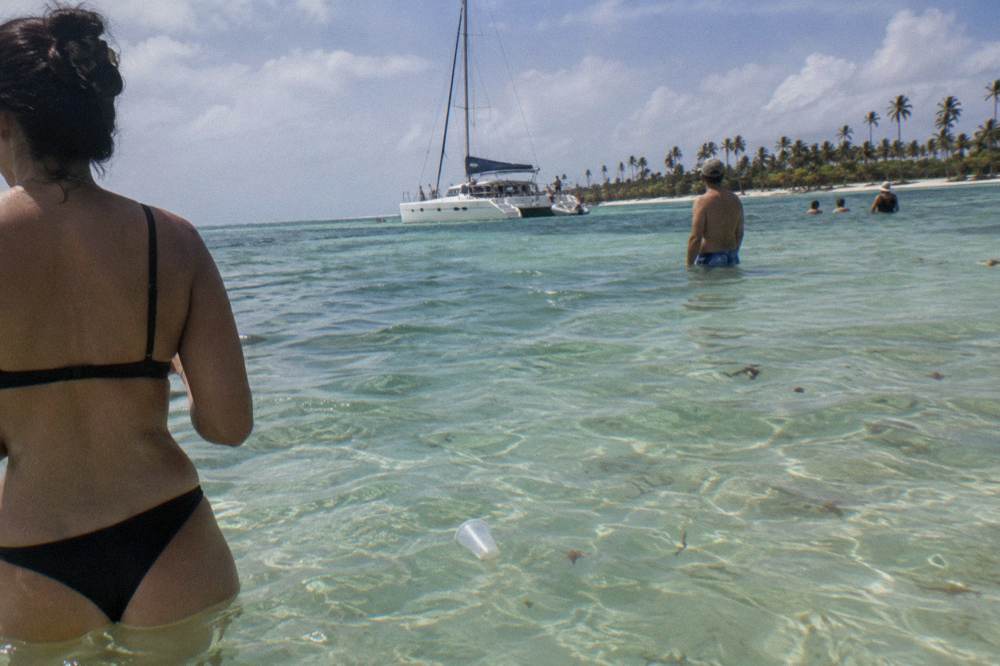
The flagship option, the catamaran boat to Saona Island with buffet lunch, runs 8 hours from $71 per person, is rated 4.4 across 4,780 reviews, and lists hotel pickup, meal and drinks all included, with free cancellation. For travelers who want more distance from a crowd, the small group Saona Island full day tour caps the day at 12 travellers, from $165 per person, rated 4.9 across 1,572 reviews, and there is also a luxury catamaran version limited to 30 guests, from $169 per person, rated 4.9 across 625 reviews. Group size, not seaweed, is the real difference between these products, as the Saona Island tour guide explains in full.
One honest caveat belongs here rather than buried later. Saona's main beach, like any beach, can receive its own weed line in peak weeks, and operators then shift the day toward the sandbar and the calmer coves. Weather and sea conditions, which operators monitor constantly, cause far more rescheduling than seaweed itself, and a reputable operator will tell you at booking what the week has looked like.
Is Snorkeling Still Worth It During Seaweed Season?
Snorkeling from the shore suffers most in seaweed season, because decaying mats tint the shallows and cut visibility. Offshore snorkeling by boat usually holds up, since reefs and sandbars sit beyond the weed line, and the small group cruises that target them note clear water, though trips depend on weather and sea conditions.
The distinction is between where you enter the water and where you end up. Snorkeling straight off a Bavaro beach in a heavy landing week means tan water and disappointed masks. Boarding a catamaran that motors out to a reef or a natural pool reverses the equation, because the weed concentrates near shore where waves break and drifts offshore in looser, passable rafts rather than solid mats.
Two products illustrate the offshore bet. The small group snorkeling cruise with open bar and light snacks runs 3 hours 30 minutes from $89 per person, rated 4.9 across 1,657 reviews, capped at 27 travellers, and the small-group cruising and snorkeling catamaran tour, from $99 per person, rated 4.9 across 2,659 reviews, limits the boat to 16. Both list hotel pickup, drinks and free cancellation. For the full landscape of underwater options, including how visibility varies across the coast, see Punta Cana snorkeling tours.
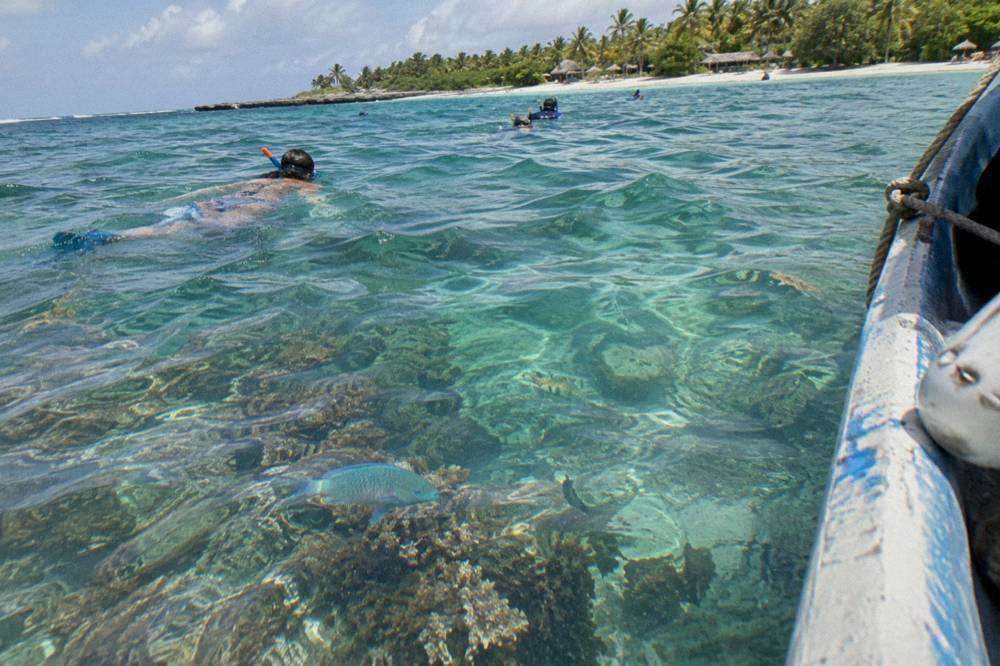
A word on expectations rather than guarantees. Visibility at any single reef depends on that week's wind, swell and weed, and operators report conditions honestly because a bad snorkel stop generates bad reviews. Ask the operator directly before booking what the water has been like, and favor trips with multiple stops, since a cruise with a reef and a sandbar has a backup if one is murky. The hoyo azul cenote guide covers one striking alternative where clarity is a feature of the geology rather than the season.
What Can You Do Instead On A Heavy Seaweed Day?
The strongest seaweed-day alternatives are inland and on the water away from the exposed shore: Scape Park's cenote and zip lines, buggy and ATV circuits through the countryside and cave pools, and the Monkeyland safari, all of which run regardless of beach conditions and all of which list hotel pickup and free cancellation.
Punta Cana's excursion scene is deep enough that a brown coastline barely dents the itinerary. Scape Park in Cap Cana bundles the Hoyo Azul cenote, a striking blue sinkhole reached by a guided nature walk, with zip lines, caves and beaches inside one gated park, from $129 per person, rated 4.3 across 1,356 reviews. A second entry option focused on the cenote, zip lines and caves starts from $149 per person, rated 4.4 across 280 reviews. The park's own rules note that zip line activities carry weight minimums and maximums and are not recommended for pregnant guests, so check the restrictions page before booking for a mixed group.
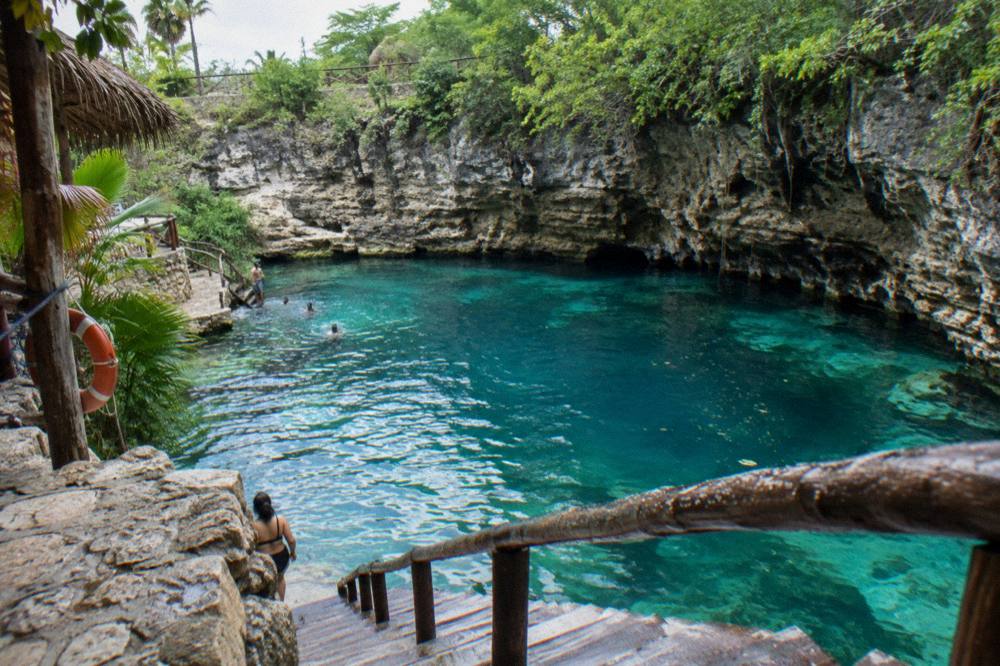
The countryside options are equally immune to seaweed. The buggy or ATV tour with Macao Beach, cave and tastings runs 4 hours from $24.65 per person, rated 4.9 across 2,232 reviews, and the ATV and buggy adventure to the water cave and Macao Beach starts from $32 per person, rated 4.8 across 2,629 reviews, capped at 150 travellers. Even when Macao's sand carries weed, the ride, the cave swim in a freshwater pool and the chocolate and coffee stops are the substance of the day. Monkeyland and the plantation safari, 6 hours from $95 per person and rated 4.8 across 4,879 reviews, adds a family-friendly wildlife dimension with squirrel monkeys, meal and drinks listed.
| Seaweed-day alternative | Duration | From (per person) | Rating and reviews | Why it beats the weed |
|---|---|---|---|---|
| Scape Park with Blue Hole | 7 hours | $129 | 4.3 across 1,356 reviews | Cenote clarity is geological, not seasonal |
| Buggy or ATV with tastings | 4 hours | $24.65 | 4.9 across 2,232 reviews | Countryside and cave pool, not the sea |
| Monkeyland and plantation safari | 6 hours | $95 | 4.8 across 4,879 reviews | Fully inland, meal and drinks listed |
| Santo Domingo city tour | 10 hours | $95 | 4.8 across 5,427 reviews | Colonial history, zero dependence on water |
For a wider sweep, the best Punta Cana excursions roundup ranks the headline days out, and families will find the seaweed-proof picks flagged in Punta Cana excursions for families.
East Coast Or South Coast: Where Is The Water Clearer?
The south coast, meaning Bayahibe, Dominicus and the waters around Saona and Catalina, is typically clearer during sargassum season because its angle shelters it from the Atlantic mats that hammer the east coast. Punta Cana's east-facing shores win on convenience and resorts, but in peak weed months the south coast wins on water color.
This is a directional pattern, not a law. South coast bays can still catch weed when wind swings, and east coast beaches run crystal clear for entire weeks in November or February. But when forecasts show high risk for Punta Cana, the Bayahibe side is usually a step cleaner, which is one reason the Saona and Catalina boats, already the region's most booked sea days, become even more valuable in the affected months. Catalina trips in particular are positioned as the quieter alternative to Saona, from $69 per person, rated 4.2 across 75 reviews, a modest review pool but a genuine product distinction, as the Catalina Island day trip guide details.
| Factor | Punta Cana east coast | South coast (Bayahibe side) |
|---|---|---|
| Sargassum exposure | Direct Atlantic, heaviest landings | Sheltered angle, usually lighter |
| Typical peak-season water | Patchy, best on raked hotel strips | More consistently clear |
| Trip style | Resort base, everything nearby | Boat departures to Saona and Catalina |
| Best booked as | Your base with a seaweed backup plan | Your day trip when weed is in |
Staying in one place does not lock you in. Every Saona, Catalina and snorkeling tour on this site includes hotel pickup from the Punta Cana area, so the south coast's cleaner water is a bus ride away rather than a relocation.
How Do You Check Sargassum Conditions Before Booking?
The reliable approach is satellite-based forecasts plus live beach reports: sargassum monitoring services publish weekly risk outlooks by shoreline, and condition trackers show day-by-day beach scores, so read both a few days before your trip and again the day before each excursion. Conditions shift fast enough that an older snapshot misleads.
Two tools do most of the work. The sargassum forecast for Punta Cana maps predicted landings across Bavaro, Cap Cana and Uvero Alto with a rolling seven day outlook, and live beach condition reports translate the same data into per-beach scores and sargassum risk. Read the forecast for the week and the beach report for the day, since a forecast can say low risk while a local wind event pushed one bay brown overnight.
Operators watch the same data, and their incentives align with yours, because a murky beach stop produces complaints. Ask at the desk or by message what the water has looked like for the past few days, and if the answer is vague, treat that as information too. For sea state beyond seaweed, including the tropical weather that actually cancels boats, the Punta Cana hurricane season guide and the month-by-month breakdown in Punta Cana weather by month give the wider frame, and the official Scape Park rules page is the source to confirm any activity restriction before you book an inland park day.
Can You Cancel Or Reschedule A Tour Because Of Seaweed?
Most major tours on this site list free cancellation, which is the protection that matters, and operators routinely reschedule sea days when sea state forces it. Seaweed alone rarely triggers a cancellation, since boats run around it, so plan to rebook toward the south coast or an inland park rather than expect a refund for brown water.
Read the cancellation terms on the booking page before paying, not after. The pattern across the excursions featured here is free cancellation up to a stated cutoff, typically the day before, which gives you room to watch the forecast and pivot. If a landing week hits, the move most travelers make is shifting the day rather than cancelling it: swap a beach-based morning for Scape Park, or move a snorkel stop to a boat that heads south. Travelers deciding at the margin may find the cost-benefit framing in are Punta Cana excursions worth the cost useful, and the practical packing angle is covered in what to bring on a Punta Cana excursion. One more pivot worth knowing: when sargassum shuts down shore snorkeling, the open water offshore usually stays clear, so a fishing day becomes a solid substitute. The guide to Punta Cana deep sea charters and shared boats compares what each option costs and what your money actually covers.
Punta Cana Travel Tours covers the alternatives: when seaweed sits on one stretch of sand, zipline courses, catamarans and Santo Domingo day trips still run. Pick the coast side and the activity to match the day's conditions.
Common Questions About Punta Cana Sargassum
What Months Is Sargassum Worst In Punta Cana?
Landings typically build from February or March, peak between April and July, and taper through September and October. November through January is usually the cleanest stretch, though pulses vary year to year.
Does Sargassum Reach Saona Island?
Saona sits on the sheltered south coast of Parque Nacional Cotubanama, which usually escapes the heaviest east coast landings, and tours run year-round. In peak weeks operators may weight the day toward the offshore natural pool and calmer coves.
Is It Safe To Swim Near Sargassum?
The algae itself is harmless to touch. Decaying mats near the waterline can smell and reduce visibility, so most swimmers prefer raked hotel stretches or offshore sandbars where the water stays clear.
Do Boat Tours Get Cancelled Because Of Seaweed?
Rarely. Operators route around weed, and the trips that get rescheduled are usually moved for sea state or weather rather than seaweed. Check the booking page for the cancellation terms before you pay.
Which Punta Cana Beach Is Best During Seaweed Season?
The raked hotel stretches of Bavaro and the partially sheltered bays of Cap Cana hold up best on the east coast. For the clearest water in peak weeks, the Bayahibe and Dominicus area on the south coast is typically the better bet.
How Do I Check Sargassum Conditions Before My Trip?
Read a satellite-based sargassum forecast for the week ahead and a live beach condition report the day before each excursion. Conditions change quickly, so trust the freshest snapshot over an older one.