Will Sargassum Be Bad In 2026?
An honest look at how sargassum behaved across Punta Cana in 2026, which beaches fared better, and how to plan sea tours around the seaweed season.
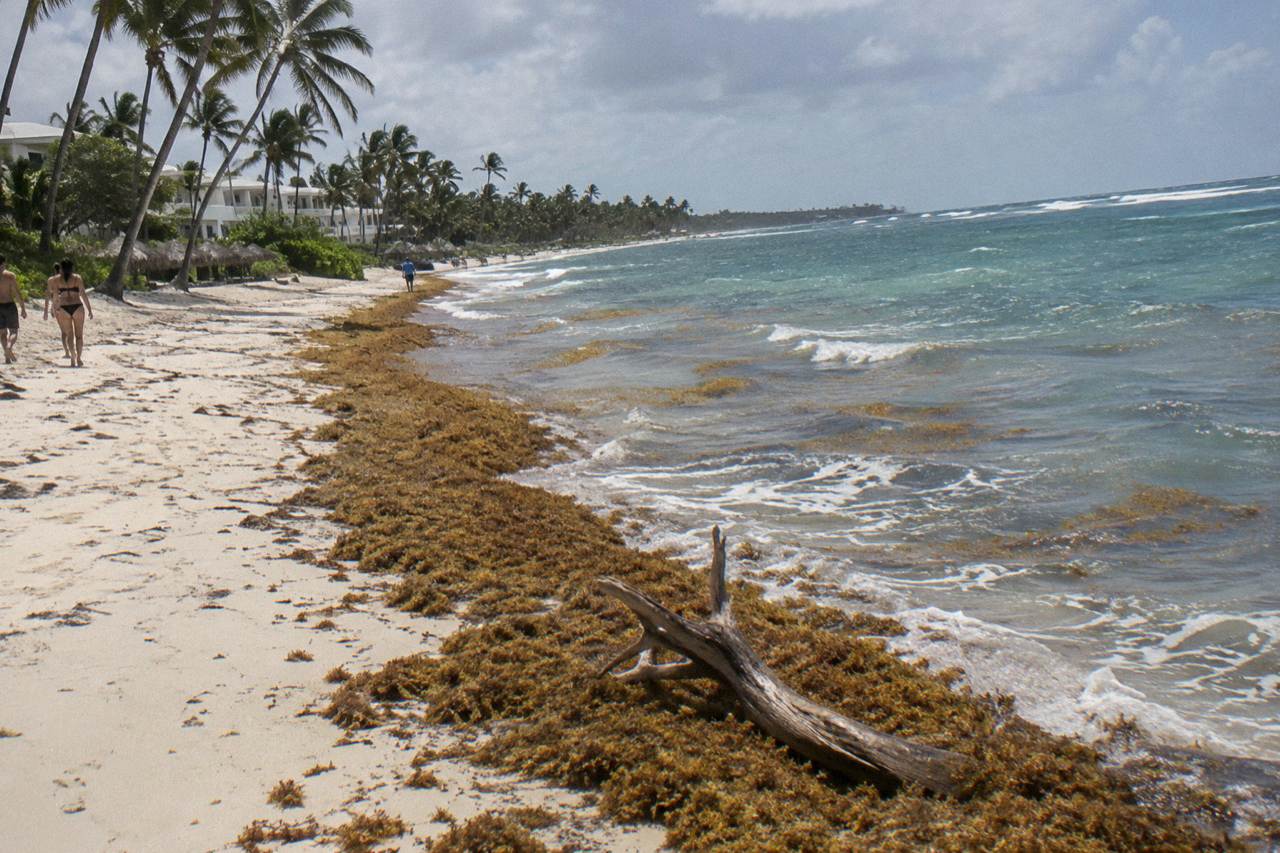
The short version of the 2026 story: the seaweed came, as it does every year, but it came lighter than the worst years on record. Satellite tracking and beach condition reports through late October 2026 showed clean water and low sargassum risk across the main Punta Cana and Bávaro stretches, with beach scores in the 67 to 76 range on the monitoring indices. That does not mean the stuff vanished, and it does not mean a visitor arriving in the peak seaweed months of spring found perfect sand every morning. It means the gap between the alarmist headline version of sargassum and the lived version on the sand widened again in 2026.
This matters most for one kind of traveler: the person deciding whether to spend real money on the water. A catamaran day to Saona Island, a snorkeling cruise, a beach club afternoon, these are the bookings sargassum can ruin if you time them badly. The good news is that timing them well is not hard, because the seaweed follows a pattern you can plan around, and the boat trips that make up the best of Punta Cana's sea inventory have geometry on their side.
No, sargassum still reached Punta Cana beaches in 2026, but Saona and Catalina boats ran on normal schedules, and by late October 2026 the major beaches including Bávaro, Los Corales, Cap Cana and Uvero Alto were reporting clean conditions and low sargassum risk, with satellite data and beach scores of 67 to 76 out of 100 on the weekly outlooks. The Atlantic sargassum belt still existed, as it has every year since the blooms became a recurring feature of the region, and the peak months of March through July still brought landings somewhere on the coast. But the forecasts that track the belt week by week showed a lighter load reaching the Dominican Republic's eastern shore than in the record years.
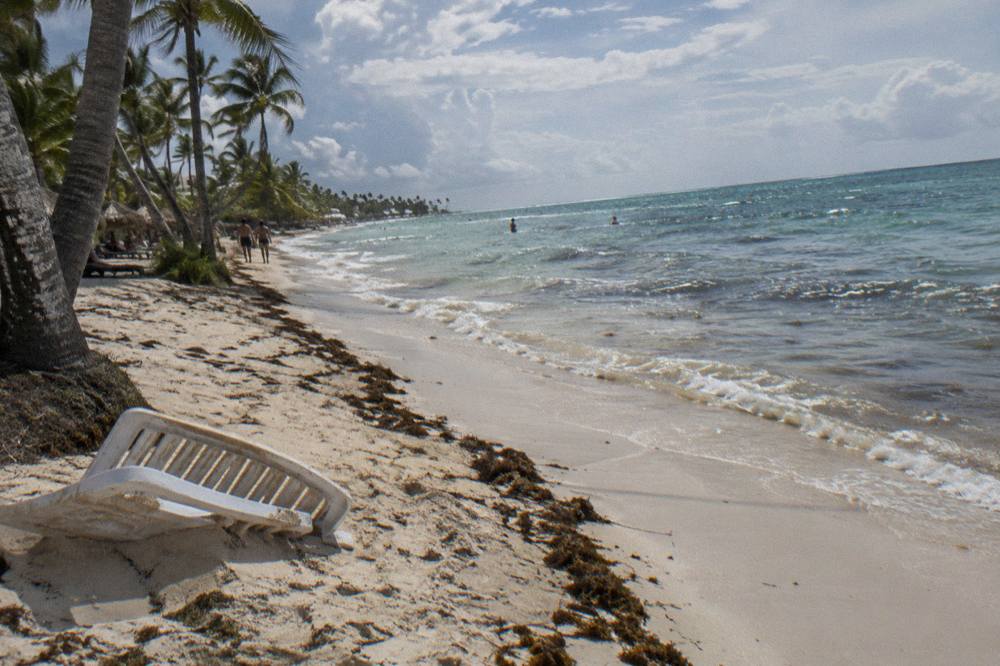
The honest framing is seasonal, not binary. Sargassum in the Dominican Republic is a spring phenomenon that fades through autumn. A traveler who arrived in April 2026 might have found mornings where the beach crew was raking, while a traveler arriving in November will almost certainly find clear water. Both experienced "sargassum in 2026", and both would answer the question differently. That is why the useful version of the question is not "is it bad" but "when is it bad, and where, and what do I book around it".
Two monitoring sources carry most of the weight for anyone planning around seaweed. The weekly forecast at Sargassum Punta Cana's forecast page rates individual beaches and posts a seven day outlook, and the Check Beach Conditions tracker aggregates current reports for Bávaro, Cap Cana and Uvero Alto. Both showed clean or low-risk status across the area in the final week of October 2026. Neither is a guarantee for your Tuesday, but a five minute check the day before a boat booking beats any article, including this one.
For the booking decision, the practical translation is this: sea tours in the November to February window face a genuinely low seaweed risk, spring bookings carry a real but manageable one, and late summer through autumn sits in between, trending cleaner as the year closes. The three most seaweed-resilient ways to spend a Punta Cana day on the water are collected below.
When Does Sargassum Season Actually Hit Punta Cana?
Sargassum season in Punta Cana runs roughly April through September or October, with the heaviest landings usually from May to August, and the coast is typically at its cleanest from November through February, which is exactly when the peak tourist season and the clean water season overlap. The seaweed drifts in from the Great Atlantic Sargassum Belt, a floating band that loops from West Africa toward the Gulf of Mexico, and the eastern Dominican coast catches its edge when currents and trade winds push patches shoreward. By August the volume usually drops, and by October the weekly outlooks show mostly clean beaches.
The reason the timing feels chaotic at beach level is that landings arrive in pulses. A beach can be clear for ten days, take a landing over one windy night, and be raked clean or naturally dispersed within two or three days. That is why the honest answer to any "will the beach be clean on my date" question is a shrug plus a link to the weekly forecast, not a promise. What holds steady is the seasonal shape: light in winter, building through spring, peaking late spring to early summer, fading through autumn.
There is also a storm-season interaction worth understanding, because it cuts against intuition. The Atlantic hurricane season runs June through November, and the same tropical systems that churn the sea also disrupt and disperse sargassum mats offshore. In 2026 the hurricane season ran below average, with ten named storms and one hurricane through late October, and no tropical cyclones active or expected in the final week of October. A quiet storm season does not automatically mean more seaweed on the beach, but an active one can bring day-to-day swings in what washes ashore.
| Period | Typical sargassum risk in Punta Cana | What it means for bookings |
|---|---|---|
| November to February | Low, beaches typically clean | Book sea tours freely, this is the safest window |
| March to April | Building, first significant landings | Book with free cancellation and watch the weekly outlook |
| May to June | Peak, landings in pulses | Prefer boat trips over fixed beach days, favor offshore destinations |
| July to August | Easing, intermittent patches | Good value season, check the forecast 2 to 3 days ahead |
| September to October | Low to moderate, trending clean | Late October 2026 reports showed clean beaches area-wide |
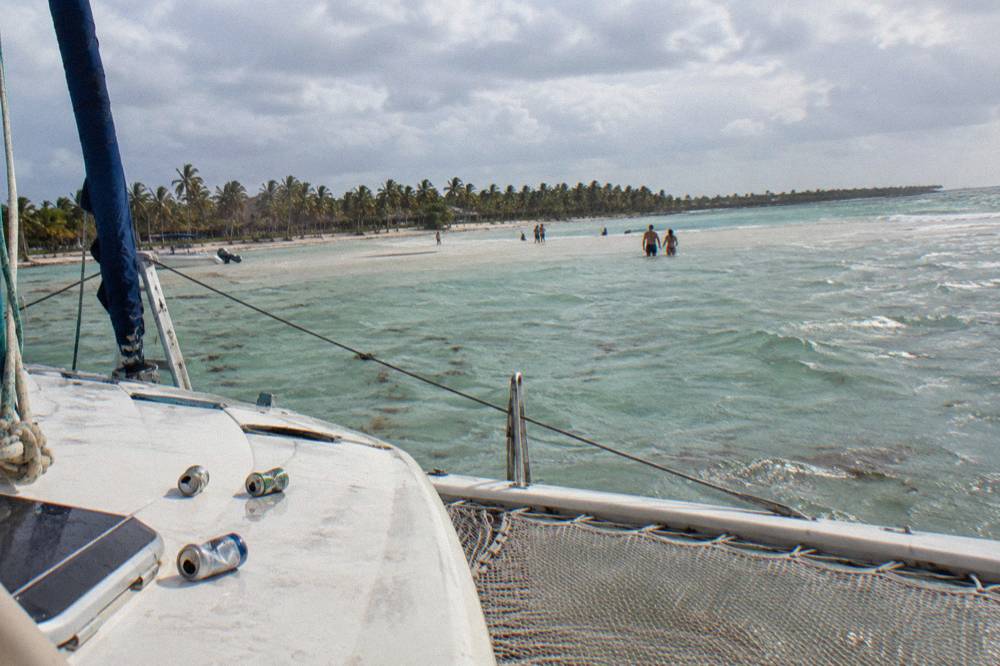
A pattern worth exploiting: seaweed risk is mostly a beach problem, not a boat problem. The tours that leave the sand behind, like the catamaran crossings to Saona Island, spend their day on water and islands that sit away from the mainland's windward accumulation zone. The listing for the Saona Island catamaran with buffet lunch describes an 8-hour day from $71 per person with hotel pickup, lunch and drinks included, rated 4.4 across 4,780 reviews, and its free-cancellation flag means a bad forecast does not have to trap you. That combination, offshore destination plus flexible cancellation, is the single best sargassum hedge in the whole tour inventory.
Which Beaches And Which Tours Fare Better?
In general, the southern and sheltered stretches fare better than the exposed eastern points: Cap Cana's Juanillo and Playa Blanca, and the beaches inside protected coves, tend to collect less windward drift than open Bávaro and Uvero Alto, while Saona and Catalina lie just offshore, reached by boat, and current reports show low sargassum along the Bávaro to Cap Cana coast. Wind direction matters as much as geography, and the beach-by-beach forecast exists precisely because two beaches ten minutes apart can hold opposite conditions on the same morning.
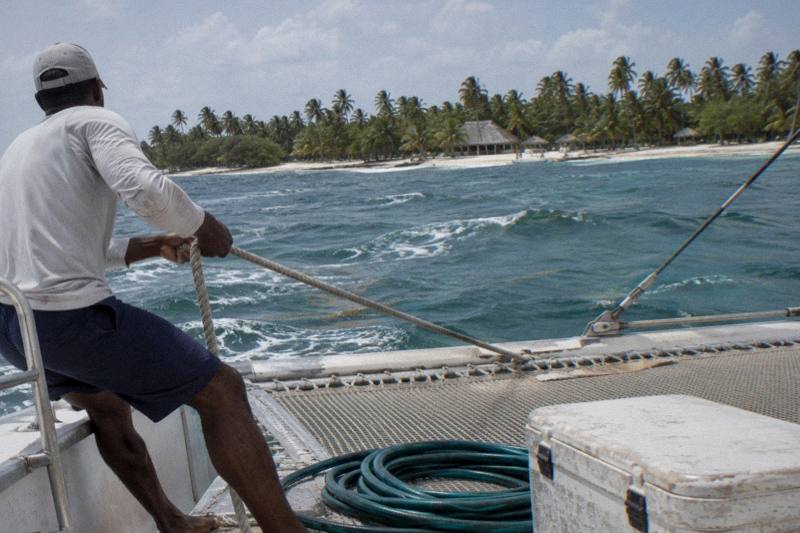
The island day trips are the standout case. Saona Island sits in Parque Nacional Cotubanama, across the channel from Bayahibe, and boats reach it in roughly 20 to 60 minutes by speedboat or 1 to 2 hours by catamaran depending on the vessel and the sea. That distance from the mainland coast is the practical difference: when Bávaro is raking, Saona's palm-lined beach can be completely clean, and vice versa on the days when a landing arrives from the southeast. Cross-checking the mainland forecast with your operator the evening before is the standard move.
Snorkeling tours have a similar geometry advantage. The small-group cruising and snorkeling catamaran tour runs 3 hours 30 minutes from $99 per person, capped at 16 travelers, with drinks included and free cancellation listed, rated 4.9 across 2,659 reviews. Its reef and sandbar stops sit offshore, where floating sargassum thins out and the water clears, and a small-group cap means the crew can shift the stop to the cleaner side of the day. Through the shoulder months, flexibility rather than any fixed route is what keeps a snorkel day viable.
Should You Book A Sea Tour During Seaweed Season?
Yes, with two conditions: book tours that list free cancellation, and book the ones whose destinations sit offshore rather than on the mainland sand, because the seaweed risk that ruins a beach day rarely follows you out onto the water. Every Punta Cana tour covered here comes with free cancellation, which converts the seaweed forecast from a gamble into a plan you can revise. The standard play is to reserve early for the price and the spots, then check the weekly outlook two or three days out and rebook if a landing is forecast.
The pricing logic also favors shoulder-season booking. The listing prices hold steadier than the seaweed does, but the crowd pressure drops outside the November to February clean-water peak. A May booking of the Saona day trip from $82 per person, rated 4.3 across 3,350 reviews, costs less in stress than a spring beach-club day, because the tour's value sits in the crossing, the natural pool stop and the island lunch rather than in any one patch of sand. The natural pool, the waist-deep sandbar where the boats stop for starfish, is a highlight that sargassum rarely touches, since the starfish zone sits in shallow, circulating water.
The one honest caveat: nobody can promise sea state. Operators describe weather-dependent operations, and the crossing to Saona, usually 20 to 60 minutes by speedboat, gets bumpy when the wind is up regardless of seaweed. The rules inside the national park also hold year-round: visitors may not touch or remove the starfish, shells, coral or sand. A week of sargassum on the mainland does not change any of that, and neither does a clean week.
What If The Beach Is Bad But You Still Want Out?
The strongest answer on a rough beach day is to spend it inland, and Punta Cana's best inland day barely notices the sea at all: Scape Park in Cap Cana sells a full-day admission from $129 per person with hotel pickup, and its headline attraction, the Hoyo Azul cenote, is a freshwater sinkhole that sargassum cannot reach, so a seaweed morning costs that day nothing. It is the natural pivot when the forecast turns, and it fills a full day rather than a gap.
Scape Park is rated 4.3 across 1,356 reviews, with food and drinks listed among the paid extras. The park runs daily, and the official rules page at Scape Park's restrictions listing carries the weight and height limits for the zip lines and cave swims, so families can check fit before booking.
Beyond the park, the inland and adventure inventory holds up under any beach condition. Zipline courses in the interior run in light rain and ignore the sea entirely. Buggy and ATV rides to the water cave and Macao Beach do finish at the coast, but their value is the mud and the cave swim, and the adventure bundle that combines Monkeyland, ziplines and buggies runs from $209 per group for a party of up to 4, rated 4.9 across 13,875 reviews, the most reviewed product in the whole inventory. On a seaweed morning, that is a day that proceeds exactly as booked.
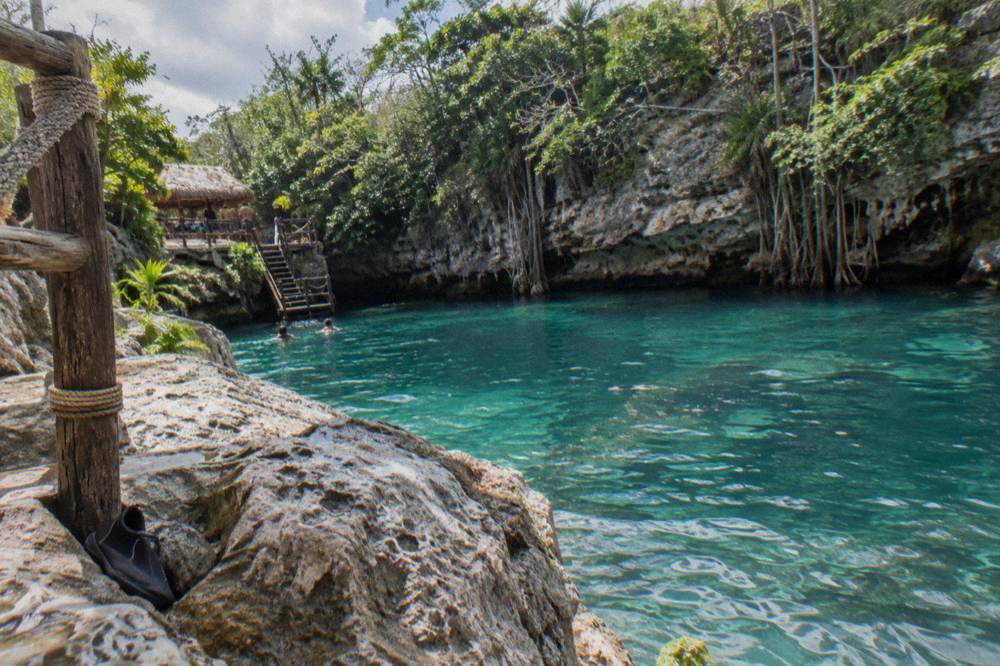
The mainland beaches themselves deserve a fair hearing too. Resorts rake daily in season, and the monitoring scores for late October 2026 put Bávaro and Cap Cana beaches in the 67 to 76 out of 100 range with low risk on the seven day outlook, which is good, not perfect, water. A seaweed landing is a visual disappointment more than a health event for most people, though anyone with sensitive skin or breathing conditions should give thick, decomposing deposits a wide berth, since hydrogen sulfide from rotting mats can irritate. Walk a few hundred meters along any beach and the patches thin out, because landings are never uniform.
How Do You Read A Sargassum Forecast Before Booking?
Read the seven day beach-by-beach outlook rather than the seasonal headline, because sargassum moves in pulses that arrive and clear within days, and a single beach score of 67 to 76 out of 100 with low risk on the weekly forecast tells you more about your Saturday than any article about the Atlantic belt. The forecast pages update continuously and break the coast into named stretches, so the check that matters is the one for your specific hotel zone and your specific tour departure point.
The routine takes five minutes. Check the outlook when you book, so you can pick a date inside a clean window. Check it again three days out, when the seven day forecast starts resolving into a real picture. Check it the evening before, and if your beach shows a landing, that is the moment free cancellation earns its keep: message the operator, move the date, or pivot to the inland day. For planning context beyond the week, the National Hurricane Center's Atlantic outlook, mirrored at the NHC tropical weather feed, tells you whether any system is stirring the sea in the coming days, which affects boat comfort as much as seaweed does.
One habit worth breaking: weighting the catastrophic photos too heavily. The images that circulate come overwhelmingly from the peak weeks of the worst years, often from other islands in the belt's path. The Dominican Republic's eastern coast sits at the edge of the system, and 2026 behaved like an edge year. Trust the weekly score over the archived horror shot.
What Should Your Booking Calendar Look Like?
Book sea tours for November through February if you want zero seaweed anxiety, book them for spring only with free cancellation and a forecast check three days out, and hold an inland backup in your pocket for the weeks when a landing lands on your dates. The overlap of the clean-water season with the high tourist season from December to February is not a coincidence, it is why those weeks fill first, and why prices and availability behave the way they do in shoulder months.
For a concrete pattern, take a week in Punta Cana in, say, early May. Put the Saona catamaran day early in the week, because it is the booking most resilient to mainland conditions, and keep the afternoon before it flexible. Hold the Scape Park day as the midweek pivot. Leave the resort beach days open-ended, movable to whichever morning the outlook shows clean. Travelers who plan this way lose nothing to sargassum, they just spend their seaweed-risk energy on a zipline instead of a sunlounger.
The broader planning picture, arrival logistics, tipping norms, the free official E-Ticket entry form, is covered in depth elsewhere on Punta Cana Travel Tours, including a dedicated seasonal planning page in the best time to visit Punta Cana guide. For seaweed specifically, the Punta Cana sargassum guide goes deeper on the monitoring tools, and the month-by-month breakdown in Punta Cana weather by month shows where the seaweed season sits against the rain and heat. Together those three pages turn this article's question into an actual calendar.
The final word on 2026, offered plainly: it was a moderate year, the coast ended it clean, and the seaweed never had the power to cancel a Punta Cana trip, only to rearrange one. The travelers who enjoyed their water days most were the ones who booked offshore, kept cancellation open, and read the forecast twice.
Common Questions About Sargassum In Punta Cana
Will Sargassum Be Bad In 2026?
By the standards of the past decade, no. The 2026 season was moderate, and by late October 2026 the major beaches including Bávaro, Los Corales, Cap Cana and Uvero Alto were reporting clean conditions and low sargassum risk, with beach scores of 67 to 76 out of 100. Peak landings, when they came, fell in the March to July window as usual.
Which Months Have The Least Sargassum In Punta Cana?
November through February are typically the cleanest months, overlapping with the December to February high season. The heaviest landings usually arrive between March and July, with April through June the peak. Conditions ease through late summer and are typically clean by October.
Does Sargassum Affect The Boat Tours To Saona Island?
Rarely. Saona sits across the channel in Parque Nacional Cotubanama, away from the mainland's windward accumulation, so island beaches can be clean while Bávaro is raking, and vice versa. The crossing and the natural pool sandbar stop sit in open or shallow circulating water that sargassum rarely spoils. Sea state, not seaweed, is the usual reason a departure changes.
Can I Cancel A Tour If The Sargassum Forecast Turns Bad?
Every tour covered in this article lists free cancellation, so check the operator's specific cutoff on the listing before booking. The standard play is to reserve early, read the weekly beach forecast three days out, and rebook or pivot to an inland day if a landing is forecast for your dates.
Where Can I Check Current Sargassum Conditions Before I Book?
Weekly beach-by-beach forecasts for Punta Cana are published on the Sargassum Punta Cana forecast page, which rates individual beaches and posts a seven day outlook, and on the Check Beach Conditions tracker for Bávaro, Cap Cana and Uvero Alto. Both showed clean, low-risk status across the area in late October 2026.
What Is A Good Backup Plan If The Beach Is Bad?
Scape Park in Cap Cana, from $129 per person for full-day admission with hotel pickup, is the strongest inland day: the Hoyo Azul cenote is freshwater and untouched by seaweed. Zipline courses and buggy or ATV rides to the water cave also run regardless of beach conditions, and the Monkeyland, ziplines and buggies adventure bundle runs from $209 per group for up to 4.