Samana Whale Watching From Punta Cana: Season, Drive And Tours
Every winter, humpback whales arrive in Samana Bay on the Dominican Republic's north coast, and Punta Cana travelers ask the same three questions: when, how far, and how much. Here is what the season, the drive, and the day actually look like, plus what to book when the whales have already headed north.
Short answer
The Samana humpback season runs January 15 to March 30. Whale watching day trips from Punta Cana typically cost $130 to $200 per adult, run 10 to 12 hours door to door, and involve a 3 to 3.5 hour drive each way with pickups starting around 5:30 to 6:30 a.m. Outside the season, the island day trips and city tours are the better use of a vacation day.
Every January, North Atlantic humpback whales finish their long migration from cold northern feeding grounds and settle into the warm, shallow, protected waters of Samana Bay to breed and give birth. The Dominican Republic is one of the few places in the Caribbean where this happens at scale and on a predictable schedule, which is why whale watching in Samana has been a fixture of Dominican tourism for decades. For travelers based in Punta Cana, the catch is geography: the whales are on the opposite coast, and reaching them means giving up a full day of an all-inclusive week to a bus, a boat, and an early alarm. The Ministry of Environment issued 46 environmental permits for the 2026 whale watching season, 43 of them for Samana-area operators, so the activity is regulated, capped, and inspected rather than a free-for-all of private skippers. If the thought of losing a full day to the highway gives you pause, our guide to whether Samana or Punta Cana suits your trip better compares the two coasts on beaches, whale season, and travel times.
This page walks through the season dates, the transfer, the shape of a typical day, and the honest cost math. One thing it will not do is sell you a whale tour: whale watching trips from Punta Cana are seasonal products sold by specialist operators, and the bookable day trips covered here, Saona, Catalina, Santo Domingo and Altos de Chavon, are the reliable ways to spend a day when the whales are not in town or the sea is rough. For the full spread of options, start with the best Punta Cana excursions overview.
When Is Whale Watching Season In Samana?
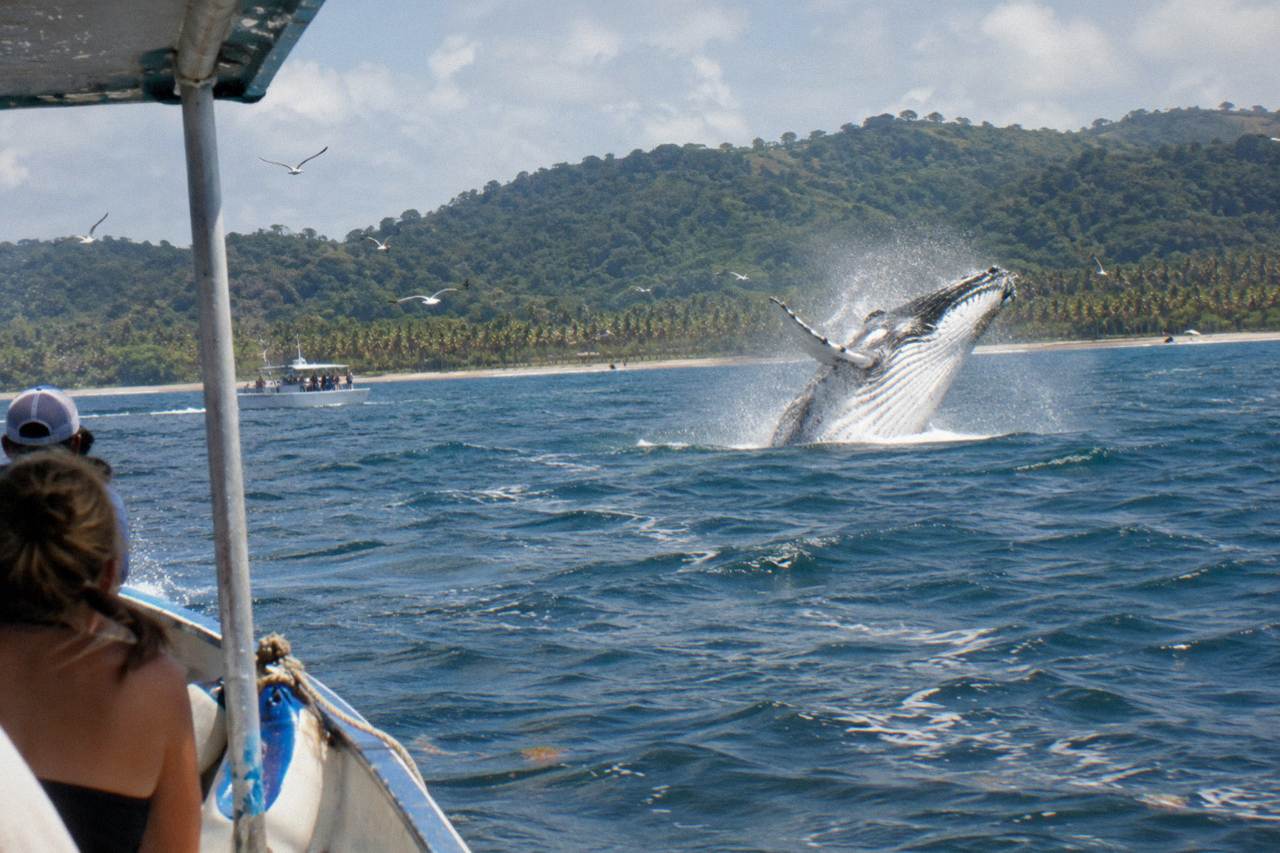
The official humpback season in Samana Bay runs from January 15 to March 30, roughly ten and a half weeks, and the Dominican Ministry of Environment sets those dates each year. Peak sightings cluster in February and early March, when mother whales with newborn calves are most likely to be resting in the bay before the return migration north.
Outside that window the whales are simply not there. They do not linger into April in numbers, and they do not arrive early in December. Operators sometimes run boat trips to Cayo Levantado and the Samana coast year round, but from late April through December those are scenery and beach trips, not whale trips, and any seller describing whales in, say, November is describing luck rather than a schedule.

The timing matters for trip planning more than most visitors expect. Peak season for whales overlaps peak season for everything else: January through March is the dry, cool, busy stretch of the Dominican winter, when hotel rates and tour demand are at their highest and the best time to visit Punta Cana question has a fairly settled answer. If whales are the main reason you are traveling, book the trip and the hotel together for February, and expect company on the observation boats.
How Long Is The Drive From Punta Cana To Samana?
Expect about 3 to 3.5 hours of driving each way between Punta Cana and Samana by road, on a route that crosses the Dominican Republic from the southeast coast to the Samana peninsula. Combined with pickups, breakfast stops and boarding, most whale watching day trips run 10 to 12 hours door to door, with hotel pickups starting around 5:30 to 6:30 a.m.
That transfer is the single biggest factor in whether the day is worth it. The drive itself is not unpleasant: it runs on decent highways through sugar cane country, over mountains near Nagua, and down onto the peninsula, and many operators use the outbound leg for a breakfast stop and the return for a late lunch or dinner stop. But it is a long sit, twice, on a day that also includes a couple of hours on a boat. Families with small children and anyone who struggles with motion or long bus rides should weigh that honestly before booking.
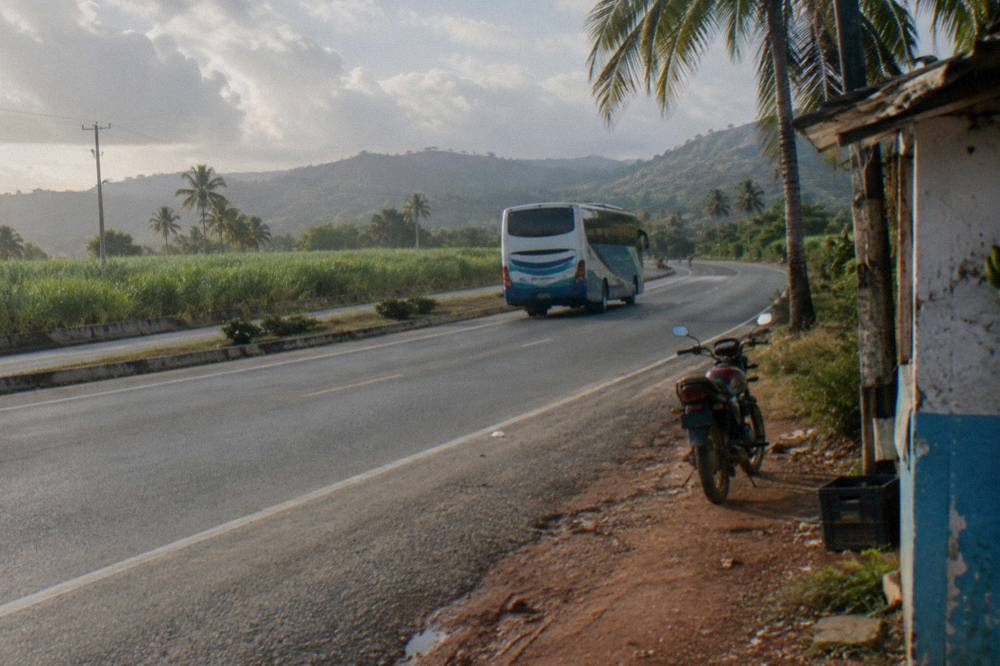
The toll highways make the drive faster than it was in earlier decades, and operators running scheduled tours have the timing down, but traffic, weather and the number of hotel pickup stops can stretch the day. A realistic shape of the day looks like this:
| Time | What is happening |
|---|---|
| 5:30 to 6:30 a.m. | Hotel pickup across Punta Cana and Bavaro |
| 7:00 to 10:00 a.m. | Highway drive northwest with a breakfast stop |
| 10:30 a.m. | Boarding at the Samana dock |
| 11:00 a.m. to 1:00 p.m. | Whale observation in the bay, weather permitting |
| 1:00 to 2:30 p.m. | Lunch, often at Cayo Levantado or a peninsula restaurant |
| 2:30 to 6:30 p.m. | Return drive, arriving back at hotels by evening |
Some operators fly travelers into Samana's small airport or use the Cativo port, and a few combine the whales with El Limon waterfall on horseback, which pushes the day even longer. Those variants cost more and sell out faster in peak weeks. Whatever the format, the schedule is the reason veterans book the whale day early in their week, never on the last day, so a weather cancellation can be retried.
How Much Do Whale Watching Day Trips Cost From Punta Cana?
Whale watching day trips from Punta Cana typically cost $130 to $200 per adult for a shared tour, with the price covering the round-trip transport, the boat, and lunch. Longer combinations that add El Limon waterfall or Cayo Levantado beach time run from about $110 to $180 per person and upward depending on inclusions, and private tours cost substantially more.
That price band is set by the transport more than the whales: you are paying for roughly seven hours of vehicle time plus a permitted boat. Compared with what the same money buys closer to base, the contrast is sharp. The Full-Day Santo Domingo City Tour, a 10-hour day in the other direction, starts from $95 per person, rated 4.8 across 5,427 reviews, with hotel pickup and free cancellation listed. The Punta Cana: Saona Island and Altos de Chavon Day Trip runs from $92 per person, rated 4.4 across 346 reviews, and pairs the island with the famous cliffside village. If the whale season is closed or the budget is tight, those two deliver more hours of experience per dollar.
| Day trip from Punta Cana | Typical cost | Duration | Notes |
|---|---|---|---|
| Samana whale watching (shared) | $130 to $200 per adult | 10 to 12 hours | Seasonal, January 15 to March 30 only |
| Samana El Limon waterfall tours, often with Cayo Levantado | from about $110 to $180 per person | 11 to 13 hours | Longest day; adds horseback ride to the falls |
| Full-Day Santo Domingo City Tour | from $95 per person | 10 hours | Rated 4.8 across 5,427 reviews, year round |
| Saona Island and Altos de Chavon Day Trip | from $92 per person | 1 day | Rated 4.4 across 346 reviews |
| Catamaran Boat to Saona Island with Buffet Lunch | from $71 per person | 8 hours | Rated 4.4 across 4,780 reviews |
The whale tours themselves are specialist bookings: prices move with fuel costs, permit fees and demand, and the operators who run them change their inclusions season to season, so treat the $130 to $200 band as a planning range and confirm the exact price, pickup window and cancellation terms on the operator's booking page before paying. Check whether lunch, park fees and the boat ticket are all included, because the cheaper end of the band sometimes excludes one of them. Tips are separate: guides and drivers on full-day tours in Punta Cana are usually tipped $10 to $20 per person for the day.
Can You See Whales From Punta Cana Without The Drive?
No, not reliably. Punta Cana sits on the Atlantic-facing southeast coast, and the humpbacks concentrate in Samana Bay and the Silver Bank on the north side of the island, three-plus hours away by road. Boat excursions from Punta Cana itself, catamarans, party boats, snorkeling cruises and Saona trips, do not encounter whales as part of their route.
There are the nearest thing on the water locally is a deep-sea fishing charter out of Punta Cana or Bávaro, since whale watching from this coast means the long haul to Samana, and humpbacks only pass through in season. But those are chance encounters on fishing charters, not scheduled watching, and no responsible operator sells them as a whale product. The two deep-sea fishing listings in the area, a private boat from $520 per group for up to 7 and a per-person trip from $145, are fishing days first; the Punta Cana fishing tours guide covers what they actually catch.
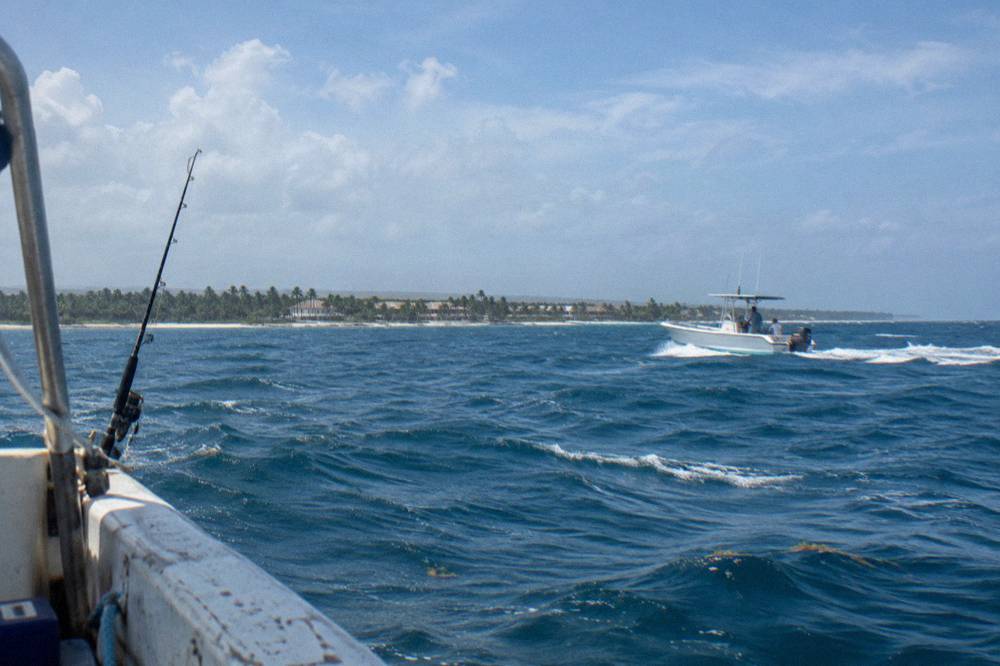
The practical takeaway is simple. If whales are a must for your trip, book the Samana day during the season and budget the full day for it. If whales are a nice-to-have, spend your boat days on the closer options and keep an eye out from the fishing boat. The whales concentrate in the protected bay each winter, which is why the Dominican government caps the operation with permits, but proximity is the whole game: the whales are where the protected bay is.
What Are The Rules On The Water In Samana Bay?
Whale watching in Samana Bay operates under Ministry of Environment regulations: permitted boats only, approach distances and time limits per encounter, and a set season from January 15 to March 30. The 46 permits issued for the 2026 season are the ceiling on how many boats can work the whales, and unpermitted skippers are not allowed to sell encounters.
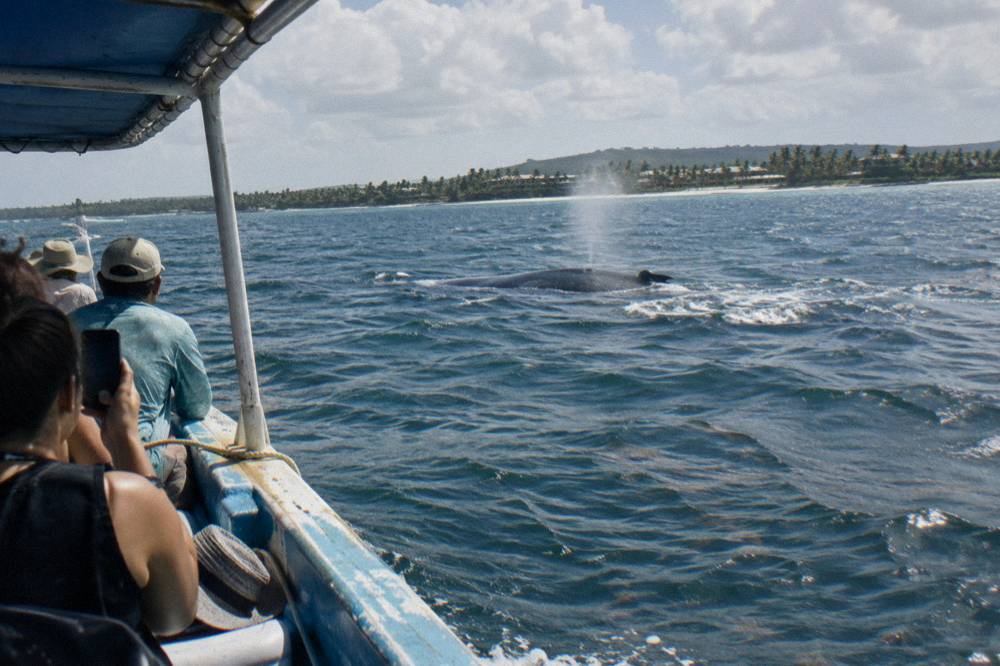
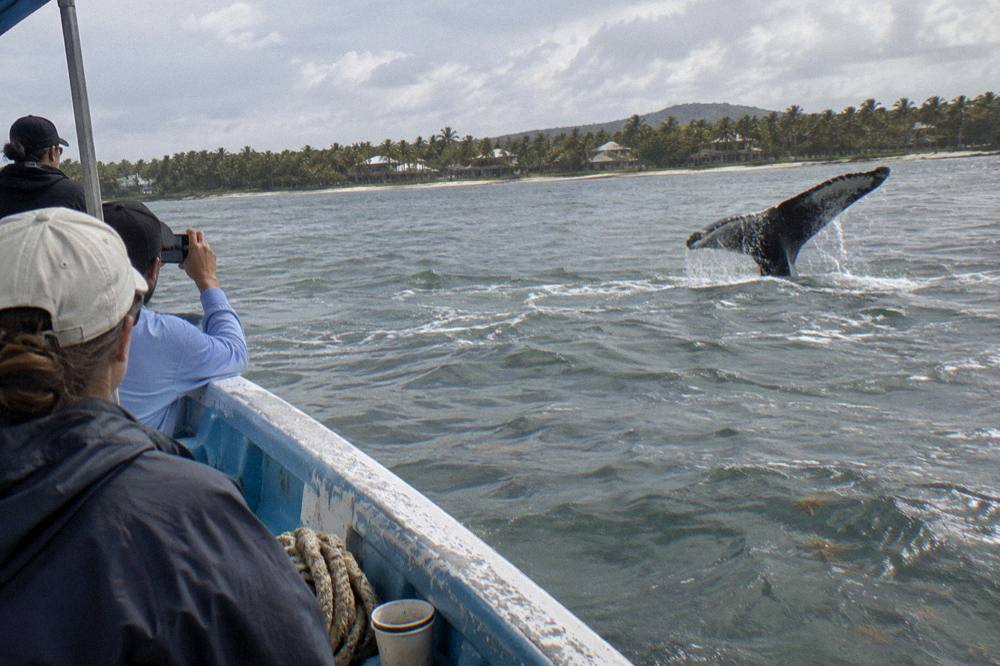
For a visitor, the rules translate into a few things worth expecting. You will watch from the boat, usually at a distance, rather than swimming with the animals. Boats take turns at good viewing positions rather than crowding a single whale. And the crew will follow the animals' behavior: if a mother and calf are resting, the encounter is short. Breaches and tail slaps happen on the whales' schedule, not the boat's, and guides who promise a breach are promising something nobody controls. What operators can and do report is that in February and early March the sighting rate is high, because the whales are present in the bay in numbers for those weeks.
Bring the practical kit, because a whale day is a bus day, a boat day and a beach-stop day stacked together:
| Item | Why it matters on a whale day |
|---|---|
| Seasickness tablets | Bay chop after a long bus ride catches even sturdy stomachs |
| Hat and sunscreen | Open boat, near-equatorial winter sun, two hours plus on the water |
| Windproof layer | January and February mornings on the bay run cooler than the beach |
| Cash in small bills | Tips for guide and driver, usually $10 to $20 per person for a full day, plus beach vendors at the lunch stop |
| Binoculars | Distant blows become watchable animals; crews carry their own for spotting |
| Camera with zoom | Encounters happen at a regulated distance, not at the rail |
What Should You Book Instead Outside Whale Season?
From April through mid January the whales are gone, and the strongest day trips from Punta Cana are the island boats and the colonial city: Saona and Catalina for beaches and snorkeling, Santo Domingo for history, and Altos de Chavon for the scenery closer to home. All of these run year round, carry hotel pickup and free cancellation, and cost less than the whale day.
The island category is the closest substitute for a big day on the water. The Small Group: Saona Island Full Day Tour runs from $165 per person, capped at 12 travellers, rated 4.9 across 1,572 reviews, and it buys quiet that the big boats cannot. At the other end, the Catamaran Boat to Saona Island with Buffet Lunch starts from $71 per person, rated 4.4 across 4,780 reviews, a standard-size day with meal and drinks listed as included. Between them sit dozens of variations, and the Saona Island tour from Punta Cana guide breaks down how to choose among them by group size and boat type.
The inland substitute is the capital. Santo Domingo's Zona Colonial is the oldest European settlement in the Americas, about three hours west of the resort corridor along the Autopista del Coral, and the full-day city tour covers the Alcazar, Las Damas Street and the Columbus Lighthouse in the listing. For a shorter scenic day, Altos de Chavon sits 75 to 90 minutes from Punta Cana above the Chavon river, a re-created Mediterranean-style village with a stone amphitheater that has drawn major international performers over the years. The Saona and Altos de Chavon combination trip covers both in one long day from $92 per person.
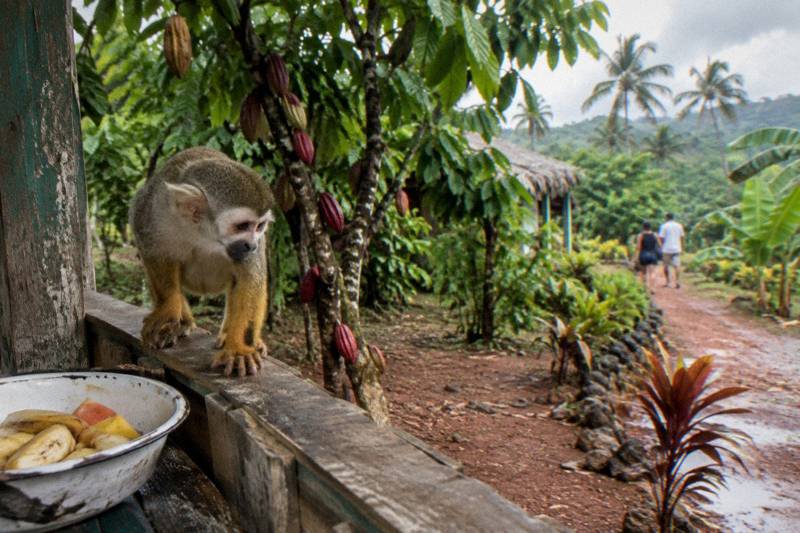
For a day that runs closer to home and suits mixed ages, the Monkeyland and Plantation Safari Tour from Punta Cana runs 6 hours from $95 per person, rated 4.8 across 4,879 reviews, with squirrel monkeys, a coffee and cacao plantation stop, and lunch listed. It is the easiest big-ticket day in the region for families, and unlike everything involving boats, it barely cares about the weather.
Is The Whale Day Trip Worth It From Punta Cana?
For most travelers with a full week, yes, once, in season. A humpback surfacing beside your boat is a genuine once-in-a-trip sight, and the regulated Samana operation is one of the more reliable whale experiences in the Caribbean. The honest cost is the day itself: 10 to 12 hours, two long drives, an early start, and a price at the top of the day-trip range.
The people who regret it are usually the people who booked it as a box-tick on a short stay, or on their last day with no retry margin, or with small children who hit their limit by noon. The people who love it booked February, sat up front on the bus, treated the drive as part of the experience, and accepted that the whales perform on their own terms. A good middle path for a two-excursion week is one water day and one inland day: whales in season, or Saona outside it, paired with Santo Domingo or Monkeyland so the week balances boat time with something solid underfoot.
Weather is the other honest variable. Winter is the dry season on this coast, and the Punta Cana weather by month breakdown shows February and March as the steadiest stretch of the year, which helps both the sea state in the bay and the highway drive. Even so, operators cancel or reschedule when the bay is rough, which is another reason to keep a spare day. Book with free-cancellation terms where offered, carry the operator's contact details, and have a backup plan, because the whale does not care about your flight home.
Whale watching fits into a bigger Punta Cana planning picture that includes entry formalities, the free official E-Ticket form every arriving visitor completes, and the seasonal rhythms of sargassum and storms. The seasonal detail on the whale operation itself is documented each year by Punta Cana Adventures, and the permit counts are reported by The Rio Times. As Punta Cana Travel Tours covers in its season and price guides, the winning move is matching the excursion to the month you are actually there.
Common Questions About Samana Whale Watching
When Is Whale Watching Season In Samana?
The official humpback season runs January 15 to March 30 each year, with dates set by the Dominican Ministry of Environment. February and early March are the strongest weeks, when mothers with calves are most consistently in the bay. Outside that window the whales have migrated north.
How Long Is The Drive From Punta Cana To Samana?
About 3 to 3.5 hours each way by road on the toll highways, crossing the country to the Samana peninsula. With hotel pickups starting around 5:30 to 6:30 a.m. and stops along the way, most whale day trips run 10 to 12 hours door to door.
How Much Do Whale Watching Tours From Punta Cana Cost?
Shared whale watching day trips typically cost $130 to $200 per adult, including transport, boat and lunch. Combination trips that add El Limon waterfall or Cayo Levantado beach time run from about $110 to $180 per person and up. Confirm exact prices and inclusions on the operator's booking page.
Can You See Whales From Punta Cana Itself?
Not reliably. The humpbacks concentrate in Samana Bay and the Silver Bank on the north coast, three-plus hours away. Catamaran, party boat and Saona excursions from Punta Cana do not encounter whales on their routes, and only occasional chance sightings of dolphins or pilot whales happen from deep-sea fishing boats.
Is Samana Whale Watching Worth The Long Day?
For most travelers on a week-long stay during the season, yes, once. A close humpback encounter is one of the Caribbean's more reliable whale experiences. Budget a full day, book early in your week so weather cancellations can be retried, and skip it with small children or on a short trip in favor of the closer island or city tours.