Which Is Nicer, Punta Cana Or La Romana?
A practical comparison of Punta Cana and La Romana as trip bases: beaches, Saona Island access, prices, day trips and who each one suits better.
Saona Island sits inside Parque Nacional Cotubanama, and both of the southeast's favorite resort towns, Punta Cana and La Romana, funnel their visitors toward the same white sand and the same starfish-filled sandbar. That shared backyard is exactly why the comparison comes up so often. The two towns are only about 55 to 80 minutes apart by road, yet they deliver noticeably different versions of a Dominican beach vacation, from resort scale to crowd levels to how early your Saona boat leaves in the morning.
Punta Cana is nicer for most first-time visitors because it has the wider resort choice, the bigger excursion menu and the shorter transfer from the airport, while La Romana is nicer for travelers who want a quieter base, faster access to Saona and Catalina, and cultural stops like Altos de Chavón within twenty minutes of the hotel. Neither is objectively better; the right pick depends on whether you want action or calm.
Punta Cana, meaning the cape and the Bávaro strip together, is the engine of the region. All-inclusive resorts line the coast from Cap Cana in the south to Uvero Alto in the north, and almost every tour on the island picks up from its hotel lobbies. If you want a catamaran, an ATV ride, a zipline course and a Santo Domingo day trip all inside one week, this is where the logistics work with the least friction.
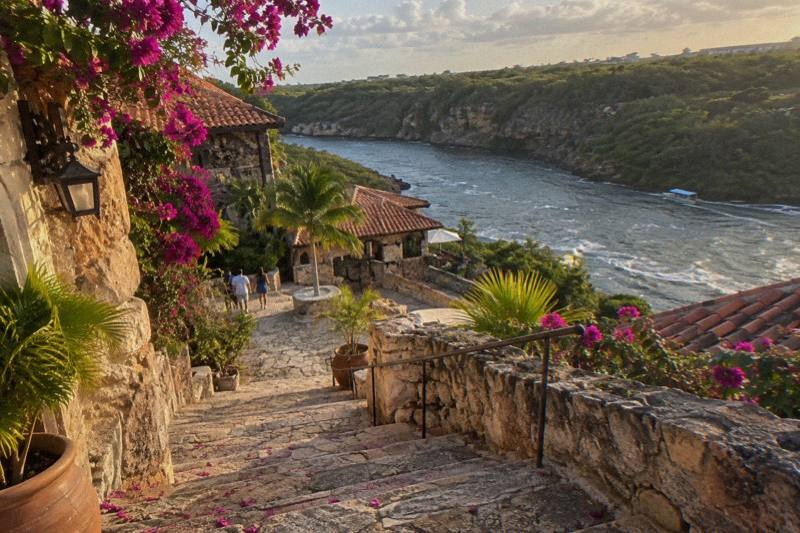
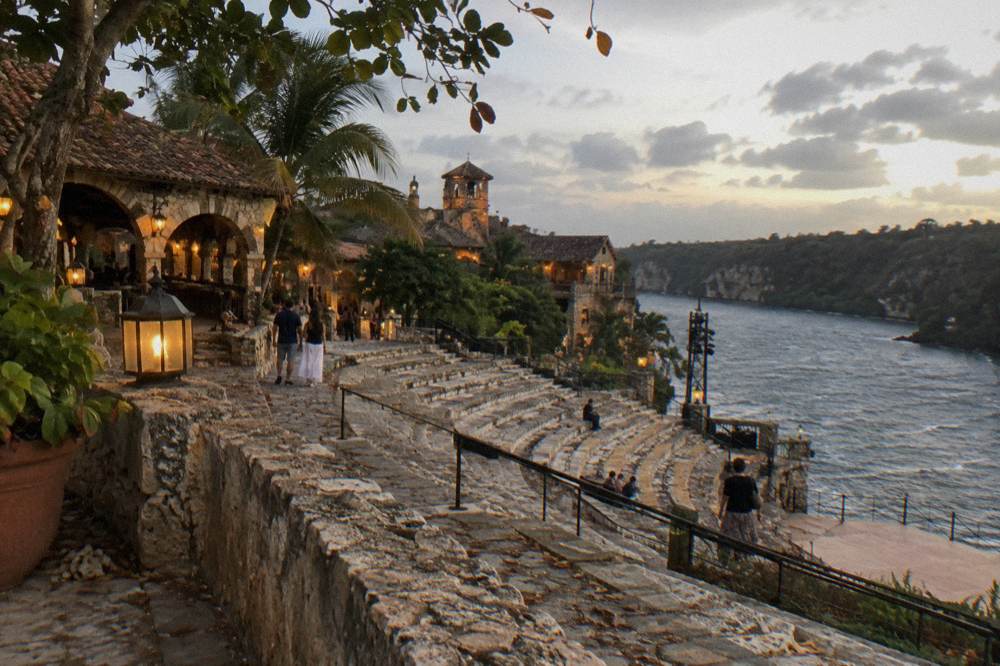
La Romana, by contrast, is a working town next to the Casa de Campo resort estate. The beaches closest to town are modest, and most visitors actually stay in Bayahibe or Dominicus, the small resort villages east of La Romana along the coast where the Saona boats dock. What La Romana trades away in nightlife and resort count it gains back in position: it sits directly beside the jump-off point for the national park, and Altos de Chavón, the rebuilt Mediterranean-style artists' village above the Chavón River, is a short drive away.
The honest framing is that you are not really choosing between two rival destinations. You are choosing between a big resort playground and a small-town gateway that happens to be closer to the islands. Many travelers split the difference by staying in Punta Cana and booking Saona or Altos de Chavón as a combined day trip, such as the Saona Island and Altos de Chavón day trip, which runs a full day from $92 per person and is rated 4.4 across 346 reviews, though the review count is modest compared with the biggest Saona sellers.
What Kind Of Traveler Prefers Each Town?
Families who want pools, kids' clubs and one-stop excursion pickups lean Punta Cana; couples and slower travelers who value quiet, shorter boat rides and a glimpse of local life lean La Romana or Bayahibe. Group size matters too, and Punta Cana covers both ends: shared Saona catamarans from $71 per person, small-group premium versions from $165 per person.
Punta Cana suits the traveler whose vacation is built around the resort and the activity list. The excursion infrastructure here is unmatched: buggy and ATV tours run from $24 to $64.72 per person depending on the package, zipline combinations start at $100 per person, and the biggest Saona sellers alone account for thousands of reviews. Hotel pickup is listed on essentially every major tour, and the road transfer to Bayahibe, usually 60 to 90 minutes per operators, is absorbed into a structured day with lunch and drinks on the island.
La Romana and its satellite villages suit the traveler who wants the islands to be the point, not one item on a list. From a Bayahibe hotel you can be on a Saona boat in minutes rather than hours, and the pace of the town itself is unhurried. The trade is choice: fewer restaurants, fewer resorts, far fewer nightly entertainment options, and a smaller pool of tours that depart without the long drive. That smaller pool does include gems, notably the Saona Island, Mano Juan & Canto de la Playa Away from Crowds tour, an 8-hour trip from $119 per person rated 5.0 across 168 reviews, whose whole premise is skipping the crowded stops that the big Punta Cana groups visit.
There is also a third profile worth naming: the split-stay visitor. Some travelers spend four nights in Punta Cana for the resort and buggy week, then two or three nights in Bayahibe for the islands. Domestic one-way transfers make this easy, and it answers the "which is nicer" question by refusing to choose. The comparison below assumes a single base, since most people book one. If you are also weighing the country's north coast, our Samana vs Punta Cana comparison asks the same question with a very different answer.
The Saona Island catamaran with buffet lunch, from $71 per person and rated 4.4 across 4,780 reviews, is the classic version of the island day from a Punta Cana base: 8 hours, hotel pickup, lunch, drinks and free cancellation.
How Do The Beaches Compare?
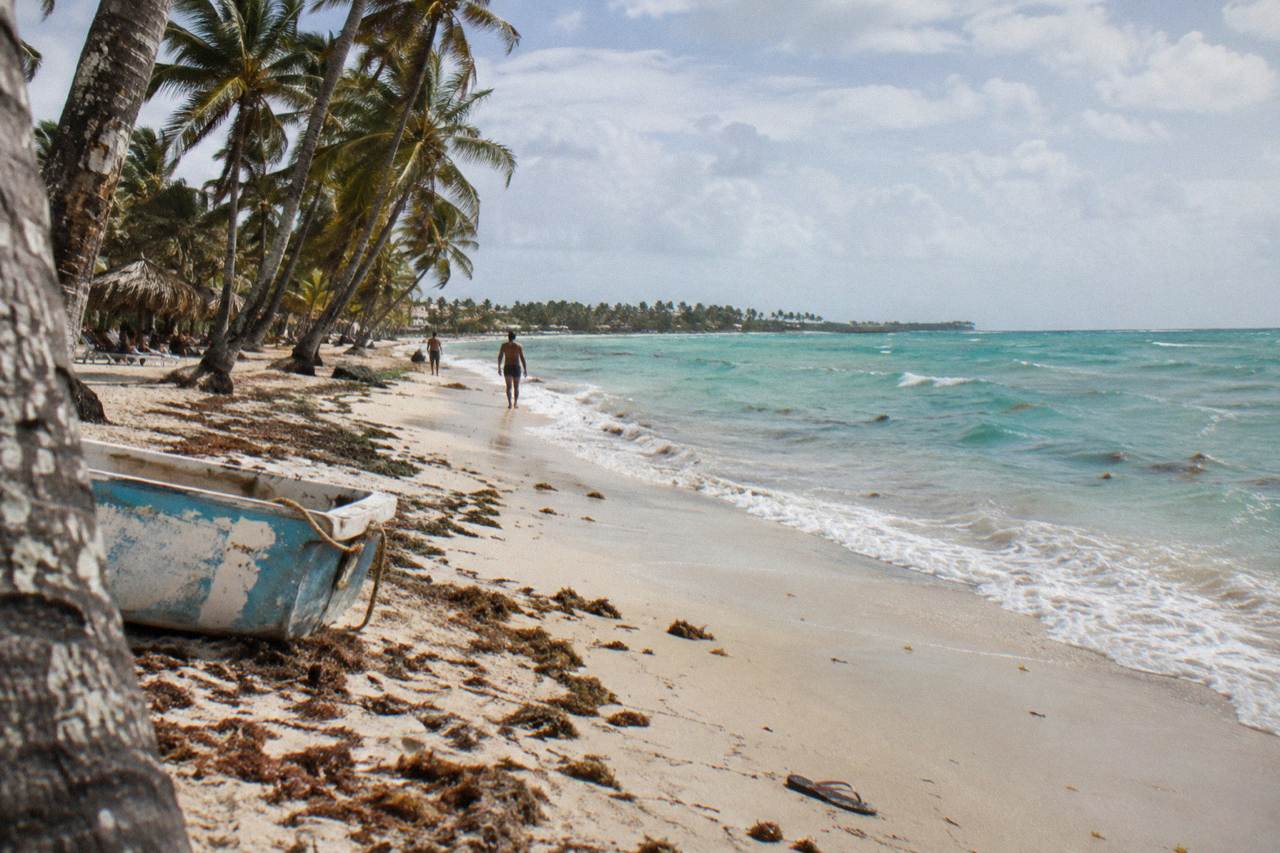
Punta Cana's beaches are longer, whiter and more resort-lined, with Bávaro's continuous ribbon of sand the signature; La Romana's own town beaches are plainer, but its nearby islands, Saona, Catalina and the Palmilla sandbar, hold the region's genuinely famous shoreline. If beach beauty is the only test, the islands beat both towns.
Bávaro beach is the postcard most people picture when they book the Dominican Republic: pale sand, calm turquoise shallows and coconut palms for kilometers. Cap Cana's Juanillo and Playa Blanca are shorter, wider and more groomed, backed by one of the country's most upscale developments. Uvero Alto at the northern end is wilder and emptier, with more wave action. The one recurring complication is sargassum, the floating seaweed that drifts in seasonally; forecasts for the region are published continuously, and late October 2026 tracking shows clean conditions with beach scores of 67 to 76 out of 100 across the main strands. Resorts rake daily in season, so the problem is managed rather than absent.
La Romana's own waterfront, around the town and the Casa de Campo marina, is pleasant but not the reason anyone comes. Minitas Beach inside Casa de Campo is the best of it, a compact crescent with a restaurant and calm water. The real beach wealth sits offshore. Saona's Canto de la Playa and the natural pool at Palmilla, where you stand in waist-deep water a kilometer from land among starfish, are the images on every Dominican Republic brochure, and they belong to the national park rather than to any hotel zone.
Catalina Island, reached from the La Romana side, deserves its own mention for snorkelers: its reef areas are the anchor of that island's trips, and it is often positioned as the quieter alternative to Saona. From a Punta Cana base the Catalina all-inclusive day runs 9 hours from $69 per person, rated 4.2 across 75 reviews, a modest review pool, with lunch and drinks included. So the beach verdict is simple: better hotel beach in Punta Cana, better island beaches from La Romana, and the island beaches win overall.
How Easy Is Saona Access From Each Base?
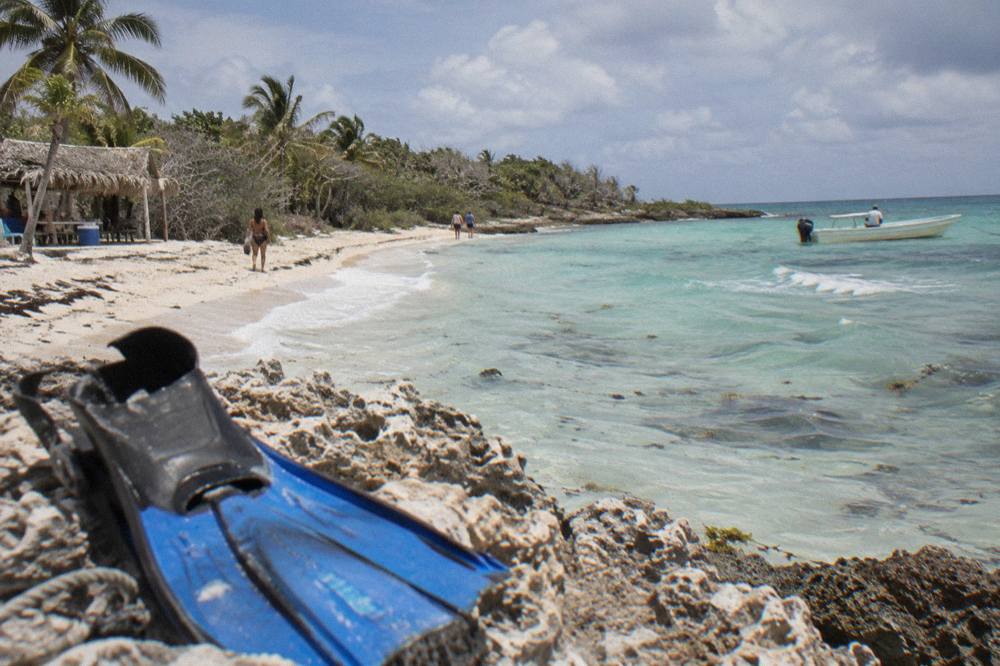
From La Romana, Bayahibe or Dominicus, Saona is a 20 to 60 minute speedboat ride from a pier minutes from your hotel; from Punta Cana, add a 60 to 90 minute road transfer before the boat, which lengthens the door-to-door day to between 8 and 11 hours. Same islands, very different mornings.
This is the single biggest practical difference between the two bases, and it is worth understanding before booking anything. Saona and Catalina tours do not leave from Punta Cana's beaches. Every one of them starts with a road transfer south and west to the Bayahibe and Dominicus pier area at the edge of Parque Nacional Cotubanama. Operators describe this leg as usually 60 to 90 minutes from the main Punta Cana and Bávaro hotel zones, earlier and longer from Uvero Alto at the far northern end. If you are staying in Bayahibe itself, you simply walk or ride a few minutes to the dock. If you are still deciding which part of Punta Cana to base yourself in, this area-by-area comparison of Punta Cana's hotel zones shows how each one affects your pickup times and excursion access.
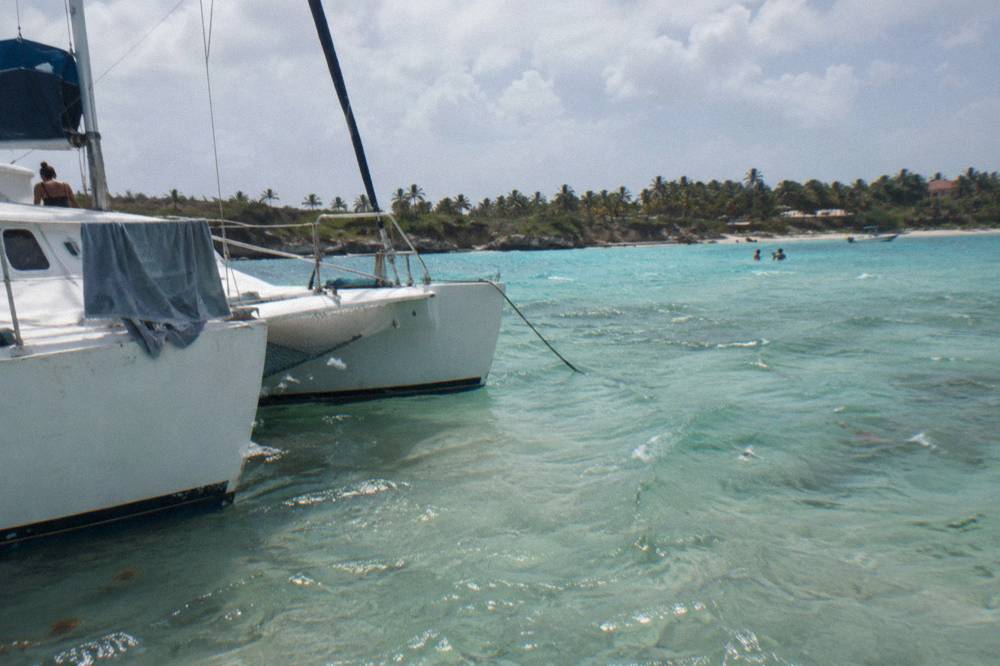
The crossing itself varies by boat. Speedboats usually cover the run in 20 to 60 minutes depending on sea state, while catamarans take one to two hours under sail. Most big tours split the difference: speedboat one way for speed, catamaran the other way for the open bar and the music. That combo structure is standard on the classic Punta Cana sellers, including the 9-hour Saona Island Day Trip with Lunch and Open Bar from $82 per person, rated 4.3 across 3,350 reviews, and the 8 to 8.5 hour Catamaran to Saona with Food & Open Bar from $66 per person, rated 4.3 across 1,218 reviews, which is currently the cheapest Saona option with hotel pickup listed.
What the La Romana base buys you is not a different island but a shorter leash. Door-to-door times from Bayahibe hotels can run two to three hours less than the same itinerary from Bávaro, which matters enormously with children or with anyone who dreads a 6:30 a.m. lobby call. The counterweight is selection: the deep menu of tour formats, group sizes and price points lives on the Punta Cana side, because that is where the volume is. A Bayahibe visitor who wants a specific premium format may still end up on a bus.
How Do Prices And Day Trips Compare?
Listed excursion prices include pickup, though coverage varies by tour, so check the listing for your base; Saona tours run from $66 to $169 per person and buggy or ATV half-days from $24.65 to $64.72. The differences show up in accommodation rates and in how much of your day the transfer consumes, not in ticket prices.
On the tour side, geography barely moves the needle. The Saona catamaran with buffet lunch sits at from $71 per person, the premium small-group Saona full day at from $165 per person rated 4.9 across 1,572 reviews, and the luxury small-group catamaran at from $169 per person rated 4.9 across 625 reviews. These are the same products wherever your hotel sits; the road transfer is folded in. Where the bases genuinely diverge is what else fills a week, and at what cost.
| Day trip or activity | Duration | From price | Rating and reviews |
|---|---|---|---|
| Saona catamaran with buffet lunch | 8 hours | $71 per person | 4.4 across 4,780 reviews |
| Saona and Altos de Chavón combined | 1 day | $92 per person | 4.4 across 346 reviews |
| Buggy or ATV tour with Macao Beach and cave | 4 hours | $24.65 per person | 4.9 across 2,232 reviews |
| Santo Domingo full-day city tour | 10 hours | $95 per person | 4.8 across 5,427 reviews |
| Monkeyland and plantation safari | 6 hours | $95 per person | 4.8 across 4,879 reviews |
Notice the pattern in that table. The big-hitters, the Santo Domingo city tour and the Monkeyland safari, both pick up from Punta Cana hotels, and Santo Domingo's colonial zone is about 2.5 hours each way by highway from there. From La Romana, Santo Domingo is closer, roughly an hour less round trip, but the organized tours with guides and lunch are built around Punta Cana pickups. Meanwhile the buggy, zipline and horseback world, the half-day adventures around Macao Beach and its water cave, is almost entirely a Punta Cana phenomenon, anchored on the northern hotel zones where those ranches sit.
Altos de Chavón is the La Romana area's cultural ace: a cobblestoned artists' village with a Greek-style amphitheater overlooking the Chavón River, typically visited on guided day trips costing around $80 to $110 per person when booked independently, and from Punta Cana reachable in 75 to 90 minutes. The combined Saona and Altos de Chavón day trip from $92 per person is the efficient way to see both from a single base, since it stacks the river village and the island into one long day rather than two. For readers weighing other base towns too, the question of whether Bayahibe beats Punta Cana outright has its own answer, and it comes down to almost the same trade.
Where Should Families And Couples Stay?
Families almost always do better in Punta Cana, where kids' clubs, calm swim zones and family-tagged excursions like the Wild Buggy Eco Adventure from $48.95 per person are concentrated; couples, honeymooners and small groups get more romance and quiet per dollar in Bayahibe or Casa de Campo on the La Romana side.
For families, the deciding factors are practical. Punta Cana's resort density means competitive all-inclusive pricing, direct airport proximity, and excursions designed around children: the Family Wild Buggy Eco Adventure runs 4 hours from $48.95 per person rated 4.7 across 2,445 reviews, and zipline courses commonly set rider minimums around age six with harnesses and helmets provided. ATV and buggy rules are worth checking before you book, since drivers typically need to be 18 or older with a valid license, while children ride as passengers, with minimum ages commonly starting at three to four years depending on the operator. The family excursions guide breaks down the age limits tour by tour.
Couples get a different calculus. Casa de Campo, the grande dame estate beside La Romana, trades on golf, marina dining and space, and the small hotels of Bayahibe put you walking distance from the Saona docks and from waterfront restaurants where the catch came in that morning. The premium small-group Saona tours, capped at 12 or 30 travelers, pair beautifully with this base: the Small Group Saona Island Full Day Tour from $165 per person, rated 4.9 across 1,572 reviews, is the kind of quiet, uncrowded island day that a honeymoon deserves, and the away-from-crowds Mano Juan itinerary from $119 per person skips the mass-market stops entirely.
Mixed groups and multigenerational trips usually resolve toward Punta Cana out of sheer optionality, because a base that can offer a party boat for the young adults, a horseback ride on the beach from $58 per person for the parents and a spa afternoon for the grandparents frictionlessly beats one that cannot. The one family situation that flips the answer is a trip built around snorkeling and islands: less bus time with small children is worth more than a water park.
What About Food, Nightlife And Getting Around?
Punta Cana wins on nightlife and restaurant variety by a wide margin, from the Coco Bongo show from $170 per person to hundreds of hotel and independent dining options, while La Romana offers quieter, more local eating around Bayahibe and the Casa de Campo marina; both require taxis or tours to move between towns.
Nightlife is a category Punta Cana takes outright. Coco Bongo, the cinema-meets-concert venue, runs a 3-hour Gold Member skip-the-line experience from $170 per person rated 4.5 across 709 reviews, and the Bávaro strip supports everything from beach bars to late-night clubs. The adult party boats, like the hip hop party boat from $65 per person rated 4.6 across 1,917 reviews, are three-hour, DJ-led afternoon parties on the water. La Romana has nothing at this scale; its evenings are long dinners and marina strolls, which is precisely the point for the travelers who choose it.
Food follows the same shape. Punta Cana's all-inclusives handle most meals in-house, but the surrounding areas hold steakhouses, beach grills and international kitchens at every price. Around La Romana and Bayahibe, the dining scene is smaller, cheaper and more Dominican: fresh fish, La Bandera lunch plates, and beachfront kitchens without a resort gate. Travelers curious about local food safety will find the practical guidance in the piece on what food to approach with care in Punta Cana, which applies equally up the coast.
Getting around either town means taxis, pre-booked transfers or tour buses; neither base is walkable beyond its core. There is no passenger rail and limited practical public transit between the two, so a split stay usually means a private transfer booked in advance. One thing both bases share is the paperwork: the E-Ticket entry and exit form is free, official and mandatory on commercial flights, with one set of forms covering a family of up to seven, and the tourist card fee is already inside most airfares. The E-Ticket guide walks through it step by step.
Which One Should You Actually Book?
Book Punta Cana if this is a first trip, a family trip or a one-week-everything trip; book La Romana or Bayahibe if you have been to the Dominican Republic before, if Saona and Catalina are your main goals, or if a quiet base with shorter boat mornings sounds like the better vacation. Split the week if you can.
The pattern that emerges from every category above is consistent. Punta Cana is the region's front door: more flights into PUJ, more resorts at more price points, more tours picking up at more lobbies, more night out when you want it. Its weaknesses are crowds, construction-in-places busyness and long transfer days whenever the destination sits to the south or west, from Saona to Santo Domingo to Altos de Chavón.
La Romana is the side door. Its strengths are precisely inverted: proximity to the islands, proximity to the colonial zone of Santo Domingo, a slower rhythm, and a real town beside the resort estate rather than a resort zone pretending to be a town. Its weaknesses are fewer choices in everything, plainer local beaches, and thinner infrastructure for the half-day adventure circuit of buggies and ziplines that makes Punta Cana weeks so dense.
For island-focused travelers the compromise pick is worth repeating. A Punta Cana hotel plus the combined Saona and Altos de Chavón day trip from $92 per person captures the La Romana area's two headline sights in one structured day, with hotel pickup listed and free cancellation, while the Saona catamaran with buffet lunch from $71 per person delivers the classic island day on the same terms. The Casa de Campo side then becomes something you visited, rather than something you gave up your whole base for.
For anyone still weighing the southeast against other regions entirely, the honest answer is that this corner, both towns together, holds the country's most dependable combination of beaches, boats and weather, and the choice between Punta Cana and La Romana is a choice of tempo, not of quality. Sargassum along these shores has run clean and low-risk through late October, and Punta Cana Travel Tours has the boats, buggies and day trips for either pace.
Common Questions About Punta Cana And La Romana
Which Is Nicer, Punta Cana Or La Romana?
Punta Cana is nicer for first-timers and families who want resorts, nightlife and the widest excursion choice. La Romana, with Bayahibe and Casa de Campo, is nicer for quiet, culture at Altos de Chavón, and faster boat access to Saona and Catalina. Neither is better overall; it depends on the pace you want.
Is La Romana Close To Punta Cana?
Yes. The drive between them runs roughly 55 to 80 minutes depending on traffic and exact endpoints. Altos de Chavón, near La Romana, sits about 75 to 90 minutes from Punta Cana, which is why combined tours can cover both the village and Saona Island in a single day.
Can You Do Saona Island From La Romana?
Yes, and it is faster from there. Saona boats depart from the Bayahibe and Dominicus pier area minutes from La Romana-side hotels, with crossings of roughly 20 to 60 minutes by speedboat. From Punta Cana, tours add a road transfer of usually 60 to 90 minutes before the boat.
Which Has Better Beaches, Punta Cana Or La Romana?
Punta Cana has the better hotel beaches, led by the long Bávaro strip and Cap Cana's groomed coves. La Romana's town beaches are plain, but the nearby islands hold the region's most famous shoreline, including Saona's natural pool and Canto de la Playa inside the national park.
Is It Cheaper To Stay In Punta Cana Or La Romana?
Tour prices are effectively the same from either base, since the same operators serve both, with Saona trips running from $66 to $169 per person. Accommodation is where costs differ: Punta Cana's volume keeps all-inclusive rates competitive, while La Romana ranges from modest Bayahibe hotels to the premium Casa de Campo estate.
Can You Stay In Both Punta Cana And La Romana On One Trip?
Yes, and it works well. A common split is several nights in Punta Cana for resorts and buggy or zipline days, followed by two or three nights in Bayahibe for the islands. A private transfer between the two is the simplest link, booked in advance.