Punta Cana Weather By Month
Punta Cana weather runs on two rhythms, a bright dry stretch that draws the December to April crowds, and a warmer, showier wet half of the year when prices soften and sargassum and storm risk shape the tour calendar.
Short answer
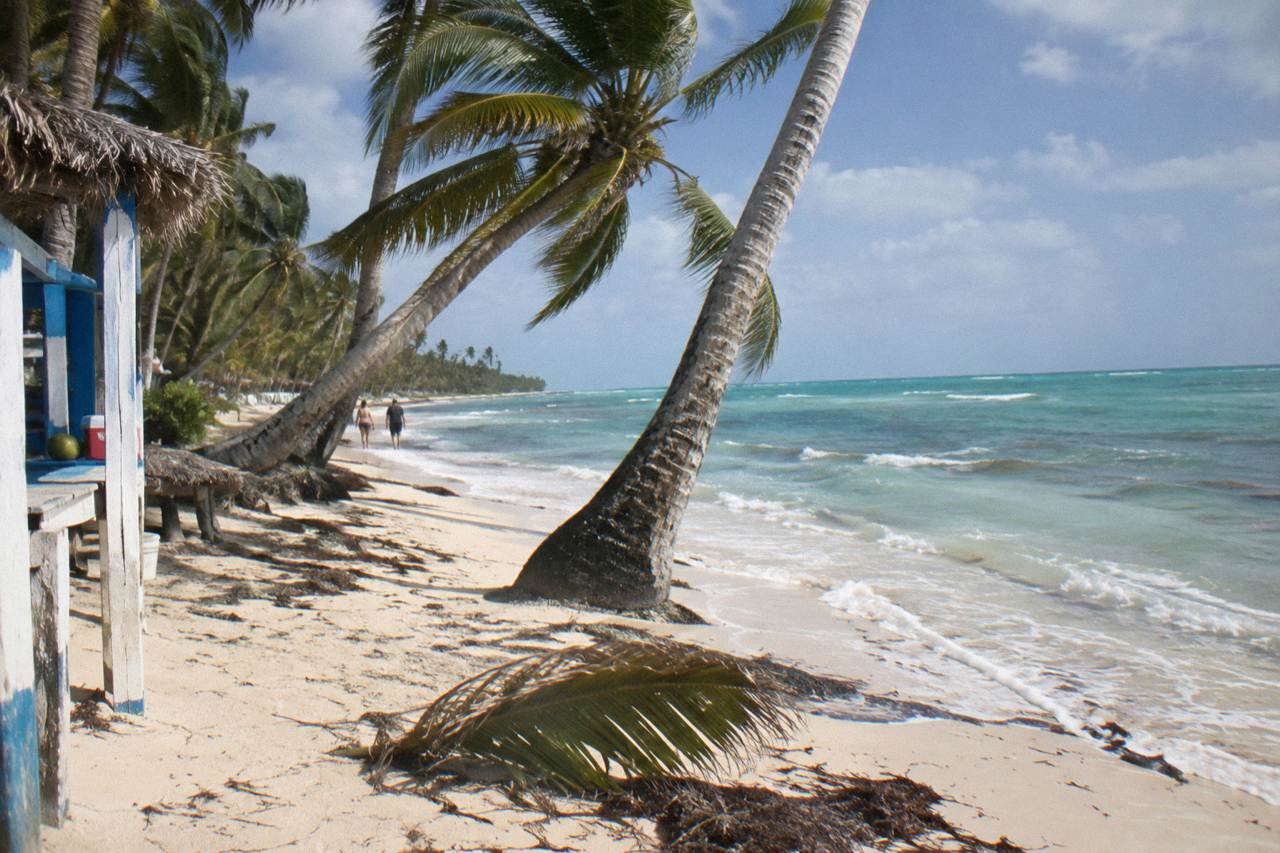
Punta Cana has a dry, busy season from December to April, a shoulder stretch from May to July, and a wetter late-summer period from August into November when hurricane risk peaks and tour prices ease. Boats run year round; the practical planning variables are sargassum on the beaches, sea state for crossings, and how early you book for the high season.
Punta Cana sits on the eastern tip of the Dominican Republic, squarely in the trade winds, and its year divides cleanly in two: a dry, busy stretch from December through April, and a warmer, wetter half from roughly May into November that overlaps the Atlantic hurricane season. Late October 2026 is a useful snapshot of what that second half actually feels like: the Atlantic hurricane season runs June through November, so tropical systems are worth watching when booking late-summer trips, the 2026 season had so far produced just 10 named storms and 1 hurricane, well below the long-run average, and the major beaches from Bávaro to Cap Cana were reporting clean water with low sargassum. In other words, the scary half of the year is often gentler in practice than the brochure language suggests.
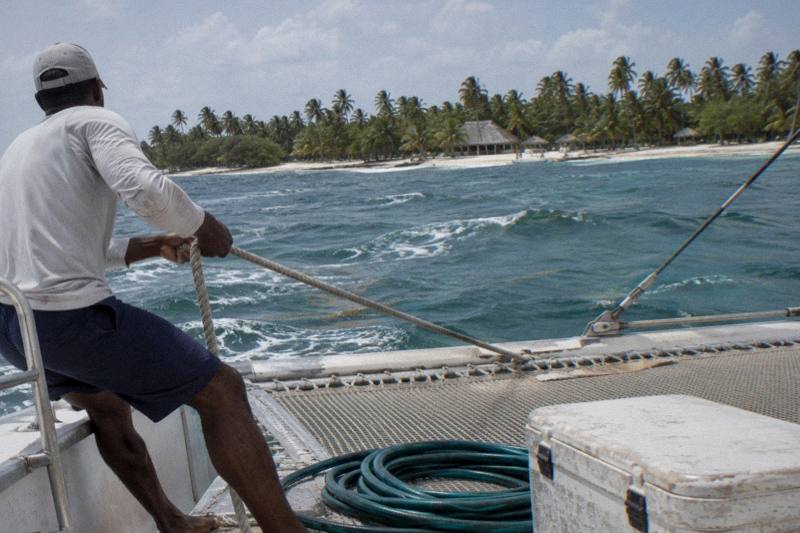
What the weather mostly decides here is which tour you take and on which day. A Saona catamaran such as the Catamaran Boat to Saona Island with Buffet Lunch, from $71 per person and rated 4.4 across 4,780 reviews, runs in every month, but the sea state on the crossing and the sargassum line on the beach change the experience more than the calendar price does. A buggy ride to Macao Beach, like the Buggy or ATV Tour with Macao Beach, Cave and Tastings from $24.65 per person, is a dust-and-mud proposition that a passing shower can turn into a highlight rather than a washout.
What Is The Weather Like In Punta Cana Month By Month?
Punta Cana runs warm all year, splitting into a dry high season from December to April, a warm shoulder from May to July, and a wetter stretch from August into November, when tropical systems are possible but rarely disruptive. Month to month, what really changes is crowd level, price, afternoon shower frequency, sargassum on the sand, and the small but real chance a named storm reshapes a week of plans. Whale watching around Samaná adds a distinct window, with the official 2026 humpback season having run January 15 to March 30.
Punta Cana temperatures move very little from month to month, so most guides collapse the year into wet and dry seasons. The table below takes the month-by-month route instead, pairing each month with what current conditions reporting and tour calendars show, plus the events that can genuinely change a trip.
| Period | Character of the season | What it means for tours |
|---|---|---|
| December to April | The dry, busy high season; operator prices typically climb and shared boats fill | Book Saona and catamaran days early; the calmest, most reliable sea state of the year |
| January 15 to March 30 | Humpback whale season on the Samaná side of the island | A whale-and-waterfall day trip from Punta Cana is possible but runs 10 to 12 hours door to door |
| May to July | Shoulder season: warm, quieter, occasional showers | Good window for small-group boats and buggy rides at softer prices |
| August to November | The Atlantic hurricane season's peak months, though most weeks are simply hot with passing showers | Free cancellation matters; watch forecasts and live beach reports rather than assuming a washout |
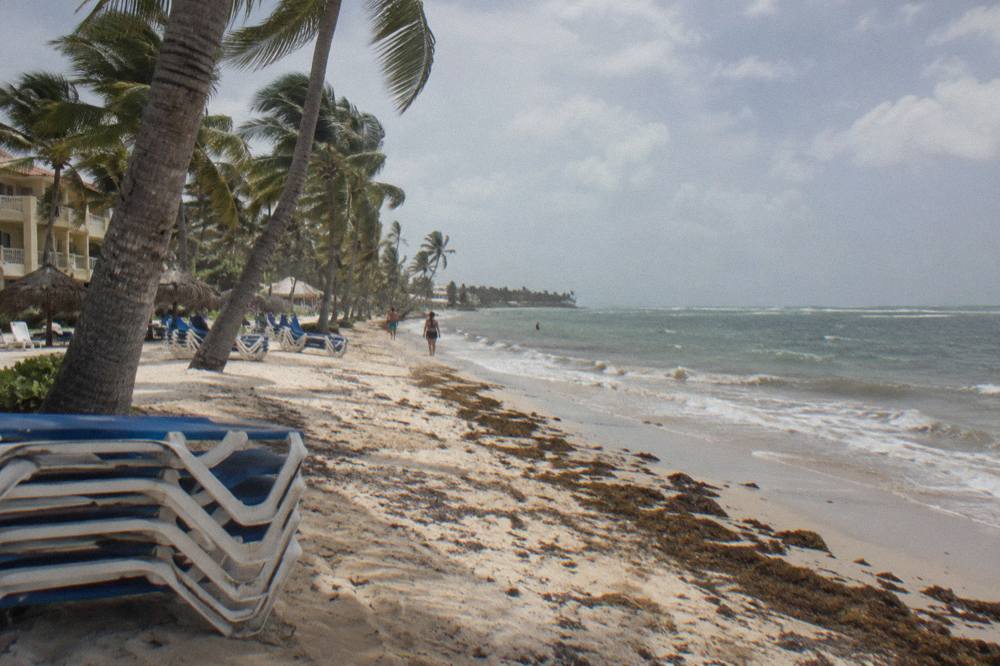
Two facts from the current conditions reporting deserve emphasis. First, sargassum on Punta Cana's beaches moves in waves and is tracked daily: as of late October 2026, Bávaro, Los Corales, Cap Cana's Juanillo and Playa Blanca, and Uvero Alto all showed clean conditions, with beach scores in the 67 to 76 out of 100 range. Second, the drive-time geometry does not change with the seasons: Punta Cana and Bávaro hotel pickups for Saona and Catalina boats begin with a road transfer to the Bayahibe and Dominicus pier area, usually 60 to 90 minutes each way, and that transfer is the same in January as in September. If you want the deeper beach-by-beach sargassum picture, the Punta Cana sargassum guide covers forecasting tools and which beaches fare best.
When Is The Best Month To Visit Punta Cana?
The best months to visit Punta Cana are December through April, when dry weather delivers reliable sunshine and calm water, with February and March adding the Samaná whale season. If lower prices matter more, aim for May through July, when operators run daily, boats are quieter, and quick showers rarely claim whole days.
The decision is really about what you most want from the trip. A traveller whose whole holiday is built around one Saona beach day should aim for the dry season and book early; the classic shared day trips, such as the Saona Island Day Trip From Punta Cana with Lunch and Open Bar from $82 per person, carry hundreds of travellers in high season and their departure slots fill first. A traveller with loose plans and a budget can do very well in the shoulder months instead.
Weather also argues for certain tour formats in certain months. Small-group boats, such as the Small-Group Cruising and Snorkeling Catamaran Tour, 3 hours 30 minutes from $99 per person and rated 4.9 across 2,659 reviews, stay close to shore, which makes them an easy call in shoulder months when a long open crossing is less appealing. Full-day island runs commit a bigger share of your day to the sea. On rougher mornings the near-shore option is simply the safer bet, and on flat mornings the island run wins outright.
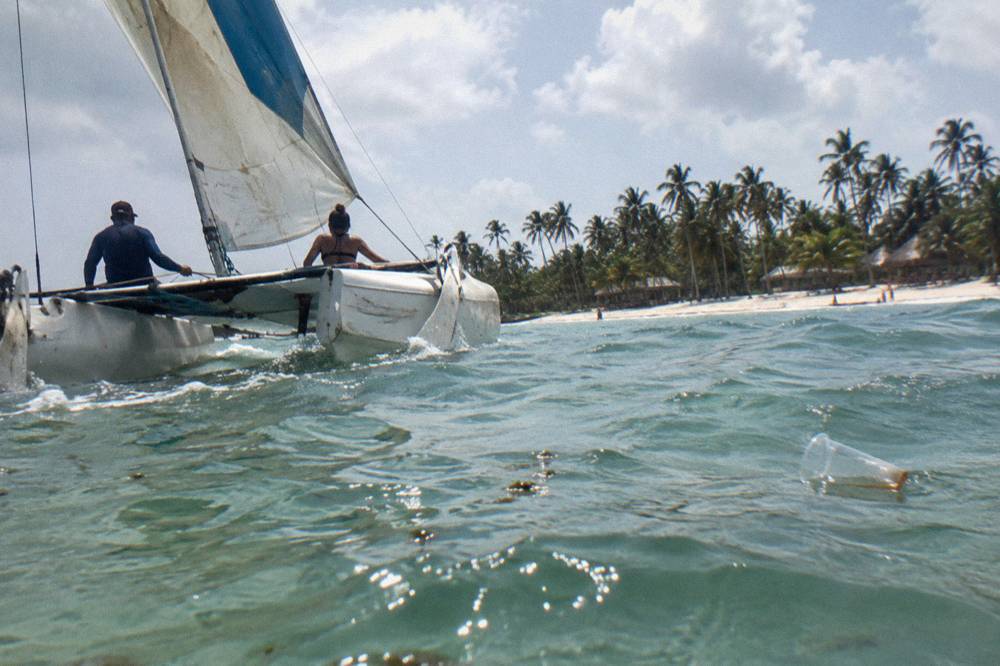
Free cancellation is the quiet hero of off-peak booking. Every tour named in this article lists free cancellation, which converts a weather gamble into a scheduling decision: hold your date, watch the forecast, and move the day if the sea or sky argues against it. The monthly price pattern runs the other way, with operator prices typically higher from December to April and softer in the wet months, so the cheapest dates and the calmest dates are not the same dates. Choose which one you are optimizing for before you book.
How Does Hurricane Season Affect Punta Cana Tours?
The Atlantic hurricane season formally runs June 1 to November 30, with the sharpest risk concentrated from August into October, yet most weeks inside that window are ordinary hot beach weather with scattered showers rather than storm drama. The 2026 season illustrates the point: through late October it had produced 10 named storms and only 1 hurricane, below the long-term average, and no cyclones were active or expected to form in the week ahead of the late-October snapshot.
Operators handle the risk structurally rather than by cancelling seasons. Boats watch sea state and harbor advisories; land tours such as buggy rides, ziplines and horseback rides run in light rain and pause for electrical storms; and the free-cancellation terms across the tour catalog mean a named storm heading toward the island rarely costs a traveller their money, only their original date. The National Hurricane Center's Atlantic outlook, carried on official weather feeds, is the authoritative source for cyclone activity, and live trackers such as the sargassum forecast for Punta Cana serve the same role for beach conditions. For the full seasonal picture, including how storms have historically lined up with travel dates, see the Punta Cana hurricane season guide.
| Tour type | Wet-season behavior | Practical planning tip |
|---|---|---|
| Saona and Catalina island boats | Sensitive to sea state on the open crossing; operators reschedule rough days | Book with free cancellation and keep one spare day |
| Near-shore catamarans and party boats | Usually run in shoulder rain; pause for thunderstorms | A morning slot often beats an afternoon one |
| Buggy and ATV rides | Rain turns dust to mud, which many riders enjoy; heavy storms pause rides | Wear clothes that can get dirty either way |
| Ziplines and parks | Close for lightning within the park radius, reopen quickly | Check the park's weather policy on the booking page |
| Santo Domingo city tours | Almost entirely weatherproof, mostly indoors and shaded colonial streets | The strongest rainy-day swap in the catalog |
The honest framing is probability, not promise. Nobody can guarantee a storm-free week in September or a rain-free week in February, and operators do not pretend otherwise; what they offer is rescheduling flexibility and, across this catalog, free cancellation. Treat the wet months as a value window with a backup plan, not as a month to avoid entirely.
When Is Sargassum Season In Punta Cana?
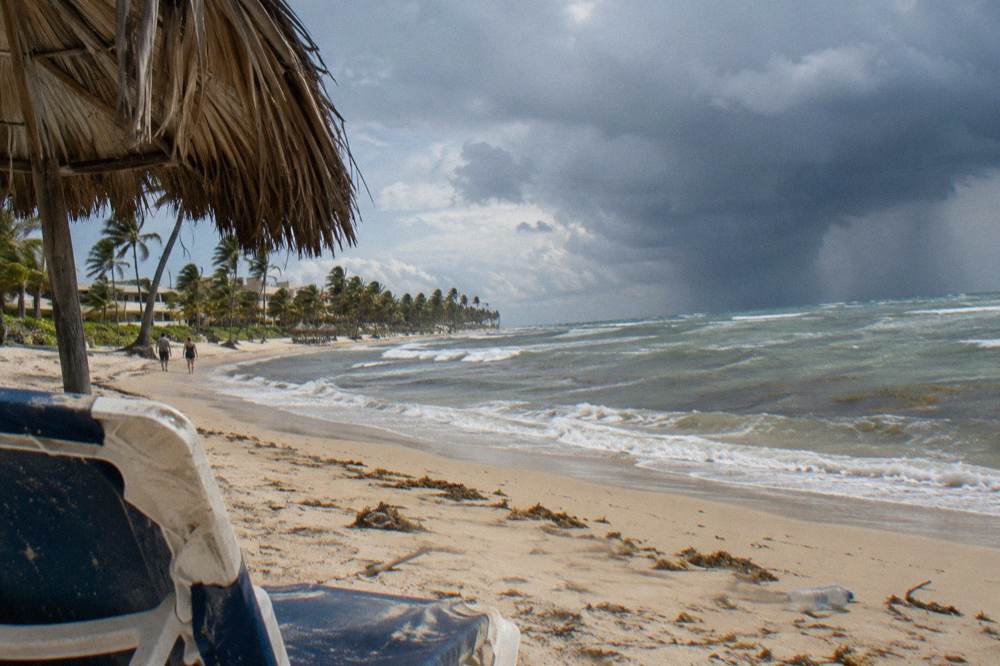
Punta Cana has no fixed sargassum season: seaweed arrives in pulses, with strandings typically building through spring and early summer and easing as the year moves into late autumn, though any single week can break the pattern. Rather than trusting a calendar, check a live beach report before you go, since conditions shift week to week.
Sargassum matters more for beach-bound days than for boat days. Saona's famous natural pool stop, the Palmilla sandbar, sits in waist-deep water a boat ride from the strandings, and the island's exposed main beach is monitored by operators who shift anchor points when weed lines push in. The full-day catamaran format, exemplified by the Catamaran to Saona Island with Food & Open Bar from $66 per person, rated 4.3 across 1,218 reviews, builds in that flexibility: with lunch, drinks and a natural-pool stop on the itinerary, the day does not collapse if one beach is weedy. Before committing dates, the daily Punta Cana beach conditions report shows which stretches are clean right now.
Which Tours Are Best In The Rainy Months?
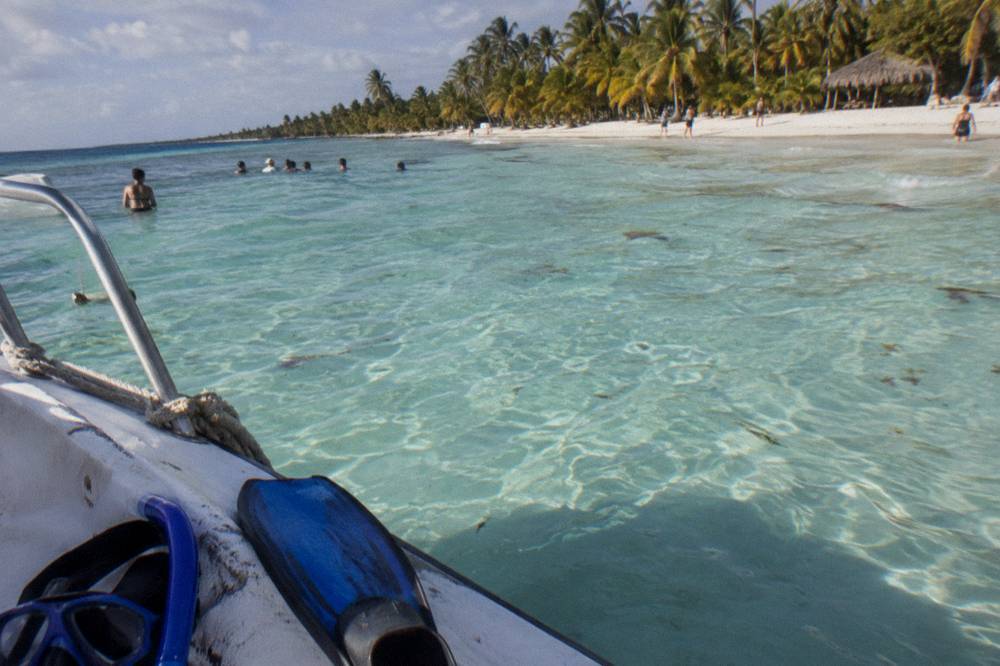
In the rainy months, the best tours are near-shore catamarans, buggy and ATV rides, and the Santo Domingo city tour, because they either shrug off showers or shelter you entirely. The Small Group Snorkeling Cruise with Open Bar and Light Snacks (from $89, rated 4.9) stays near the reef, while the Full-Day Santo Domingo City Tour (from $95, rated 4.8) is a full day of sightseeing in the capital.
Buggy rides deserve a special mention because rain improves them for many riders. The Punta Cana: Buggy or ATV Tour with Cenote & Beach Stops runs from $24 per person, rated 4.8 across 689 reviews, over 4 hours with a cave swim and beach stops; dust becomes mud, mud becomes the point, and the cave pool is wet regardless of the sky. Operators run morning and afternoon departures, commonly around 8:30 a.m., 11:30 a.m. and 2:30 p.m. depending on the operator, so a morning slot leaves your afternoon free to dodge a passing shower at the pool. Helmet and safety gear are provided and required, drivers need to be 18 or older with a valid license on most rides, and no prior experience is needed for the routes. The full index of guides sits on Punta Cana Travel Tours.
For families weighing the wet months, the same logic applies at every age. Passenger minimums on buggy and ATV tours commonly start at 3 or 4 years old depending on the operator, and family-oriented options like the Punta Cana Family Wild Buggy Eco Adventure, from $48.95 per person and rated 4.7 across 2,445 reviews, are built around exactly that flexibility. The family excursions guide breaks down age minimums across the whole catalog.
Does The Weather Change What A Saona Day Looks Like?
Yes, mostly through the sea state rather than the sky: the crossing from Bayahibe usually runs 20 to 60 minutes by speedboat and 1 to 2 hours by catamaran, and wind and swell decide which end of that range you get. The day itself follows a steady shape, with hotel pickups from about 6:30 to 8:00 a.m., the road leg to the pier, the boat out, a natural-pool stop of 30 to 45 minutes in waist-deep water, beach time and lunch on Saona, and a return that lands you back at your hotel between roughly 3:30 and 6:30 p.m., 8 to 11 hours door to door.
Operators lean on the combination format precisely because of this. Most Saona tours use a speedboat one way, faster at roughly 25 to 45 minutes of crossing, and a catamaran the other, a slower 60 to 75 minute or more sail with music and an open bar that is steadier and more social. In calmer months both legs are pure pleasure; in breezier weeks the speedboat leg is the one sensitive readers think about, and the catamaran leg is the one they remember. The natural pool sits inside the protected sandbar, so it stays swimmable in conditions that would close an exposed beach, and park rules prohibit touching or removing the starfish and other marine life there.
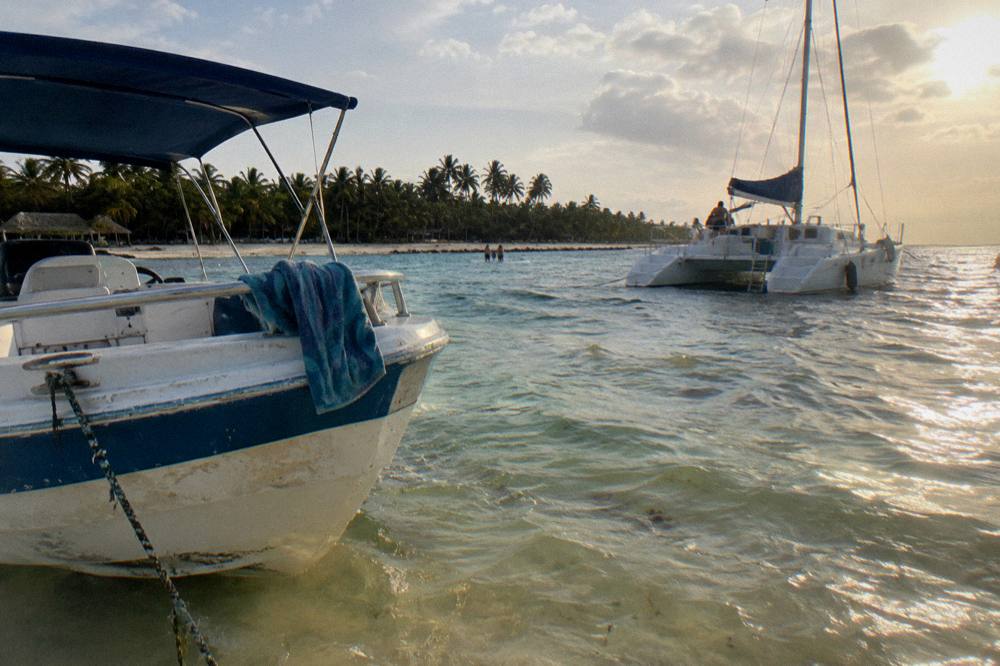
Saona and Catalina sit inside Parque Nacional Cotubanama, run by the Ministry of Environment, and organized tours are the standard access route for visitors. If a weather reshuffle pushes you toward the smaller island instead, the Catalina Island from Punta Cana day trip, from $69 per person, markets itself as more exclusive than Saona, with a group of up to 60, though its review pool of 75 is modest compared with Saona's thousands. The two are different islands and different products, and a swap between them is a genuine change of plan rather than a like-for-like trade.
One planning note that spans every season: park entry is not stated as included on these island listings, so check the booking page for the fee treatment before you go, and never rely on a fixed figure quoted on a forum. The Punta Cana Travel Tours listings rarely spell out park entry, so give the booking page a quick check before you go.

How Far Ahead Should You Book Around The Weather?
In the December to April high season, book Saona boats and small-group tours as soon as your dates are fixed, because departure slots and hotel pickups fill; in the shoulder and wet months, a week or two of lead time is usually enough, with free cancellation doing the rest. The weather-driven logic is simple: high season has the most demand and the most reliable conditions, so availability, not the sky, is the constraint. Off peak, the sky is the constraint, and cancellation terms are your insurance.
Small-group formats tighten this further. The Small Group: Saona Island Full Day Tour caps its boat at 12 travellers, from $165 per person and rated 4.9 across 1,572 reviews, and a 12-seat boat in February sells out long before a 300-traveller catamaran does. The luxury variant, Saona Island small group and relax, caps at 30 from $169 per person, rated 4.9 across 625 reviews. If a small-group day is the goal in high season, booking early is not caution, it is arithmetic. Tipping is budgeted the same in any month: common practice runs $10 to $20 per person for full-day guides and $5 to $10 for half-day tours and boat crews, with small US bills preferred.
| Booking situation | Recommended lead time | Why |
|---|---|---|
| Saona day trip in February or March | 4 to 8 weeks | Peak demand plus the island's biggest crowds of the year |
| Small-group catamaran in high season | 3 to 6 weeks | 12 to 27 seats per departure fill first |
| Shared party boat in shoulder season | 1 to 2 weeks | Large capacity, up to 200 travellers, daily departures |
| Buggy or ATV ride, any month | A few days | Many daily departures and large group caps |
| Santo Domingo city tour in wet months | 1 week | Weatherproof day, moderate capacity of up to 49 |
A final scheduling habit worth adopting in any month: keep one flex day for the water. A traveller who books the snorkel cruise on day two and leaves day five open can roll the whole plan forward if a squall line parks over the reef, at no cost under free cancellation. A traveller who schedules the boat on the departure morning has no such room. For the broader question of how the calendar and the costs line up, the best time to visit Punta Cana guide works through it month by month, and the Punta Cana excursion prices guide covers the money side.
What Should You Pack For Punta Cana Weather?
Pack for heat with a rain plan: quick-dry clothes, reef-safe sunscreen, a light rain layer for passing showers, and clothes you do not mind getting muddy on buggy and ATV days, where dust and mud are part of the route in every season. Operators provide helmets and required safety gear on the adventure tours, and briefings cover the rest, so the packing burden is mostly about comfort, not equipment.
The rain layer deserves a word of honesty. Showers in the warm months are often brief and genuinely warm, and many visitors simply wait them out under a palapa rather than dressing for them. Where the layer earns its space is on boats, where a fast crossing after a shower can feel cool, and on the Santo Domingo day, where colonial streets drain slowly after a heavy burst. Footwear matters more than most packing lists admit: closed shoes for buggy and ATV rides, something secure for boat ladders, and sandals for everything else. The full item-by-item breakdown, including what to bring for cave swims and horseback rides, lives in the what to bring on a Punta Cana excursion guide.
Money and documents round out the list, and they are weatherproof concerns. The Dominican E-Ticket, the free official entry and exit form at eticket.migracion.gob.do, is mandatory for commercial flights, with separate forms and QR codes for arrival and departure, and the old tourist card fee is included in most airfares rather than paid at the airport. US dollars are widely accepted for tips, transfers and resort services, with the local peso as the everyday currency alongside them; small US bills make every tip and every beach vendor transaction easier.
Common Questions About Punta Cana Weather
What Is The Weather Like In Punta Cana Month By Month?
The year splits into a dry, busy December-to-April stretch, a warm May-to-July shoulder, and a wetter August-to-November period overlapping hurricane season. Every month is warm enough for tours; what changes is crowd level, price, shower frequency, sargassum arrivals and the small chance a named storm shifts a booking.
When Is The Best Month To Visit Punta Cana?
December to April for the most reliable sunshine and calmest seas, with February and March adding the Samaná whale season from January 15 to March 30. May to July offers quieter boats and softer prices, while late August to October carries the lowest prices and the most need for flexible plans.
Does Hurricane Season Ruin Punta Cana Trips?
Rarely. The season formally runs June 1 to November 30 with peak risk from August into October, but 2026 had produced only 10 named storms and 1 hurricane through late October, below average. Tours run normally most weeks, and free cancellation across the catalog lets you reschedule rather than lose money.
When Is Sargassum Worst In Punta Cana?
Sargassum moves in pulses rather than a fixed season, tending to build through spring and early summer and ease toward late autumn. Check a live beach report before you travel: in late October 2026, Bávaro, Los Corales, Cap Cana and Uvero Alto beaches all showed clean, low-sargassum conditions.
Do Saona Boat Tours Still Run In The Rainy Season?
Yes, daily. Operators watch sea state and reschedule rough crossings, and most tours pair a speedboat one way with a catamaran the other, so the day adapts to conditions. The natural pool stop sits in protected waist-deep water and stays swimmable when exposed beaches do not.
What Should You Wear For Rainy-Day Tours In Punta Cana?
Quick-dry clothes and a light rain layer for boats and city tours, closed shoes for buggy and ATV rides, and clothes that can get muddy. Operators provide helmets and required safety gear, and routes are designed for beginners in every month.