Punta Cana Hurricane Season: Cancellations, Refunds And Timing
Hurricane season in the Dominican Republic runs from June through November, but the risk in Punta Cana is not spread evenly across those months, and most tours carry free cancellation when the weather turns.
Short answer
Hurricane season runs June 1 to November 30, with the highest risk from late August through October. Punta Cana sits on the island's eastern tip, within the June 1 to November 30 Atlantic hurricane season. Every tour compared here comes with free cancellation, so a storm does not have to cost you money if you book with flexibility in mind.
Hurricane season officially spans half the calendar in the Dominican Republic, June 1 through November 30, yet Punta Cana receives far fewer direct strikes than the phrase suggests. The Atlantic basin as a whole produced just ten named storms and one hurricane through late October of 2026, a below-average count, and the eastern tip of Hispaniola where Punta Cana and Bavaro sit has historically been one of the island's quieter corners for landfalls. Most travelers who visit in September or October never see a storm. What they do see is the odd cancelled boat trip, and that is the part worth planning for. Booking something with free cancellation, such as the Catamaran Boat to Saona Island with Buffet Lunch from $71 per person, rated 4.4 across 4,780 reviews, means a rough sea day costs you nothing.
When Is Hurricane Season In Punta Cana?
Hurricane season in the Dominican Republic runs from June 1 to November 30 each year, and the peak of it arrives between late August and the middle of October. June and July stay comparatively quiet, and by December the season is over. The calendar matters less than the booking terms, though, because every tour on this site lists free cancellation regardless of month.
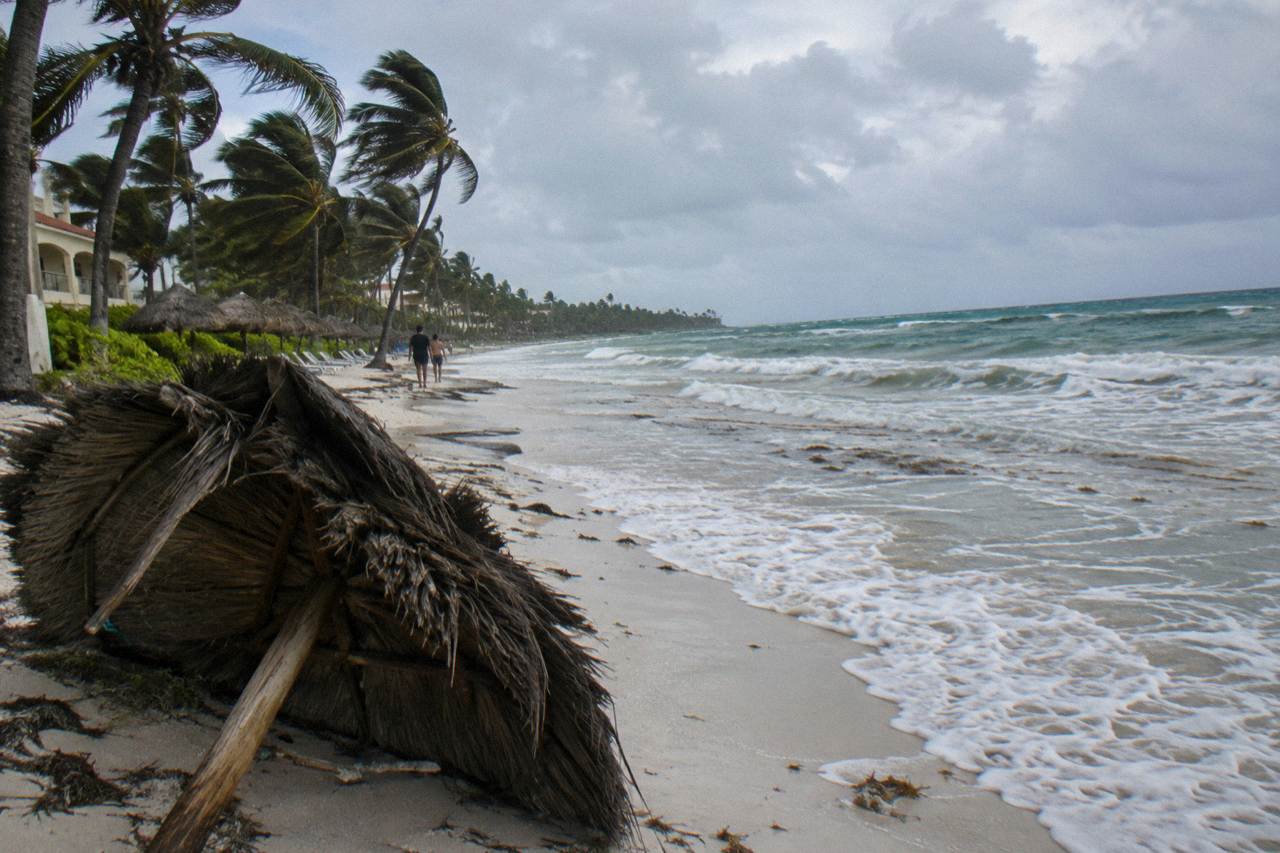
The season is an Atlantic-wide framework, not a Punta Cana forecast. Meteorologists at the United States National Hurricane Center watch tropical waves rolling off the African coast from early summer onward, and most of those systems curve north into the open Atlantic long before they reach Hispaniola. A handful each year come close enough to bring the island heavy rain and surf, and the eastern provinces, including La Altagracia where Punta Cana sits, occasionally take a direct hit. Those events are the exception rather than the pattern.
Within the six-month window, the risk is lopsided. June and July typically produce a storm or two somewhere in the basin, but September is the statistical peak month for the whole Atlantic, and early October follows close behind. By late October the atmosphere usually quiets down, and November storms that reach the Caribbean are uncommon. Travelers weighing a September trip against a December trip are comparing the most active stretch of the calendar with a month that sits entirely outside the season.
| Month | Season status | Typical conditions in Punta Cana | Practical read |
|---|---|---|---|
| May | Before season | Hot, occasional afternoon showers | No storm planning needed |
| June | Season opens | Warm, humid, brief rain bursts | Low storm risk |
| July | Early season | Hot, passing showers | Low to moderate risk |
| August | Ramping up | Hot, humid, surf can rise | Moderate risk, late month higher |
| September | Peak month | Humid, rain possible, sea variable | Highest statistical risk |
| October | Late peak | Gradually settling, rain still possible | Moderate risk, falls late month |
| November | Season fades | Drier, calmer seas | Low to moderate risk |
| December | Season over | Drier, steady trade winds | Standard dry-season planning |
One more calendar note worth planning around: the whale watching season in Samana, on the opposite coast, will run from mid-January through late March in the coming year, which sits entirely outside hurricane season. If your heart is set on both calm seas and whales, the January to March window covers both.

Do Punta Cana Tours Get Cancelled During Hurricane Season?
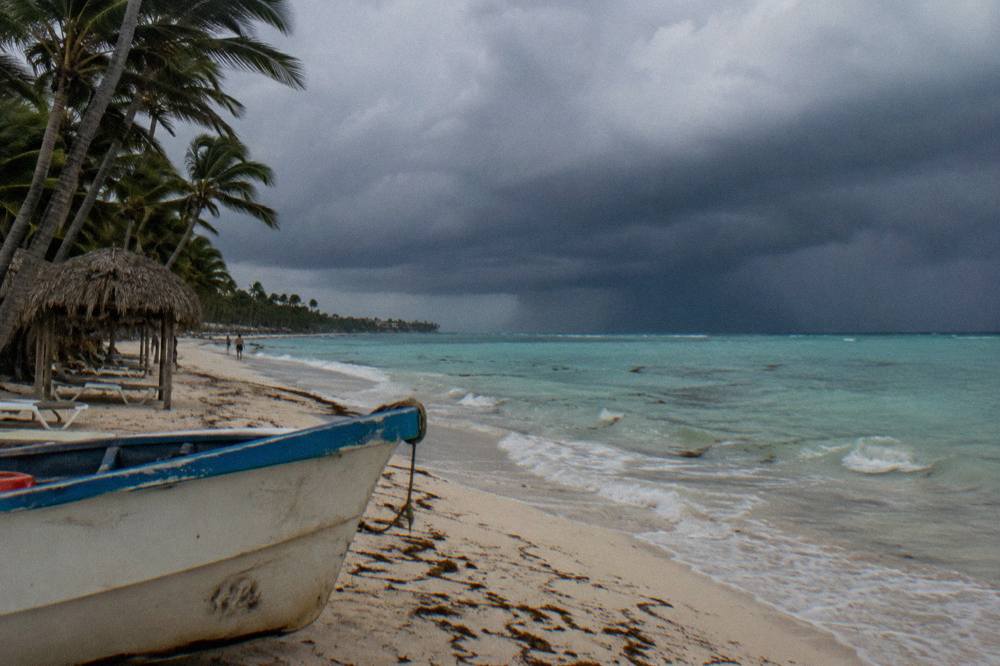
Yes, tours cancel when conditions are unsafe, and boat trips cancel far more often than land tours. Operators make the call a day or occasionally hours ahead, based on sea state and official advisories rather than rain alone. A cancelled tour with free cancellation is refunded, including operator cancellations for weather, which return your payment rather than issuing a credit.
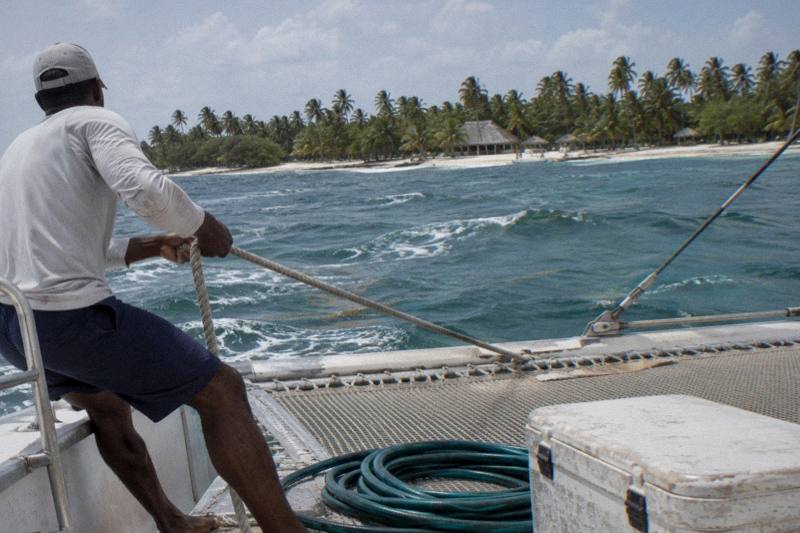
Boats are the weather-sensitive category. Saona Island and Catalina Island trips cross open water from the Bayahibe and Dominicus pier area, usually 20 to 60 minutes by speedboat or 1 to 2 hours by catamaran, and operators will not run those crossings in rough seas. The Catamaran Boat to Saona Island with Buffet Lunch, the Saona Island Day Trip From Punta Cana with Lunch and Open Bar, and the smaller-group options all follow the same logic: the operator watches the forecast, and if the crossing looks unsafe, the day is off. A passing shower almost never cancels a trip. A tropical wave with sustained wind and swell does. If the crossing does go ahead and you want to look after the crew, the guide to tipping on Punta Cana island and catamaran tours explains when a single dollar works and when it falls short.
Snorkeling catamarans closer to shore sit in between. The Small-Group Cruising and Snorkeling Catamaran Tour, 3 hours 30 minutes from $99 per person and rated 4.9 across 2,659 reviews, stays in more protected water than a Saona crossing, but reef stops still depend on visibility and swell. Party boats such as the Punta Cana Booze Cruise with Snorkeling, Sand Bar, and Transfers, from $59 per person, usually run in rain but pull the plug when the sand bar stop becomes impractical.
Land-based tours barely notice a storm unless it is actually overhead. Buggy and ATV rides, ziplines and horseback riding run in light rain, and operators supply the briefing, helmets and harnesses regardless. The Punta Cana Zipline Adventure with Buggies and Horseback Riding, 6 hours from $100 per person and rated 4.9 across 5,400 reviews, operates through ordinary season weather, and operators report only genuine system-level storms stop it. Safari-style cultural tours and the Santo Domingo city day trip run on roads, so rain shortens photo stops more than it cancels the day.
| Tour type | Example from this site | Cancellation trigger | Typical notice |
|---|---|---|---|
| Saona or Catalina crossing | Catamaran Boat to Saona Island with Buffet Lunch, from $71 per person | Rough seas on the Bayahibe crossing | Day before or same morning |
| Snorkeling catamaran | Small-Group Cruising and Snorkeling Catamaran Tour, from $99 per person | Swell or poor visibility at the reef | Same morning |
| Party boat | Booze Cruise with Snorkeling, Sand Bar, and Transfers, from $59 per person | Wind, surf at the sand bar | Same morning |
| Ziplines and buggies | Zipline Adventure with Buggies and Horseback Riding, from $100 per person | Lightning, active storm only | Hours ahead |
| City day trip | Full-Day Santo Domingo City Tour, from $95 per person | Road conditions in a named storm | Day before |
When a tour does cancel, the operator's standard sequence is to offer an alternative date first, and if that does not fit your stay, the booking is refunded under the free-cancellation terms the tour lists. Every product featured on Punta Cana Travel Tours carries a free-cancellation flag, which is precisely why booking flexible excursions matters in these months.
If you are mapping your whole week, the broader planning pieces in the best time to visit Punta Cana and the month-by-month breakdown in Punta Cana weather by month cover the rest of the year outside this season.
How Do Cancellations And Refunds Actually Work?
Every tour sold through this site lists free cancellation, so if the operator cancels for weather you are refunded rather than credited. If you cancel yourself, the same free-cancellation terms apply, and the exact cutoff window, often 24 hours before departure, is stated on each booking page. Read that cutoff before you pay, not after.
Free cancellation cuts both ways, and that is the part travelers miss. When the operator cancels, you get your money back as a matter of course, because the service never happened. When you decide the forecast looks grim and cancel on your own, the refund depends on doing so before the stated cutoff, which is commonly 24 hours ahead of departure but varies by tour. A Saona boat trip from Bayahibe, a zipline circuit, a buggy ride: the mechanism is the same on every one, only the window differs, and the booking page states it plainly.
Weather in the tropics is also local and fast-moving. A Tuesday forecast of rain says very little about Thursday's sea state, so cancelling yourself three days early often means giving up a day that would have run perfectly fine. The more effective pattern, experienced seasonal visitors report, is to book the weather-dependent tours, boats especially, for the first half of your stay. That leaves the back half of the week as free reschedule space if the operator calls off the crossing.
| Scenario | Who cancels | What happens to your money | What to check |
|---|---|---|---|
| Operator cancels for sea state | The operator | Refund under free cancellation | Offer of a new date first |
| You cancel before the cutoff | You | Refund under free cancellation | The exact cutoff hour on the booking page |
| You cancel after the cutoff | You | Terms vary, check before booking | The refund policy section |
| Storm is named but the tour runs | Nobody | Tour proceeds in acceptable conditions | Operator updates before departure |
| Delayed flight, missed pickup | You, indirectly | Depends on the tour's policy | Cutoff wording before paying |
A related seasonal question this site covers in depth: a few storms in a season does not mean the coast is unsafe to visit, and the assessment in is Punta Cana safe addresses the broader picture. For those with fixed travel dates, the United States advisory level for the Dominican Republic is published by the State Department and currently sits at Level 2, exercise increased caution, a general crime-related rating rather than a storm warning.
Which Tours Should You Book During Hurricane Season?
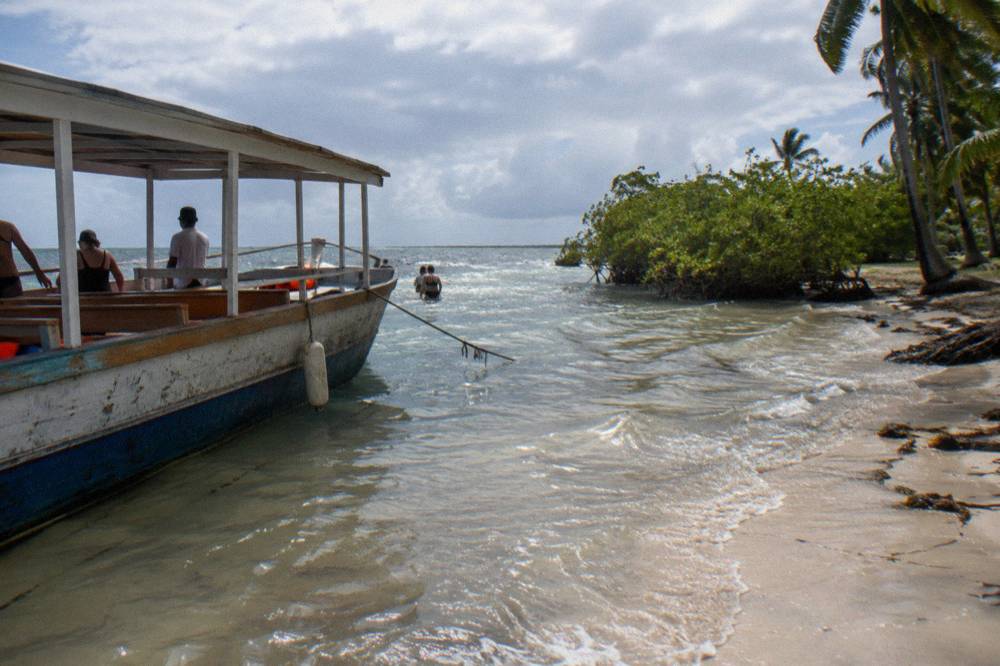
Book land tours and short catamaran cruises first, and leave the full-day island crossings flexible early in your stay. The Zipline Adventure with Buggies and Horseback Riding from $100 per person handles almost any season weather, while Saona crossings from $66 per person are the ones to schedule with a backup day in reserve. All of them list free cancellation.
The logic is exposure time. A Saona day trip runs 8 to 10 hours door to door, including a 60 to 90 minute road transfer from Punta Cana and Bavaro hotels to the Bayahibe pier area, then a crossing of up to two hours. That is a long chain of weather-dependent links. The Saona Island Tour in Punta Cana with lunch included, 10 hours from $85.5 per person and rated 4.8 across 219 reviews, is the longest version, and the Catamaran to Saona Island with Food & Open Bar, 8 to 8.5 hours from $66 per person, is the cheapest way to make the crossing. Both are excellent tours, and both are best placed in the first half of a September or October week with room to rebook.
Shorter water time narrows the risk window. The Small Group Snorkeling Cruise with Open Bar and Light Snacks, 3 hours 30 minutes from $89 per person and rated 4.9 across 1,657 reviews, keeps you close to shore, and the catamaran tour with food, drinks and snorkeling at $89 per person does the same with a meal added. A three-hour commitment that cancels is a morning recovered, not a day lost.
Land adventures are the reliable core of a seasonal itinerary. The zipline, buggy and horseback combination at $100 per person bundles three activities into one 6-hour day with lunch and drinks included, and it takes ordinary rain in stride. The same goes for the Monkeyland and Plantation Safari Tour from Punta Cana, 6 hours from $95 per person and rated 4.8 across 4,879 reviews, which runs on inland roads and forest trails. Even the Full-Day Santo Domingo City Tour, 10 hours from $95 per person, rated 4.8 across 5,427 reviews, is primarily a bus-and-walking day on the island's southern coast.
| Tour | Length | Price basis | Weather sensitivity | Season fit |
|---|---|---|---|---|
| Catamaran to Saona Island with Food & Open Bar | 8 to 8.5 hours | from $66 per person | High, open crossing | Book early in stay |
| Small Group Saona Island Full Day Tour | 9 hours | from $165 per person | High, open crossing | Needs a backup day |
| Small Group Snorkeling Cruise with Open Bar | 3 hours 30 minutes | from $89 per person | Moderate, near shore | Easy to rebook |
| Zipline Adventure with Buggies and Horseback Riding | 6 hours | from $100 per person | Low, land-based | Reliable any day |
| Monkeyland and Plantation Safari Tour | 6 hours | from $95 per person | Low, land-based | Reliable any day |
One pricing note that matters in season: per-group listings are not per-person prices. A private catamaran listed from $839 per group covers the whole party of up to 15, and the adventure bundle at $209 per group covers up to 4. Dividing those figures in your head is the fastest way to miscalculate a budget, in season or out of it.
Is September Or October Still Worth Visiting Punta Cana?
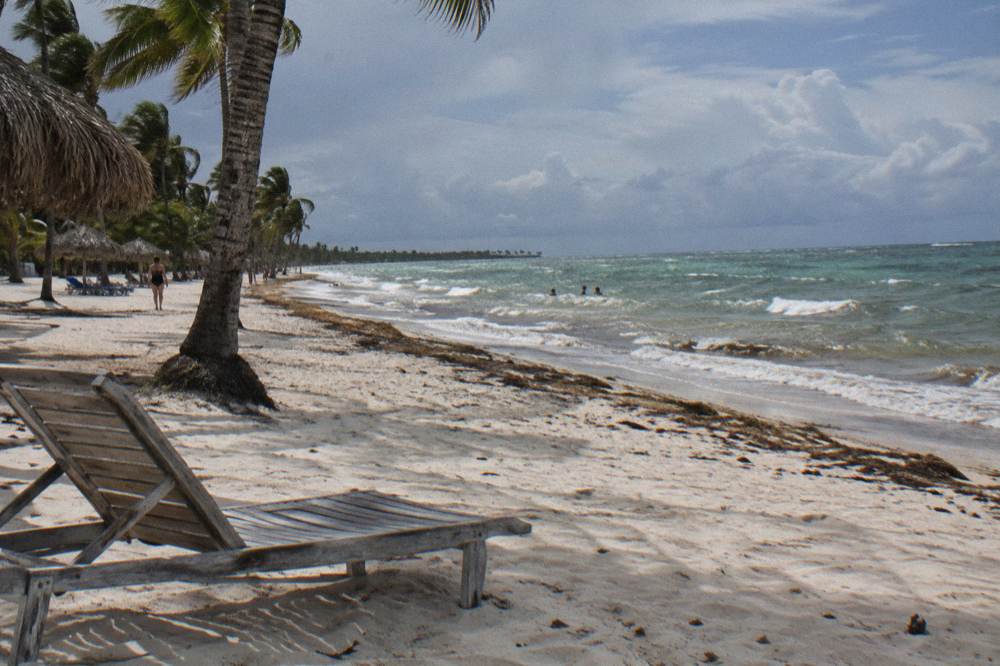
Yes, and many travelers deliberately choose these months for lower prices and thinner crowds. The statistical storm risk is real but modest, most days in an average September run hot and partly sunny, and the sea is warm enough for every tour on the calendar. Booking with free cancellation converts the remaining risk into an inconvenience.
The trade is straightforward. September and October sit inside the statistical peak of the Atlantic season, and Punta Cana is humid with passing showers through both months. In exchange, hotel rates drop well below the December to April high season, beaches are uncrowded, and tour availability is wide open, including the small-group Saona trips, which run through winter. The Small Group Saona Island Full Day Tour, capped at 12 travellers and rated 4.9 across 1,572 reviews, is a very different booking experience in October than in February.
The deciding factor is tolerance for plan changes rather than tolerance for danger. A storm-free September week in Punta Cana is genuinely excellent: calm mornings, warm water, short lines. A week with a passing tropical wave means one or two cancelled boat days and a resort afternoon instead. Travelers who treat those days as a feature of low-season travel tend to book these months again. Travelers who need every day to execute exactly as planned should aim for the January to April window instead.
There is also a seasonal silver lining worth knowing. Sargassum, the seaweed that shapes beach conditions from spring through summer, is typically at its lowest levels by October and November, once the peak season passes, and beach-condition trackers along Bavaro and Cap Cana consistently show cleaner shorelines in these months than in the summer. Storm season's back half overlaps with some of the cleanest beach water of the year, a point the Punta Cana sargassum guide covers in detail.
What Should You Do If A Storm Forms During Your Trip?
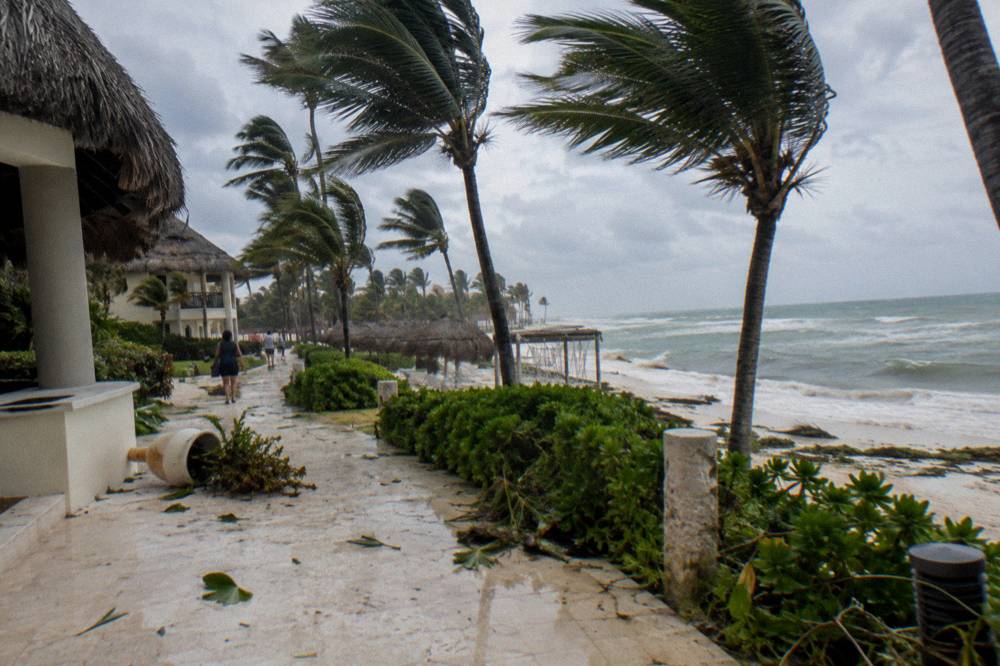
Follow the resort and operator instructions first, move your tour bookings according to their free-cancellation cutoffs, and keep your departure logistics flexible. Local authorities and hotels communicate directly with guests when a named storm approaches, and tours suspend themselves before roads or piers become unsafe. Your money is protected by the cancellation terms.
The practical sequence, based on how operators and resorts in the area handle approaching systems, is simple. Named storms are forecast days ahead, so you have time to adjust your plans. Contact the operator or check your booking page as soon as a cancellation looks likely and act inside the cutoff window rather than waiting for the storm to arrive. Move inter-island flights and paid transfers with the same attention, and note that pre-booked airport transfer drivers track flights as standard practice, so a storm-delayed departure does not strand you at the terminal. Arrival immigration at Punta Cana airport typically takes 15 to 40 minutes, which can stretch when weather reshuffles schedules. If you are weighing whether to keep an excursion booked at all while a storm sits in the forecast, our guide to excursion safety in Punta Cana right now explains what free cancellation actually gets you.
Departure paperwork deserves one specific reminder, storm or no storm. The Dominican Republic's E-Ticket entry and exit form is free, official, and required on commercial flights, with separate forms for arrival and departure, and the official form is completed at eticket.migracion.gob.do. Travelers sometimes confuse it with a paid service; it is not, and the tourist card fee is already included in most airfares. The Dominican Republic E-Ticket guide walks through it step by step.
Do not plan around a live storm tracker while you are on the ground, because conditions change hourly and this article will not. The reliable real-time sources are the National Hurricane Center advisories, your hotel's front desk, and the operator's own updates. A good general rule for the season: keep one flexible day, keep your bookings inside the free-cancellation cutoffs, and treat a cancelled Saona crossing as a reason to rebook the next morning rather than a lost deposit.
Seasonal budgeting is one place travelers consistently overspend unnecessarily. Tips in Punta Cana run about $10 to $20 per person for full-day tour guides and $5 to $10 for half-day tours or boat crews, in small US bills. US dollars are widely accepted for tips, transfers and many resort services, so there is no need to chase exchange rates. Carrying small denominations means a rebooked tour day does not become a tipping scramble. More detail lives in the Punta Cana excursion prices guide.
Can You Book Punta Cana Tours In Advance For Season Months?
Yes, and advance booking is the normal approach even in September and October, because the free-cancellation flag on every tour featured here keeps the commitment reversible. Book the small-group and capacity-limited trips early, since those sell out regardless of month, and hold flexible dates on the weather-dependent crossings.
Capacity, not weather, is what actually sells out. The Small-Group Cruising and Snorkeling Catamaran Tour caps its boat at 16 travellers, the Full Day Excursion to Saona Island with All Inclusive, 8 hours from $85 per person and rated 4.7 across 362 reviews, caps at 30, and the Saona Island small group and relax luxury catamaran, from $169 per person and rated 4.9 across 625 reviews, also caps at 30. Those seats vanish in any month. The big shared Saona boats carrying up to 300 travellers, and the standard catamaran runs at up to 50, have far more room, which is why they are the classic first-timer choice in season: abundant availability, low per-person pricing, and free cancellation if the sea decides otherwise.
Advance booking also locks the price you saw. Tour prices in this market move with season and demand, and the from-prices cited here are the booking-page figures, not estimates. Booking two months out for a September trip, with free cancellation as the safety net, is the standard play. Booking the day before, in a resort lobby, is how travelers end up paying more for a less suitable trip because the better options are full.
A useful habit from frequent seasonal visitors: build the week in layers. Land the ziplines, buggies and safari tours in the middle days, which rarely cancel. Place the Saona or Catalina crossing near the start, where a cancellation leaves recovery days. Keep one late week day empty as the universal backup slot. If everything runs to plan, that empty slot becomes the morning snorkel cruise you book on the spot.
The pattern that ties all of this together: the season punishes rigid plans and rewards flexible ones. Free cancellation is the single feature that makes a September Punta Cana trip a reasonable bet rather than a gamble, and it costs nothing to use.
Common Questions About Hurricane Season In Punta Cana
When Is Hurricane Season In Punta Cana?
Hurricane season runs from June 1 to November 30, with the highest statistical risk between late August and mid-October. September is the peak month for the whole Atlantic basin. June, July and November are typically much quieter in the Dominican Republic.
Do Punta Cana Tours Cancel For Hurricanes?
Yes, when conditions are unsafe. Boat tours, including Saona and Catalina crossings, cancel most often because they depend on sea state. Land tours such as buggies, ziplines and safaris usually run through ordinary season rain and stop only for an actual storm.
Do You Get A Refund If A Tour Is Cancelled For Weather?
Yes. Every tour sold through this site lists free cancellation, so an operator cancellation for weather results in a refund, usually after the operator first offers an alternative date. Check the booking page for the exact cutoff if you cancel yourself.
Is September A Bad Time To Visit Punta Cana?
September carries the highest storm risk of the year, but it also brings lower hotel prices, thin crowds and wide tour availability. Many travelers book it deliberately and use free-cancellation tours to stay flexible. Travelers who need a fixed itinerary should choose January to April instead.
Should I Book Punta Cana Tours In Advance For Hurricane Season?
Yes. Small-group tours with tight caps, such as 12 to 30 travellers, sell out in every month. Free cancellation makes advance booking low-risk, so reserve early and adjust inside the cutoff window if the forecast changes.
What Happens If A Storm Forms During My Trip?
Follow your hotel and operator instructions, move bookings before the stated cancellation cutoffs, and keep departure logistics flexible. Named storms are forecast days ahead, and airport transfer drivers track flights as standard practice, so delays do not leave you stranded.