Is It Still Safe To Go On An Excursion In Punta Cana Right Now?
A straight answer on excursion safety in Punta Cana: operator practice, weather cancellation policies, park rules, and what free cancellation actually covers.
The honest answer for anyone asking this question in late 2026 is yes, with ordinary travel caution. Punta Cana excursions operate every day of the year, the tours on offer follow standard safety practice, and the US State Department's standing advisory for the Dominican Republic, Level 2, asks visitors to exercise increased caution mainly because of crime in non-tourist areas, not because anything is wrong with the excursion industry. The State Department's own guidance notes that tourist zones are generally safer, and Punta Cana Travel Tours exists because the region's tour economy is steady, organized, and built around hotel pickup logistics that keep visitors inside that loop.
That said, "safe" deserves a real breakdown rather than a single word. This article looks at what operators actually do on the day, what happens when weather threatens a departure, how crime advisories translate to tour areas, what the national park rules require of you, and how free cancellation protects the money you put down. Prices mentioned are per person unless a group rate is noted.
Yes, excursions in Punta Cana are running normally and follow the same safety practice as in recent years: briefings before every activity, helmets and harnesses provided and required, licensed adult drivers for buggies and ATVs, and hotel pickup that keeps the whole day inside the organized tourism corridor. No new restriction or regulatory change affecting these tours has appeared in the current operator sources, and every tour discussed here offers free cancellation.
Three things actually drive excursion safety in Punta Cana, and none of them is a news cycle. First is operator practice: the briefing, the gear, the group size, and the driver rules, all of which are consistent across the established operators. Second is weather, which is the single most common reason a tour changes shape, and which operators handle through rescheduling and cancellation rather than by pushing boats out in bad conditions. Third is your own booking choice, because free cancellation, present on every tour in this article's lineup, means a bad forecast never traps your money. Once the excursion itself is handled, the other cost question travelers ask about comes at the end of the trip, and our guide to what it actually costs to leave the Dominican Republic clears up that fee confusion before you get to the airport.
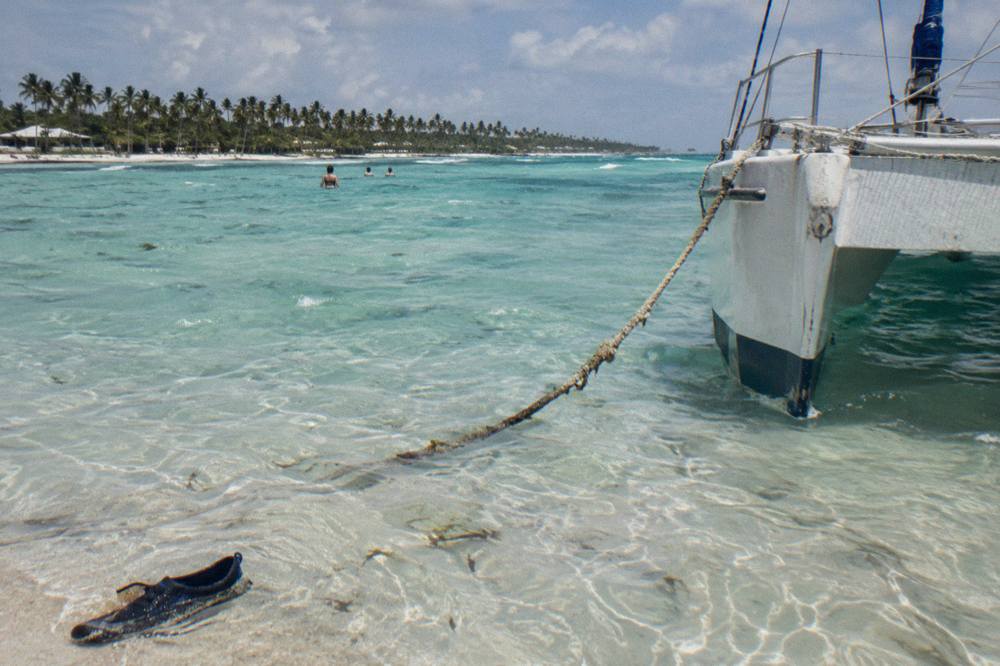
A good example of the standard day is the Catamaran Boat to Saona Island with Buffet Lunch, 8 hours from $71 per person, rated 4.4 across 4,780 reviews. It lists hotel pickup, lunch, drinks, and free cancellation. That package shape, pickup plus meal plus drinks plus cancellation, is the norm for island trips here, and it is the shape that a cautious traveler should be looking for: everything door to door is arranged by one operator with one point of contact. If it is your first excursion and you want a low-stakes format, check availability alongside the fuller Saona Island tour guide.
The catamaran above sits at the small-group end of the range most visitors weigh, between large-group island days and multi-activity adventure days. Its listing carries free cancellation. Group size is the variable that most changes how a day feels, and it is the one detail worth checking deliberately before booking, because a boat carrying dozens and a boat capped at 16 are genuinely different products even when the itineraries look similar on paper.
How Do Operators Keep Excursions Safe Day To Day?
Every established Punta Cana operator follows the same routine: a safety briefing before the activity starts, helmets provided and required on buggy, ATV, zipline, and horseback tours, harnesses and instruction on ziplines, and licensed drivers behind the wheel. Drivers of buggies and ATVs must be 18 or over with a valid license checked at check-in, while children ride as passengers.
The driver rule surprises some families and reassures them once explained. The standard across Punta Cana's buggy and ATV tours is that the person driving must be an adult with a valid driver's license, verified at check-in, and everyone else, including children, rides as a passenger. Minimum passenger ages vary by operator, with family-oriented tours commonly accepting children from 3 or 4 years old and others listing 5, 7, or 8 as the floor. One operator in the area accepts drivers from 16 with a learner's permit or a home-country license plus an on-site safety assessment, but 18 is the norm, so if a teenage driver matters to your group, check the booking page for that specific tour before counting on it. No prior experience is needed on any of these formats.
Ziplines carry their own limits, and these are worth reading closely if you are booking for children or larger travellers. Operators commonly require a minimum age of 6, with children aged 6 to 12 sometimes limited to shorter courses, and maximum rider weights in the range of 120 to 127 kilograms, with some courses also setting a minimum height around 130 centimetres or a maximum waist measurement near 112 centimetres for the harness. Scape Park, whose rules are published on its own official restrictions page, lists a maximum weight of 280 pounds for zip-line activities and advises against them for pregnant guests or those with significant medical conditions. None of this is hidden: it is on the booking page, and reading it is the single most useful safety step you can take before paying.
Horseback tours follow the same pattern: helmets provided, no experience needed, and rider weight maximums commonly listed between 110 and 120 kilograms. The daily machinery of safety, briefings, gear, limits, is boring by design, and boring is what you want.
| Tour format | Standard safety practice | Typical age and size limits |
|---|---|---|
| Buggy and ATV | Helmet provided and required, briefing, licensed adult drivers | Drivers 18+ with license; passengers commonly from 3 or 4 years |
| Zipline | Harness and helmet provided, briefing, guide-controlled lines | Min age 6 common; max weight 120 to 127 kg, some min height 130 cm |
| Horseback riding | Helmet provided, guided line, no experience needed | Min age often 4 to 8; max rider weight 110 to 120 kg |
| Boat and catamaran | Crew on board, life equipment, snorkel gear provided | Party boats often adults only, minimum age 18 |
One practical note that belongs to the road tours rather than the water ones: routes are designed for beginners and run at modest speeds, and muddy or dusty conditions are normal. Wear old clothes and bring something to cover your phone. The half-day ATV formats run about 4 hours including the water cave swim and Macao Beach stop, and they are typically priced around $29 to $70 per person, with the buggy and ATV tours here starting at $24.
If the question in your head is really "what if I book and then change my mind", the answer sits in the cancellation column, not the safety column. Every tour named in this article lists free cancellation, so the decision to book is reversible in a way it would not be with a non-refundable fare.
What Happens If The Weather Turns During Excursion Season?
Operators cancel or reschedule when sea or sky conditions make a trip unsafe, and free cancellation means a weather call by the operator does not cost you the fare: you get a reschedule or a refund. Punta Cana's excursion calendar runs all year, and the August to October hurricane window, which is nearly over as this is written, is handled the same way every year, by day-to-day go and no-go decisions rather than blanket shutdowns.
Weather is the honest risk in this region, and the system built around it is mature. Boat tours to Saona and Catalina depart from the Bayahibe and Dominicus pier area after a road transfer of about 60 to 90 minutes from Punta Cana and Bavaro hotels, and the crossing itself runs about 20 to 60 minutes by speedboat or 1 to 2 hours by catamaran depending on the sea. When the sea is wrong, the operator does not run the crossing at a discount, it reschedules or refunds. That is the whole policy, and it is why the cancellation flag on a booking page matters more than any forecast you read before leaving home.
Sargassum, the seaweed question that dominates some travel forums, is a comfort issue rather than a safety one, and it is seasonal. Conditions vary by beach and by week, and the practical move is a live beach report before a snorkeling day rather than a fixed assumption; forecasts for the area are published at sargassumpuntacana.com. Tour operators time reef and sandbar stops where the water is clearest, and snorkel cruises provide the equipment, so the operator's local read on the day usually beats anything you can plan from abroad.
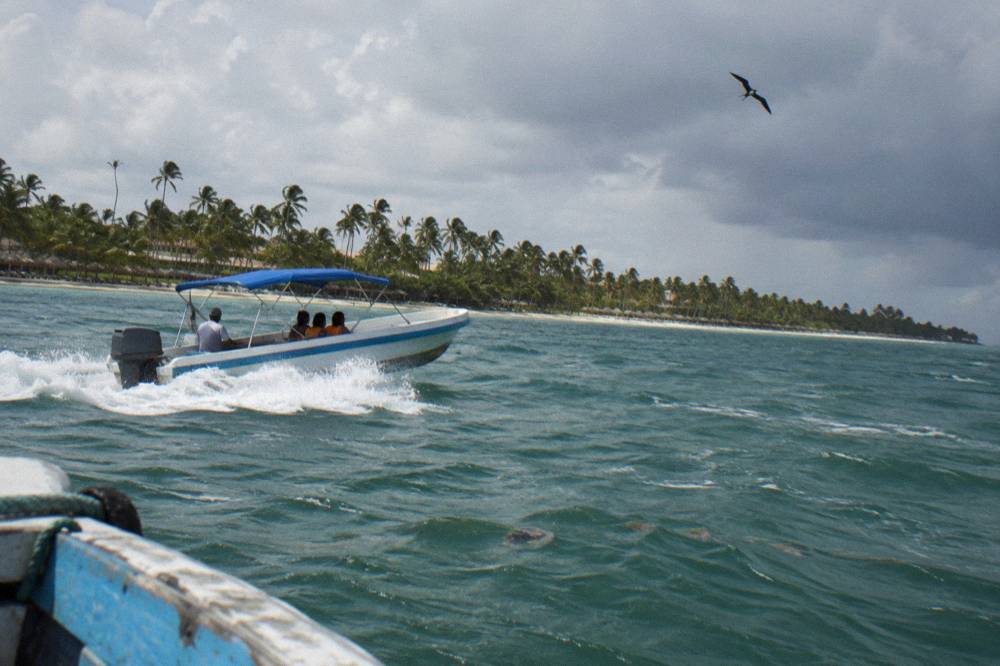
A useful example of a weather-flexible water day is the Small Group Snorkeling Cruise with Open Bar and Light Snacks, 3 hours 30 minutes from $89 per person, rated 4.9 across 1,657 reviews, capped at 27 travellers with hotel pickup and free cancellation listed. A short-format cruise like this carries less weather exposure than a full island day simply because there is less ocean to cross, and the small cap keeps the briefing and the boarding manageable.
The same logic applies on land. Rain on a buggy route changes the mud, not the safety envelope, and operators run in it unless conditions are genuinely bad. The tours to keep an eye on for weather sensitivity are the long boat days, the Saona and Catalina trips, because they commit a full 8 to 10 hours and a sea crossing. Even there, the downside of a cancellation is a refund, not a stranded fare.
Is Crime A Concern On Punta Cana Excursions?
The US State Department rates the Dominican Republic Level 2, exercise increased caution, citing crime, and its guidance consistently notes that tourist areas are generally safer than the country at large. Excursion days take place almost entirely inside that tourist infrastructure: hotel pickup, operator vehicles, guided sites, and return transfers, with very little unsupervised movement in between.
The Level 2 advisory is a standing worldwide-format rating, not a reaction to a Punta Cana event, and it is the same band many popular Caribbean and Latin American destinations sit in. What matters for an excursion decision is where your body actually is during the day. A Saona catamaran day is a hotel lobby, a transfer bus, a pier, a boat, a beach inside a national park with an operator lunch, and the reverse trip home. A buggy day is a hotel lobby, a transfer, a guided route, and a beach stop. The advisory sits at Level 2 and points to opportunistic street crime; tourist areas are generally safer, and a booked excursion keeps to a guided itinerary rather than free roaming on your own. The rest of the planning pages sit on Punta Cana Travel Tours.
The precautions that do matter are the ordinary ones that apply at home: keep valuables in the hotel safe rather than on the boat, carry small USD bills for tips, and use the operator's pickup rather than arranging your own transport to a pier. Tipping practice here is well documented and modest, about $10 to $20 per person for a full-day guide, $5 to $10 for half-day tours or boat crews, and $1 to $2 per drink round, and operators do not treat tips as security deposits. For broader context on the advisory and how it maps to the resort zones, the Is Punta Cana safe guide covers the detail, and the Bayahibe versus Punta Cana comparison is useful if your excursion leaves from the Bayahibe side.
| Segment of a typical excursion day | Who is responsible | Crime exposure |
|---|---|---|
| Hotel pickup | Operator, named vehicle and driver | Minimal, resort zone |
| Road transfer to pier or ranch | Operator driver | Minimal |
| Activity: boat, buggy, zipline, horses | Trained crew and guides | Minimal, guided site |
| Beach or island stop | Operator lunch and schedule | Minimal, national park or resort beach |
| Return transfer | Operator | Minimal |
None of this is a promise; conditions anywhere can change, and no honest writer guarantees an outcome. What it is, is a description of how the excursion day is structured, and that structure is the reason the State Department's crime caution and the everyday reality of a Punta Cana tour day sit so far apart.
What Rules Apply Inside The National Parks?
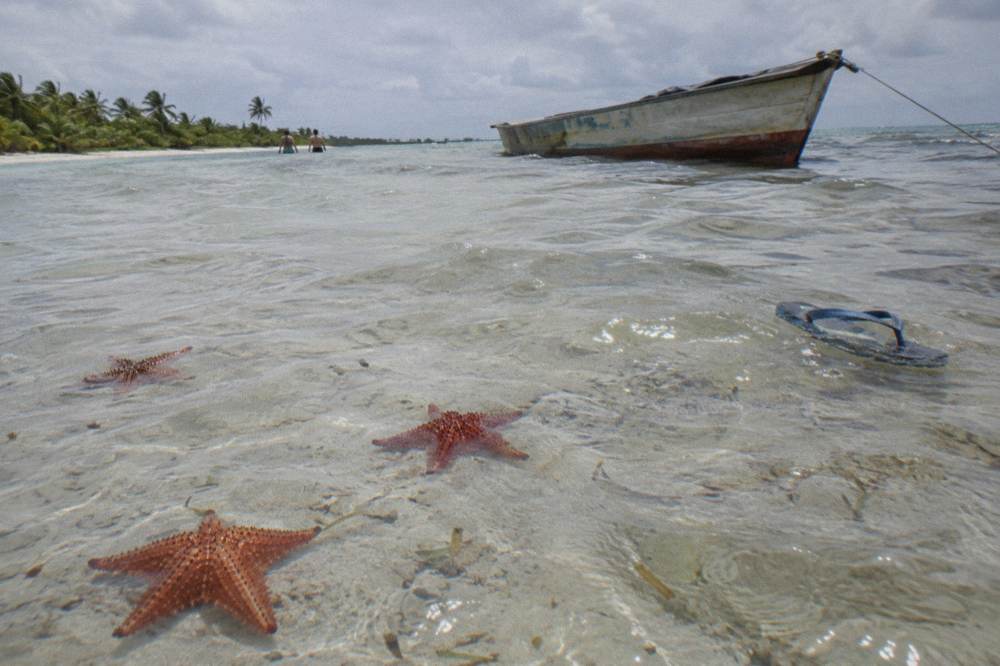
Saona and Catalina sit inside Parque Nacional Cotubanama, run by the Dominican Ministry of Environment, and the rules are simple and enforced: do not remove starfish, shells, coral, or sand, and follow crew instructions at protected stops. The natural pool sandbar stop, waist-deep water with starfish, is a standard 30 to 45 minute visit on Saona trips, and touching or removing marine life there is prohibited. Because the island sits inside a protected national park, plenty of travelers wonder if overnight stays are even allowed, and our guide to spending the night on Saona Island explains what the rules mean in practice and which day tours give you the most time ashore.
This section matters for safety in a way people overlook: the fastest way to ruin an island day is an interaction with park authorities, and the rules are not decorative. The starfish at the Piscina Natural, the Palmilla sandbar, are protected, and the prohibition covers touching them, holding them for photos, and taking anything from the water or the beach. Crews state this on the boat, and the instruction exists because the ecosystem is the reason the stop exists.
No operator is "the official" tour of the park, and any page claiming otherwise is selling you a framing rather than a fact. Organized tours are the standard access method, essentially the only practical one for visitors from Punta Cana, since boats depart from the Bayahibe and Dominicus pier area under park authorization. Park entry is not listed as included on most tour pages here, so check the booking page for your specific trip rather than assuming the fee is bundled. The Catalina Island day trip guide covers that island's own snorkel sites, which are different products from Saona's beach-and-pool format.
On land tours, the parallel rule set is simpler: helmets stay on, the guide's line is the route, and the water cave swim happens where the operator says it happens. The adventure park formats add their own published restrictions, as covered earlier, and those pages are the authority on weight and age limits for their own cables and platforms.
Does Free Cancellation Actually Protect Your Booking?
Yes, and it is the quiet headline of Punta Cana excursion booking: every tour named in this article lists free cancellation, so weather cancellations by the operator and second thoughts by you both end in a refund or reschedule rather than a lost fare. The practical rule is to book with cancellation terms visible on the page and to check the cut-off window before relying on it.
The reason this deserves its own section is that it converts the safety question into a money question you fully control. You cannot decide the sea state on the morning of your Saona trip, but you can decide to book a tour that refunds if the operator calls it off, and every island trip, party boat, buggy ride, zipline course, and horseback tour on this site carries that flag. The detail that varies is the cut-off: how many hours before departure you can still cancel for free, which the booking page states per tour.
A multi-activity day shows how far the cancellation umbrella stretches. The Punta Cana Zipline Adventure with Buggies and Horseback Riding packs three formats, ziplines, buggies, and horses, into 6 hours from $100 per person, rated 4.9 across 5,400 reviews, with hotel pickup, meal, drinks, and free cancellation all listed. A day like that carries the age and weight rules of all three formats at once, so it is exactly the kind of booking where reading the restrictions page before paying is worth ten minutes.
For a simpler commitment, the ATV Adventure to Water Cave and Macao Beach, 4 hours from $45 per person, rated 4.8 across 3,513 reviews, is a single-format day with the standard helmet and briefing practice and the same free cancellation. Between the two, the choice is really about how many activities you want stacked, not about which one is safer, because both run on the same operator practice.
What Should A Cautious Traveler Actually Do Differently?
Read the age, weight, and license rules on the booking page before paying, choose tours that list hotel pickup and free cancellation, keep valuables in the hotel safe, bring small USD bills for tips, and treat a bad-forecast morning as a reschedule conversation rather than a lost day. Beyond that, Punta Cana excursions do not require special caution, only ordinary traveler sense.
The cautious traveler's edge in Punta Cana is preparation, not avoidance. Know the driver rule before you promise a teenager a buggy. Know the weight limits before you book a zipline for the whole family. Know that party boats are adults only, minimum age 18 on the main listings, before you plan one with teenagers. Know that the long Saona days start early, pickups commonly between 6:30 and 8:00 in the morning from Punta Cana hotels, and run 8 to 11 hours door to door. And know your own exit: the cancellation cut-off on the page you booked from.
None of this is complicated, and none of it argues against going. It argues for booking the way locals and repeat visitors do, with the details read first and the reversible option chosen. The tours that make that easy are the ones that publish pickup, inclusions, and cancellation plainly and let the group size do the differentiating.
Common Questions About Excursion Safety In Punta Cana
Is It Still Safe To Go On An Excursion In Punta Cana Right Now?
Yes. Excursions operate year round with standard safety practice: briefings, provided helmets and harnesses, licensed adult drivers for vehicles, and crewed boats. The US State Department's Level 2 advisory for the Dominican Republic cites crime and notes tourist areas are generally safer; excursion days take place almost entirely inside the organized tourism corridor. Every tour named here also lists free cancellation, so a change of plans does not strand your fare.
Do Punta Cana Tours Cancel For Bad Weather?
Yes, operators reschedule or refund when sea or weather conditions make a trip unsafe, and free cancellation means the operator's call does not cost you the money. Boat trips to Saona and Catalina, which involve a crossing of roughly 20 to 60 minutes by speedboat, are the most weather-sensitive formats, which is why the cancellation terms on the booking page matter more than any pre-trip forecast.
Can Teenagers Drive A Buggy Or ATV In Punta Cana?
Usually not. The standard rule is that drivers must be 18 or over with a valid driver's license, checked at check-in. One area operator accepts drivers from 16 with a learner's permit, a home-country license, or an on-site safety assessment, so check the specific tour's booking page. Children otherwise ride as passengers, with minimum passenger ages commonly starting at 3 or 4 on family-oriented tours.
Are Punta Cana Ziplines Safe For Children?
Operators commonly set a minimum age of 6, with children aged 6 to 12 sometimes limited to shorter courses, and maximum weights in the 120 to 127 kilogram range with some courses adding a minimum height near 130 centimetres. Scape Park publishes its own rules, including a 280 pound maximum for zip-line activities and a caution against them for pregnant guests. Helmets and harnesses are provided and required, and no experience is needed.
Is Crime A Risk On The Excursions Themselves?
The Level 2 advisory is about crime in the country broadly, not about tour areas. A typical excursion day consists of hotel pickup, an operator transfer, a guided activity, and a return transfer, with almost no unsupervised time in public spaces. Ordinary precautions still apply: leave valuables in the hotel safe, carry small USD bills for tips, and use the operator's pickup rather than self-arranging transport to a departure pier.
What Happens If The Operator Cancels My Tour?
You get a reschedule or a refund, not a lost fare. Every tour discussed in this article lists free cancellation, and every tour on this page comes with free cancellation. Check the booking page for the exact cut-off window for self-cancellations, which varies by tour, before you rely on it for a tight itinerary.